Boost Business Valuation: 6 Steps to Brand Equity in 2026

Building Brand Equity in 2026: A 6-Step Guide for US Small Businesses to Increase Valuation (FINANCIAL IMPACT)
In the dynamic landscape of the US economy, small businesses are constantly seeking avenues for sustainable growth and increased market presence. While immediate sales and profit margins are crucial, savvy entrepreneurs understand that true long-term value lies in cultivating strong brand equity valuation. By 2026, the businesses that will thrive and command higher valuations will be those that have strategically invested in building a robust and recognizable brand.
Brand equity, at its core, is the commercial value that a brand name has due to positive associations and consumer perceptions of a product or service. It’s not just about a logo or a catchy slogan; it encompasses everything from customer loyalty and perceived quality to brand awareness and proprietary assets. For small businesses, enhancing brand equity translates directly into a higher business valuation, making them more attractive to investors, potential buyers, and even top talent. This comprehensive guide will walk you through six essential steps to significantly improve your brand equity valuation by 2026, focusing on tangible financial impact.
Step 1: Define and Articulate Your Unique Brand Identity
Before you can build, you must first define. The first critical step in improving your brand equity valuation is to clearly articulate what your brand stands for. This goes beyond your products or services; it delves into your mission, vision, values, and unique selling proposition (USP).
Mission, Vision, and Values
- Mission: What is the core purpose of your business? Why do you exist? Your mission statement should be concise, inspiring, and clearly communicate your business’s impact.
- Vision: Where do you see your business in the future? What aspirations do you hold for your brand’s long-term impact on your customers, industry, and the world? A compelling vision can motivate both your team and your customers.
- Values: What principles guide your business operations and decision-making? Authenticity in living your values builds trust and connection with your audience.
Identifying Your Unique Selling Proposition (USP)
What makes your small business different from the competition? Your USP is the specific benefit that sets you apart. It could be superior customer service, innovative product features, a unique business model, or a strong commitment to sustainability. A well-defined USP provides a clear reason for customers to choose your brand over others, directly contributing to brand preference and, consequently, your brand equity valuation.
Crafting Your Brand Story
Humans are wired for stories. A compelling brand story can create an emotional connection with your audience, making your brand memorable and relatable. Share your origins, challenges overcome, and the passion that drives your business. This narrative helps to humanize your brand and fosters stronger customer loyalty.
By investing time in this foundational step, you create a solid framework upon which all future brand-building efforts will rest. A clear and consistent brand identity is the bedrock of strong brand equity valuation.
Step 2: Consistent Brand Messaging and Visuals Across All Touchpoints
Once your brand identity is clearly defined, the next crucial step is to ensure unwavering consistency in how your brand is presented to the world. Inconsistency can confuse your audience, dilute your brand’s impact, and ultimately hinder your brand equity valuation.
Visual Identity: Logo, Colors, Typography
Your visual elements are often the first point of contact customers have with your brand. Develop a professional and memorable logo that reflects your brand’s essence. Choose a consistent color palette and typography that evoke the desired emotions and maintain readability. These elements should be uniformly applied across all your marketing materials, website, social media, packaging, and physical locations.
Voice and Tone
Beyond visuals, your brand’s voice and tone are equally important. Are you formal or informal? Humorous or serious? Authoritative or approachable? Define your brand’s communication style and ensure it’s consistent in all written and spoken interactions, from website copy and email newsletters to customer service responses and social media posts. This consistency builds familiarity and trust, key drivers of brand equity valuation.
Omnichannel Consistency
In today’s multi-channel world, customers interact with your brand through various touchpoints. Whether it’s your website, social media, email campaigns, in-store experience, or customer support, the brand experience must be seamless and consistent. Each interaction should reinforce your brand’s identity and values. This holistic approach strengthens brand recognition and recall, directly impacting positive perceptions and enhancing your brand equity valuation.
Regular audits of your brand’s presence across all platforms can help identify and rectify any inconsistencies, ensuring your brand message is always clear and unified.
Step 3: Deliver Exceptional Customer Experiences
In the digital age, customer experience (CX) has become a paramount differentiator and a significant contributor to brand equity valuation. A positive experience can turn a one-time purchaser into a loyal advocate, while a negative one can quickly erode brand trust and reputation.
Beyond the Transaction: The Customer Journey
Map out your entire customer journey, from initial awareness to post-purchase support. Identify every touchpoint and consider how you can optimize each one to create a delightful experience. This includes ease of website navigation, responsiveness of customer service, clarity of product information, and efficiency of delivery.
Personalization and Engagement
Customers appreciate feeling seen and valued. Leverage data to personalize interactions, whether it’s through tailored product recommendations, personalized email communications, or remembering their preferences. Active engagement on social media, responding to reviews, and creating community around your brand also foster stronger connections and loyalty.
Exceeding Expectations
While meeting expectations is good, exceeding them is what truly builds lasting brand equity valuation. Go the extra mile, offer unexpected value, and surprise your customers with exceptional service. Word-of-mouth marketing, driven by positive experiences, is incredibly powerful and cost-effective for small businesses.
Think of each customer interaction as an opportunity to reinforce your brand’s positive attributes. Satisfied and delighted customers become brand ambassadors, spreading positive sentiment and contributing significantly to the intangible assets that boost your brand equity valuation.
Step 4: Strategic Marketing and Brand Awareness Campaigns
Even the strongest brand identity and the best customer experience won’t contribute to brand equity valuation if no one knows about them. Strategic marketing and brand awareness campaigns are essential for increasing visibility and reaching your target audience.
Content Marketing That Provides Value
Create and distribute valuable, relevant, and consistent content to attract and retain a clearly defined audience. This could include blog posts, videos, infographics, podcasts, or webinars that address your audience’s pain points and offer solutions. High-quality content positions your brand as an industry expert and builds trust, a cornerstone of brand equity valuation.
Leveraging Digital Channels
- SEO (Search Engine Optimization): Optimize your website and content to rank higher in search engine results. Being easily discoverable online significantly boosts brand awareness.
- Social Media Marketing: Choose the platforms where your target audience is most active and engage with them authentically. Share your brand story, behind-the-scenes content, and interact with comments and messages.
- Email Marketing: Build an email list and nurture leads with valuable content, promotions, and updates. Email remains one of the most effective channels for direct customer communication.
- Paid Advertising: Consider targeted ads on search engines and social media to reach specific demographics and accelerate brand awareness.
Public Relations and Partnerships
Securing media coverage, whether through press releases, guest blogging, or interviews, can significantly enhance your brand’s credibility and reach. Strategic partnerships with complementary businesses or local organizations can also expose your brand to new audiences and strengthen its reputation. These efforts collectively contribute to increased brand recognition and positive associations, which are vital for improving brand equity valuation.
Step 5: Foster Brand Loyalty and Community
True brand equity valuation is built on a foundation of loyal customers who not only repeatedly purchase from you but also actively advocate for your brand. Moving customers from mere satisfaction to deep loyalty is a powerful driver of long-term value.
Loyalty Programs and Incentives
Implement loyalty programs that reward repeat customers. This could be a points system, exclusive discounts, early access to new products, or special member-only experiences. These programs provide tangible benefits that encourage continued engagement and reinforce customer appreciation.
Building a Brand Community
Create spaces where your customers can connect with each other and with your brand. This could be an online forum, a private social media group, or local events. A strong community fosters a sense of belonging, ownership, and shared values, transforming customers into brand evangelists. Encourage user-generated content and testimonials, as these are incredibly powerful forms of social proof.
Active Listening and Feedback Integration
Show your customers that their opinions matter. Actively solicit feedback through surveys, reviews, and direct conversations. More importantly, demonstrate that you listen by implementing changes and improvements based on their input. This cycle of feedback and improvement builds trust and strengthens the relationship, directly solidifying your brand equity valuation.
Loyal customers have a higher lifetime value, are less price-sensitive, and are more likely to refer new customers, all of which positively impact your financial performance and, consequently, your brand equity valuation.
Step 6: Measure, Monitor, and Adapt Your Brand Strategy
Building brand equity valuation is not a one-time task; it’s an ongoing process that requires continuous measurement, monitoring, and adaptation. To ensure your efforts are yielding the desired financial impact, you must track relevant metrics and be prepared to adjust your strategy.
Key Brand Equity Metrics to Monitor
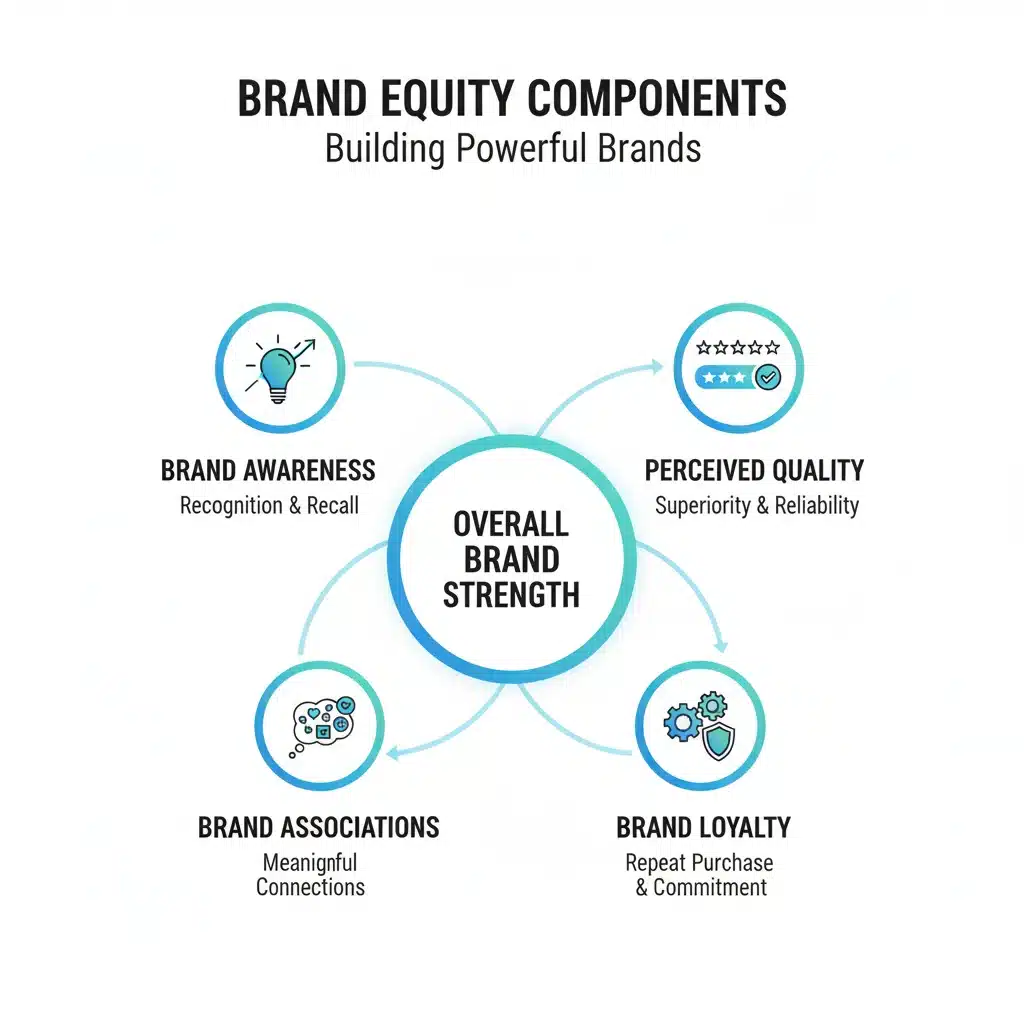
- Brand Awareness: Track mentions, website traffic, social media reach, and search volume for your brand name.
- Brand Recognition: Conduct surveys to gauge how easily consumers can identify your brand.
- Perceived Quality: Monitor customer reviews, ratings, and feedback regarding the quality of your products or services.
- Brand Associations: Understand what attributes and emotions consumers connect with your brand through surveys and qualitative feedback.
- Brand Loyalty: Measure repeat purchase rates, customer retention rates, Net Promoter Score (NPS), and customer lifetime value (CLTV).
- Market Share: An increase in market share often indicates growing brand strength.
- Price Premium: The ability to command a higher price for your products or services compared to competitors reflects strong brand equity.
Financial Impact Metrics
Connect your brand equity metrics to financial outcomes. Look for correlations between increased brand awareness or loyalty and:
- Higher revenue growth
- Improved profit margins
- Reduced customer acquisition costs
- Increased customer lifetime value
- Favorable investor perception and higher business valuation multiples
Regular Brand Audits and Market Research
Periodically conduct comprehensive brand audits to assess the health of your brand. Use market research to understand evolving consumer preferences, competitive landscapes, and emerging trends. This data-driven approach allows you to identify areas for improvement, capitalize on new opportunities, and proactively address potential threats to your brand equity valuation.
Adaptation and Innovation
The market is constantly changing. Be willing to adapt your brand strategy, messaging, and even your offerings based on the insights you gather. Innovation, whether in your products, services, or how you interact with customers, can keep your brand relevant and reinforce its value in the eyes of consumers and stakeholders alike. This iterative process ensures that your efforts to build brand equity valuation remain effective and aligned with your business goals.

The Financial Impact of Strong Brand Equity Valuation
It’s crucial for small business owners to understand that brand equity valuation isn’t just a marketing buzzword; it has a profound and measurable financial impact. A brand with high equity is a valuable asset on a company’s balance sheet, influencing multiple financial aspects:
- Increased Revenue: Strong brands often enjoy higher sales volumes and can command premium pricing, leading to greater revenue. Customers are willing to pay more for perceived quality, reliability, and the emotional connection a trusted brand provides.
- Improved Profit Margins: The ability to charge premium prices directly translates to better profit margins. Additionally, loyal customers are less sensitive to price fluctuations, reducing the need for constant discounting.
- Reduced Marketing Costs: A well-known and respected brand requires less effort and expenditure to attract new customers. Word-of-mouth marketing and organic search traffic become powerful, cost-effective acquisition channels.
- Enhanced Customer Lifetime Value (CLTV): Loyal customers purchase more frequently, spend more per transaction, and remain customers for longer periods, significantly increasing their CLTV.
- Greater Resilience During Crises: Strong brands have a reservoir of goodwill that can help them weather economic downturns, negative publicity, or competitive pressures more effectively than lesser-known brands.
- Attraction of Top Talent: A reputable brand is more attractive to skilled employees, reducing recruitment costs and improving workforce quality.
- Higher Business Valuation: This is perhaps the most direct financial impact. When it comes time to sell the business, seek investment, or secure loans, a strong brand equity valuation translates into a higher overall company valuation. Intangible assets like brand recognition, customer loyalty, and proprietary brand elements are valued by investors and contribute significantly to the enterprise value.
- Easier Market Expansion: A strong brand can more easily launch new products, services, or enter new markets, leveraging existing customer trust and recognition.
By consciously focusing on these six steps, US small businesses can systematically build and leverage their brand equity to achieve not just market dominance, but also a significantly higher brand equity valuation by 2026, securing a more prosperous and sustainable future.
Conclusion: Your Path to Enhanced Brand Equity Valuation by 2026
Building robust brand equity valuation is a strategic imperative for any US small business aiming for long-term financial success and increased market value. It’s a marathon, not a sprint, requiring dedication, consistency, and a customer-centric approach. By meticulously following these six steps – defining your identity, ensuring consistent messaging, delivering exceptional experiences, executing strategic marketing, fostering loyalty, and continuously measuring and adapting – you are laying the groundwork for a significantly more valuable business.
The year 2026 is not far off, and the competitive landscape will only intensify. Businesses that prioritize their brand as a strategic asset will be the ones that stand out, attract more customers, command better prices, and ultimately achieve a higher business valuation. Start today by investing in your brand, and watch as your small business transforms into a powerful, financially resilient entity with enduring brand equity valuation.
Remember, your brand is more than just a name or a logo; it’s the sum total of every interaction and perception your audience has of your business. Cultivate it wisely, and the financial rewards will follow.