Conversational Commerce: Boost Retail Engagement 10% by Q3 2026
The Rise of Conversational Commerce: Achieving a 10% Increase in Customer Engagement for US Retailers by Q3 2026
In the rapidly evolving landscape of retail, customer engagement is no longer a mere buzzword; it’s the bedrock of sustained success. As US retailers navigate an increasingly competitive market, the imperative to foster deeper, more meaningful connections with their clientele has never been more critical. Enter conversational commerce retail, a paradigm shift that promises to redefine how businesses interact with their customers, offering a personalized, immediate, and highly efficient shopping experience. This comprehensive guide will delve into the transformative power of conversational commerce, outlining a strategic roadmap for US retailers to achieve a remarkable 10% increase in customer engagement by Q3 2026.
Understanding Conversational Commerce: Beyond the Chatbot
At its core, conversational commerce is the intersection of messaging platforms, artificial intelligence (AI), and e-commerce, enabling customers to interact with businesses through natural language interfaces throughout their buying journey. While often conflated with simple chatbots, conversational commerce is a far more sophisticated ecosystem. It encompasses a spectrum of technologies and strategies designed to facilitate two-way, real-time communication, making the shopping experience more intuitive, personal, and convenient. Imagine a customer asking a question about a product, receiving personalized recommendations, completing a purchase, and tracking their order, all within a single, continuous conversation. This is the promise of conversational commerce retail.
The traditional retail model, characterized by static websites and impersonal customer service, is increasingly falling short of modern consumer expectations. Today’s customers demand instant gratification, personalized attention, and frictionless experiences. They want to connect with brands on their terms, using the communication channels they already frequent, such as WhatsApp, Facebook Messenger, Instagram DMs, SMS, and even voice assistants. Conversational commerce bridges this gap, bringing the human element back into digital interactions, albeit often powered by intelligent automation.
The evolution of AI and natural language processing (NLP) has been pivotal in the rise of conversational commerce. Early chatbots were often clunky and limited, capable of handling only basic queries. However, advancements in AI have led to the development of highly sophisticated conversational AI that can understand context, interpret intent, and even express empathy. This technological leap has transformed conversational interfaces from mere tools for automation into powerful engines for engagement and sales.
For US retailers, embracing conversational commerce means more than just adopting new technology; it represents a fundamental shift in customer relationship management. It’s about proactive engagement, anticipating customer needs, and delivering value at every touchpoint. By integrating conversational capabilities into their existing retail operations, businesses can create a holistic customer experience that fosters loyalty, drives conversions, and ultimately, increases customer lifetime value. The goal of a 10% increase in customer engagement by Q3 2026 is not merely aspirational; it’s an achievable target for retailers who strategically implement conversational commerce retail solutions.
The “Why Now?” The Compelling Case for Conversational Commerce in US Retail
The timing for US retailers to invest in conversational commerce couldn’t be more opportune. Several converging trends are creating a perfect storm, making conversational commerce not just a competitive advantage, but a strategic imperative. Firstly, mobile commerce continues its meteoric rise. A significant portion of online shopping now occurs on mobile devices, where messaging apps are king. Integrating shopping experiences directly into these familiar interfaces removes friction and enhances convenience, aligning perfectly with mobile-first consumer behaviors. Customers are already comfortable communicating via text; extending that comfort to shopping is a natural progression.
Secondly, customer expectations are at an all-time high. The Amazon effect has ingrained in consumers a desire for speed, efficiency, and personalized service. They expect immediate answers to their questions, seamless transitions between channels, and recommendations tailored to their preferences. Conversational commerce, with its real-time, personalized nature, is uniquely positioned to meet and even exceed these heightened expectations. It provides the instant gratification that modern consumers crave, reducing wait times and improving overall satisfaction.
Thirdly, the data generated through conversational interactions is invaluable. Every conversation, whether with a chatbot or a human agent, provides rich insights into customer preferences, pain points, and buying patterns. This data can be leveraged to refine product offerings, personalize marketing campaigns, and optimize the customer journey. For US retailers, this represents a goldmine of actionable intelligence, enabling them to make more informed business decisions and continuously improve their conversational commerce retail strategy.
Fourthly, the economic landscape often necessitates efficiency. Conversational commerce, particularly through AI-powered chatbots, can significantly reduce customer service costs by automating routine queries and freeing up human agents to handle more complex issues. This operational efficiency is crucial for retailers looking to optimize their resources while maintaining high levels of customer service. The ability to scale customer support without proportionally increasing headcount is a major draw for businesses of all sizes.
Finally, the competitive landscape demands innovation. Retailers who fail to adapt to evolving consumer behaviors risk being left behind. Early adopters of conversational commerce are already seeing significant gains in customer engagement, satisfaction, and sales. By Q3 2026, those who have successfully integrated these solutions will have a distinct advantage, having cultivated more loyal and engaged customer bases. The 10% increase in customer engagement is a conservative estimate for the potential impact of a well-executed conversational commerce retail strategy.
The Roadmap to a 10% Engagement Increase by Q3 2026
Achieving a 10% boost in customer engagement through conversational commerce requires a strategic, phased approach. It’s not about implementing a single tool, but rather building a comprehensive ecosystem that integrates seamlessly with existing retail operations. Here’s a detailed roadmap for US retailers:
Phase 1: Foundation and Strategy (Q4 2023 – Q1 2024)
- Define Clear Objectives and KPIs: Before diving into technology, clearly articulate what ‘engagement’ means for your business. Is it increased repeat purchases, higher customer satisfaction scores, reduced cart abandonment, or more active participation in loyalty programs? Set measurable KPIs directly linked to these objectives. For the 10% target, establish a baseline engagement metric.
- Customer Journey Mapping: Identify key touchpoints where conversational interactions can add value. From product discovery and pre-purchase inquiries to post-purchase support and re-engagement campaigns, understand where customers need assistance or information most.
- Platform Selection and Integration Strategy: Research and select conversational commerce platforms that align with your business needs and integrate with your existing CRM, e-commerce platform, and inventory management systems. Consider factors like scalability, AI capabilities, and channel support (e.g., WhatsApp, Messenger, SMS, website chat).
- Team Training and Buy-in: Educate your team, especially customer service and marketing, on the benefits and functionalities of conversational commerce. Foster a culture of digital engagement and emphasize the co-existence of AI and human agents.
Phase 2: Pilot and Implementation (Q2 2024 – Q3 2024)
- Start Simple: FAQs and Basic Support: Begin by automating answers to frequently asked questions (FAQs). This immediately reduces the load on human agents and provides instant answers to customers, a quick win for engagement.
- Integrate with Product Discovery: Implement conversational interfaces that guide customers through product selection based on their preferences and needs. This could involve interactive quizzes or direct questions about their requirements.
- Personalized Recommendations: Leverage customer data and AI to offer personalized product recommendations within the conversational flow. This proactive approach can significantly enhance the shopping experience and drive conversions.
- Cart Abandonment Recovery: Use conversational nudges to remind customers about items left in their cart, offering assistance or answering last-minute questions to complete the purchase.
Phase 3: Expansion and Optimization (Q4 2024 – Q4 2025)
- Post-Purchase Engagement: Extend conversational capabilities to order tracking, delivery updates, and proactive post-purchase support (e.g., ‘How are you enjoying your new product?’). This builds trust and reduces post-purchase anxiety.
- Customer Feedback and Surveys: Utilize conversational interfaces to collect customer feedback, reviews, and conduct short surveys. This not only gathers valuable data but also shows customers their opinions are valued.
- Loyalty Program Integration: Allow customers to check loyalty points, redeem rewards, and receive personalized offers directly through conversational channels. This makes loyalty programs more accessible and engaging.
- Human-AI Handoff Optimization: Refine the process for seamlessly handing off complex queries from AI to human agents. Ensure agents have full context of the conversation to provide efficient support, reducing customer frustration.
- Continuous Learning and Improvement: Regularly analyze conversational data to identify areas for improvement in AI responses, content, and user flows. Use A/B testing to optimize conversational scripts and engagement strategies. The beauty of conversational commerce retail is its iterative nature.
Phase 4: Advanced Capabilities and Measurement (Q1 2026 – Q3 2026)
- Voice Commerce Integration: Explore integration with voice assistants (e.g., Alexa, Google Assistant) for hands-free shopping experiences, especially for reorders or simple product searches.
- Proactive Engagement: Implement AI to proactively reach out to customers based on their browsing behavior or purchase history with relevant offers or assistance, but always with a focus on value, not spam.
- Hyper-Personalization: Leverage sophisticated AI to deliver truly hyper-personalized experiences, anticipating needs before customers even express them, creating a ‘concierge-like’ shopping journey.
- Robust Analytics and Reporting: Establish advanced analytics dashboards to continuously monitor engagement metrics, conversion rates, customer satisfaction (CSAT), and resolution times across all conversational channels. This is crucial for verifying the 10% engagement increase.
Key Technologies Driving Conversational Commerce
The effectiveness of a conversational commerce retail strategy hinges on the underlying technologies. Here are some of the critical components:
- Natural Language Processing (NLP) & Natural Language Understanding (NLU): These AI capabilities allow systems to understand human language, interpret intent, and extract relevant information from conversations. Advanced NLU can even detect sentiment, enabling more empathetic and appropriate responses.
- Machine Learning (ML): ML algorithms power the continuous improvement of conversational AI. They learn from past interactions, identifying patterns and refining responses over time, making chatbots smarter and more effective.
- Chatbot & Voicebot Platforms: These are the foundational tools for building, deploying, and managing conversational interfaces. Modern platforms offer drag-and-drop interfaces, integration capabilities, and analytics dashboards.
- CRM Integration: Seamless integration with Customer Relationship Management (CRM) systems is vital. It allows conversational agents to access customer history, preferences, and past interactions, ensuring personalized and contextual conversations.
- E-commerce Platform Integration: Connecting conversational commerce solutions directly to your e-commerce platform enables functionalities like product lookup, inventory checks, order placement, and payment processing within the chat interface.
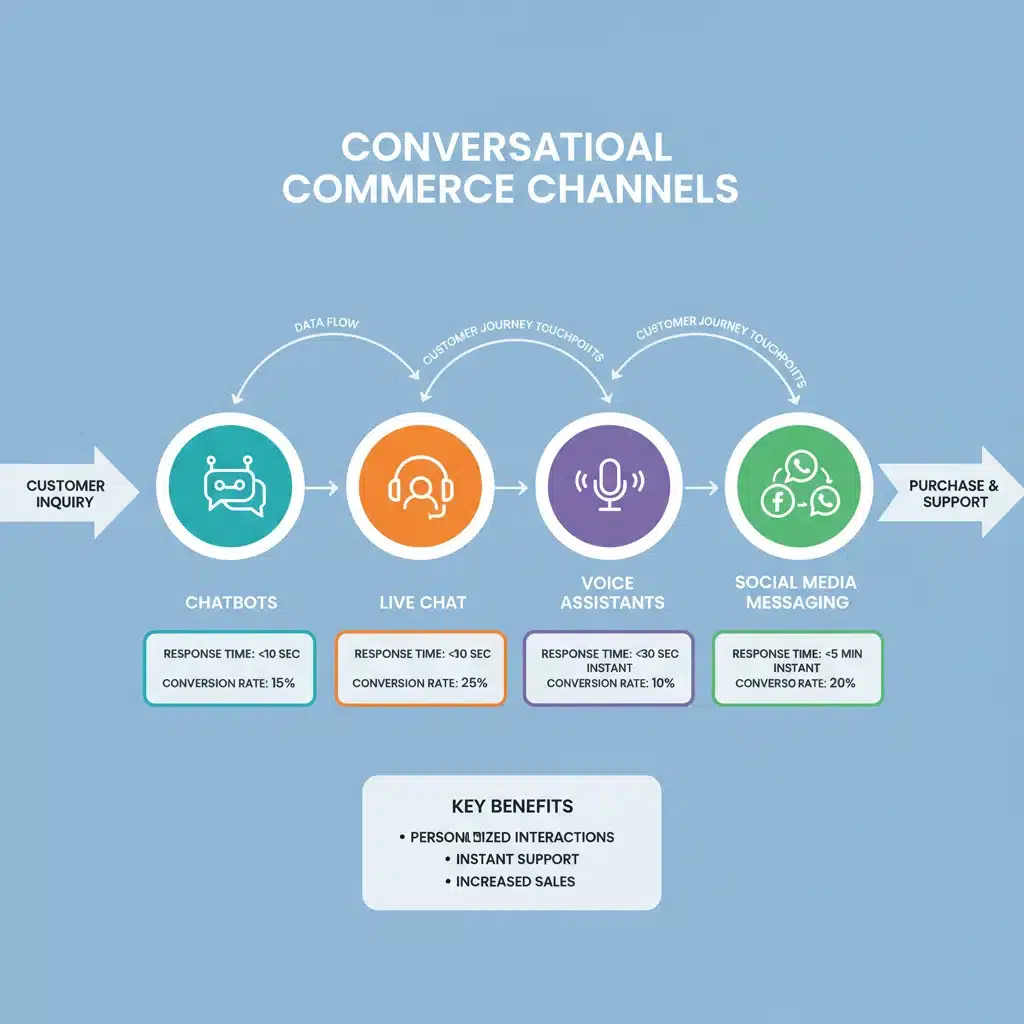
- Omnichannel Orchestration: The ability to maintain a consistent customer experience across various channels (web chat, social media, SMS, voice) is paramount. An omnichannel approach ensures that conversations can pick up where they left off, regardless of the channel switch.
Measuring Success: Beyond the 10% Target
While a 10% increase in customer engagement by Q3 2026 is a clear objective, success in conversational commerce retail is multifaceted. Retailers should track a range of metrics to gauge the true impact of their efforts:
- Customer Satisfaction (CSAT) & Net Promoter Score (NPS): Directly measure how happy customers are with their conversational interactions and their overall likelihood to recommend your brand.
- Response Time & Resolution Rate: Faster responses and higher first-contact resolution rates are direct indicators of efficiency and customer satisfaction.
- Conversion Rates: Track how many conversational interactions lead to a purchase or a desired action (e.g., signing up for a newsletter).
- Cart Abandonment Rate: Monitor reductions in abandoned carts due to conversational interventions.
- Repeat Purchase Rate: Engaged customers are more likely to return. Track increases in repeat purchases from customers who regularly interact via conversational channels.
- Customer Lifetime Value (CLTV): Ultimately, increased engagement should translate into higher CLTV.
- Cost Savings: Quantify the reduction in customer service operational costs due to automation.

Overcoming Challenges in Conversational Commerce Implementation
Implementing conversational commerce retail isn’t without its hurdles. Retailers must be prepared to address several common challenges:
- Data Privacy and Security: Handling customer data through conversational channels requires robust security measures and strict adherence to privacy regulations (e.g., CCPA, GDPR). Transparency with customers about data usage is crucial.
- Maintaining a Human Touch: While automation is key, ensuring that the conversational experience doesn’t become overly robotic is vital. The ability to seamlessly hand off to a human agent when needed is paramount for complex or sensitive issues.
- Integration Complexities: Integrating new conversational platforms with existing legacy systems can be challenging. A phased approach and careful planning are essential.
- Content Creation and Maintenance: Developing comprehensive and accurate conversational flows, FAQs, and product information requires ongoing effort and regular updates to ensure relevance.
- Managing Customer Expectations: Clearly communicate the capabilities and limitations of your conversational AI. Avoid over-promising, and ensure customers know when they are interacting with a bot versus a human.
- Scalability: As your business grows, your conversational commerce solution must be able to scale efficiently to handle increased volumes of interactions without compromising performance.
The Future of Retail is Conversational
The journey towards a 10% increase in customer engagement for US retailers by Q3 2026 through conversational commerce retail is an ambitious yet entirely achievable goal. It requires a commitment to innovation, a deep understanding of customer needs, and a strategic investment in the right technologies. The benefits extend far beyond mere engagement metrics; they encompass improved customer satisfaction, increased operational efficiency, higher conversion rates, and ultimately, a more resilient and future-proof retail business.
As AI continues to advance, conversational commerce will become even more sophisticated, offering predictive capabilities, proactive assistance, and hyper-personalized experiences that were once the stuff of science fiction. Retailers who embrace this evolution now will be best positioned to thrive in the years to come, building lasting relationships with their customers one conversation at a time. The time to invest in conversational commerce is now, transforming interactions into opportunities and turning casual browsers into loyal brand advocates.
By following the outlined roadmap, leveraging key technologies, and constantly refining their approach, US retailers can confidently navigate the exciting future of retail and achieve their ambitious engagement targets. The conversation has begun; it’s time for retailers to join in and reap the rewards of a truly engaging customer experience.