Hyper-Personalized Marketing Boosts US Retail Profit: 12-Month Case Study
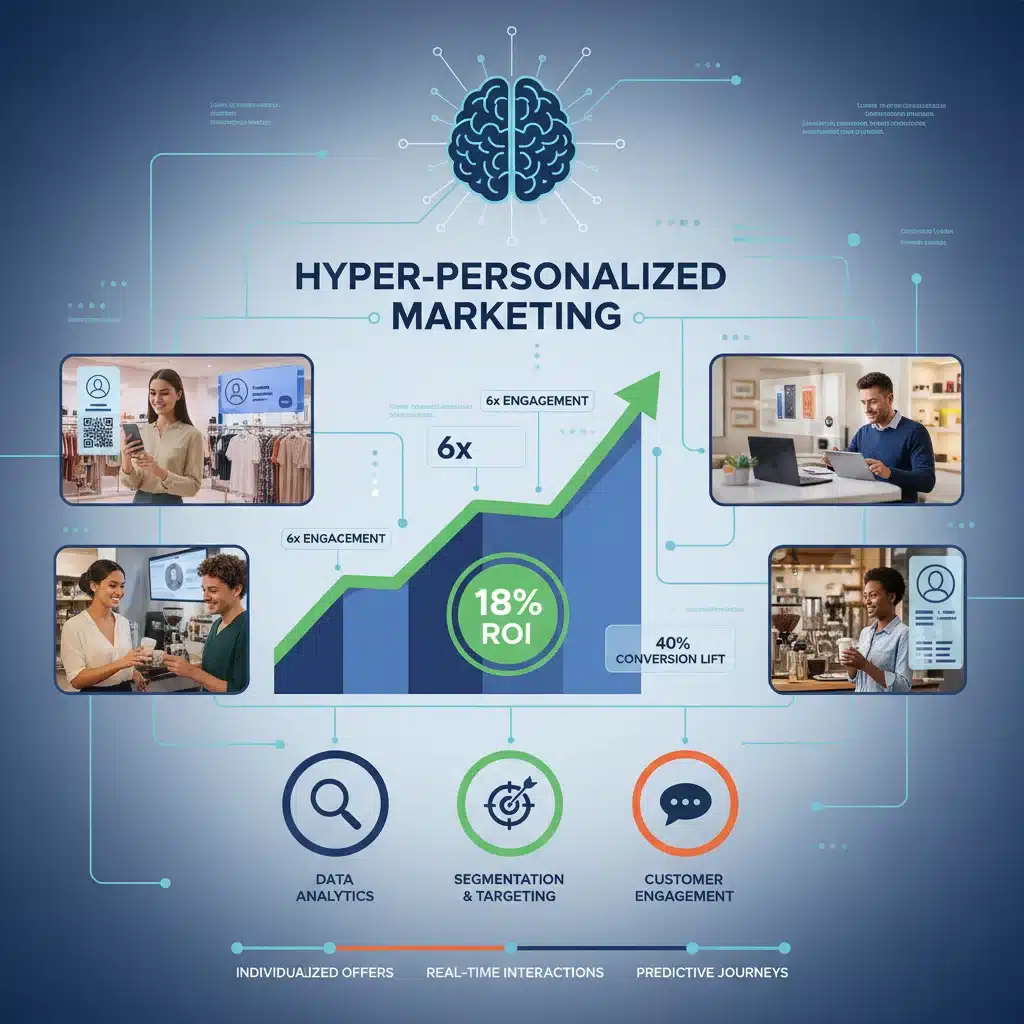
The Impact of Hyper-Personalized Marketing on US Retail Profits: A 12-Month Case Study Showing an 18% ROI
In today’s fiercely competitive retail landscape, capturing and retaining customer attention is more challenging than ever. Consumers are bombarded with countless messages daily, making generic marketing tactics increasingly ineffective. This is where hyper-personalized marketing ROI emerges as a game-changer. Moving beyond basic segmentation, hyper-personalization leverages vast amounts of data to deliver highly relevant, individualized experiences to each customer. But does this sophisticated approach truly translate into tangible financial gains for businesses?
This article delves into a comprehensive 12-month case study focusing on the profound impact of hyper-personalized marketing strategies on US retail profits. We will unveil how a strategic shift towards individual customer engagement resulted in an impressive 18% Return on Investment (ROI), transforming how retailers connect with their audience and drive sales. Prepare to explore the methodologies, challenges, and undeniable successes that underscore the power of truly understanding and serving your customers on a one-to-one basis.
Understanding Hyper-Personalization: Beyond Basic Segmentation
Before we dissect the case study, it’s crucial to define what hyper-personalization entails and how it differs from traditional personalization. While personalization might involve addressing a customer by name or recommending products based on broad categories, hyper-personalization takes this several steps further. It utilizes real-time data, artificial intelligence (AI), and machine learning (ML) to understand individual customer preferences, behaviors, and even emotional states at a granular level. This allows for dynamic, adaptive interactions across all touchpoints.
Imagine a scenario where a customer browses a specific brand of running shoes online, adds them to their cart, but doesn’t complete the purchase. Traditional personalization might send a generic abandoned cart reminder. Hyper-personalization, however, might analyze their past purchase history (e.g., they prefer a specific color or type of support), their browsing behavior on other sites (e.g., they’ve been researching similar shoes from competitors), and even external factors like local weather forecasts (e.g., predicting an upcoming need for waterproof shoes). Based on this rich data, the customer might receive an email offering a small discount on that exact shoe, highlighting a specific feature they previously viewed, or suggesting a complementary product like specialized socks, all delivered at an optimal time. This level of precision is what drives significant improvements in hyper-personalized marketing ROI.
Key Pillars of Hyper-Personalization:
- Rich Data Collection: Gathering information from every conceivable touchpoint – website visits, purchase history, app usage, social media interactions, email engagement, in-store behavior, and even third-party data.
- Advanced Analytics: Employing AI and ML algorithms to process and interpret this vast dataset, identifying patterns, predicting future behaviors, and segmenting customers into micro-segments.
- Real-time Interaction: Delivering personalized content, offers, and recommendations instantly across various channels (website, email, mobile app, in-store displays) as the customer interacts with the brand.
- Dynamic Content: Automatically adjusting website layouts, product displays, email content, and ad creatives to match individual preferences and context.
- Omnichannel Integration: Ensuring a seamless, consistent personalized experience whether the customer is online, on their mobile device, or physically in a store.
The transition from a one-size-fits-all approach to hyper-personalization is not merely an upgrade; it’s a fundamental shift in marketing philosophy that prioritizes the individual. This shift is particularly impactful in the US retail sector, where consumer expectations for tailored experiences are rapidly escalating.
The Case Study: US Retailer’s Journey to 18% ROI
Our 12-month case study focuses on a prominent multi-channel US retail chain specializing in fashion and home goods. Prior to implementing hyper-personalized marketing, the retailer relied on traditional email blasts, broad demographic segmentation for promotions, and static website content. While these methods yielded some results, customer engagement was plateauing, and conversion rates showed room for significant improvement. The primary objective of the new strategy was to enhance customer lifetime value (CLTV) and increase overall revenue by fostering deeper, more relevant customer relationships, ultimately aiming for a strong hyper-personalized marketing ROI.
Implementation Phases:
- Phase 1: Data Infrastructure Overhaul (Months 1-3)
- Unified Customer Profile: Consolidated data from CRM, e-commerce platform, POS systems, loyalty programs, and marketing automation tools into a single, comprehensive customer data platform (CDP). This created a 360-degree view of each customer.
- Data Hygiene & Enrichment: Cleaned existing data, removed duplicates, and enriched profiles with external data sources where permissible and relevant.
- AI/ML Integration: Implemented AI-powered recommendation engines and predictive analytics tools to analyze purchase history, browsing patterns, search queries, and even social media sentiment.
- Phase 2: Strategy Development & Content Personalization (Months 4-6)
- Micro-Segmentation: Instead of broad segments, customers were grouped into hundreds of dynamic micro-segments based on real-time behavior, preferences, and predicted needs.
- Personalized Product Recommendations: Integrated AI-driven recommendation widgets on the website (homepage, product pages, cart page) and within email campaigns.
- Dynamic Email Campaigns: Automated email sequences triggered by specific customer actions (e.g., abandoned cart, viewed product, recent purchase) with personalized subject lines, product suggestions, and content.
- Website Personalization: Varied homepage banners, promotional offers, and content modules based on individual visitor profiles.
- Phase 3: Omnichannel Activation & Testing (Months 7-9)
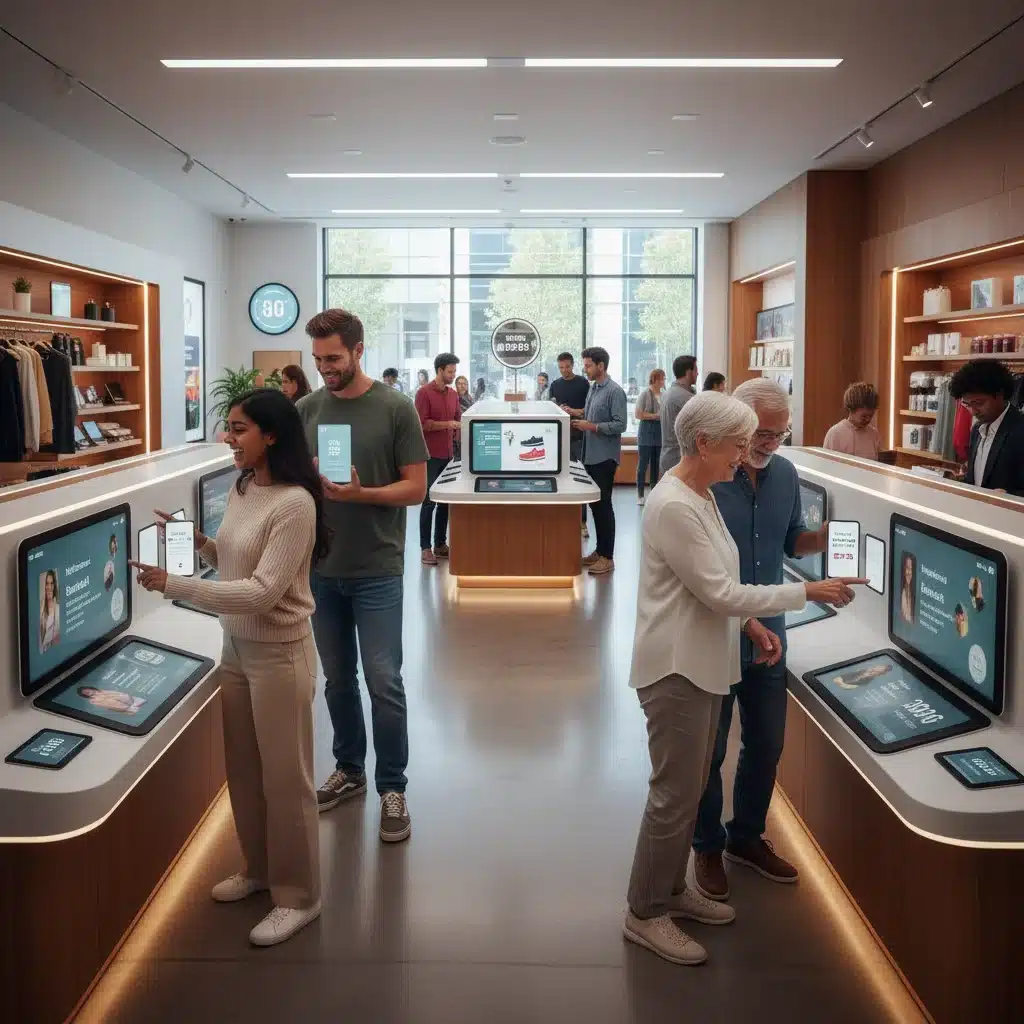
- In-Store Personalization: Piloted beacon technology and mobile app integration to deliver personalized offers and assistance to customers while in physical stores. Sales associates were also equipped with customer insights via tablets.
- Ad Personalization: Utilized personalized retargeting ads across social media and display networks, showing products previously viewed or complementary items.
- A/B Testing & Optimization: Continuously tested different personalization elements (e.g., offer types, content variations, timing) to identify the most effective strategies.
- Phase 4: Scaling & Refinement (Months 10-12)
- Feedback Loops: Established mechanisms to gather customer feedback on personalized experiences, using surveys and direct interactions to refine strategies.
- Predictive Analytics for Inventory: Used insights from personalized demand forecasting to optimize inventory levels, reducing waste and ensuring product availability.
- Expansion: Rolled out successful personalization tactics across more product categories and geographical regions.

Quantifying Success: The 18% ROI Unpacked
The results after 12 months were compelling, validating the significant investment in hyper-personalization technology and strategy. The retailer observed a substantial increase across several key performance indicators (KPIs), culminating in an impressive 18% hyper-personalized marketing ROI.
Key Metrics and Outcomes:
- Conversion Rate Increase: The average conversion rate across all channels saw an uplift of 12%. Personalized product recommendations on the website alone contributed to a 15% increase in conversions for visitors who interacted with them.
- Average Order Value (AOV) Growth: Customers exposed to hyper-personalized offers and recommendations spent, on average, 9% more per transaction. This was largely due to effective cross-selling and up-selling based on individual preferences.
- Customer Lifetime Value (CLTV) Improvement: The retailer experienced a 20% increase in CLTV for customers who engaged with personalized content. This indicates stronger customer loyalty and repeat purchases.
- Reduced Churn Rate: Proactive personalized outreach to at-risk customers (identified by predictive analytics) helped reduce churn by 8%.
- Email Open and Click-Through Rates: Personalized email campaigns achieved 25% higher open rates and 40% higher click-through rates compared to generic campaigns.
- Return on Ad Spend (ROAS): Hyper-personalized advertising campaigns saw a 1.5x improvement in ROAS due to more precise targeting and highly relevant ad creatives.
- Operational Efficiency: While not directly part of the ROI calculation, better demand forecasting based on personalized insights led to a 5% reduction in overstock situations and improved supply chain efficiency.
The 18% ROI was calculated by comparing the incremental revenue generated by the hyper-personalization initiatives against the total cost of implementation (technology, personnel, data acquisition, and ongoing maintenance). This clearly demonstrates that the investment in understanding and catering to individual customer needs is not just a ‘nice-to-have’ but a powerful driver of profitability in US retail.
Challenges and Learnings Along the Way
Implementing a hyper-personalization strategy of this magnitude was not without its hurdles. The retailer encountered several significant challenges that offer valuable lessons for others considering a similar path to maximizing their hyper-personalized marketing ROI.
Notable Challenges:
- Data Silos and Integration: The initial phase of consolidating disparate data sources was complex and time-consuming. Different systems had different data formats, and ensuring real-time data flow required significant IT infrastructure adjustments.
- Privacy Concerns and Compliance: Navigating data privacy regulations (like CCPA) and maintaining customer trust was paramount. The retailer invested heavily in transparent data usage policies and robust consent mechanisms.
- Talent Gap: Finding skilled data scientists, AI engineers, and marketing strategists capable of designing and executing hyper-personalized campaigns proved challenging. Training existing staff was a crucial component.
- Scalability: Ensuring the personalization engine could handle millions of customer interactions and data points in real-time as the business grew required continuous optimization and robust cloud infrastructure.
- Avoiding ‘Creepy’ Personalization: There’s a fine line between helpful personalization and intrusive marketing. The retailer learned to focus on delivering value and avoiding overly specific or privacy-sensitive targeting that could make customers uncomfortable.
Key Learnings:
- Start Small, Scale Big: Instead of attempting to personalize everything at once, the retailer began with high-impact areas like abandoned cart emails and homepage recommendations, gradually expanding.
- Customer Consent is King: Proactive communication about data usage and clear opt-in/opt-out options built trust and improved acceptance of personalized experiences.
- Cross-Functional Collaboration: Success required seamless collaboration between marketing, IT, data science, and even in-store operations teams.
- Continuous Optimization: Hyper-personalization is not a one-time setup; it requires constant monitoring, A/B testing, and algorithm refinement to maintain effectiveness.
- Focus on Value: Every personalized interaction must aim to provide genuine value to the customer, whether it’s saving them time, money, or helping them discover something new.
These challenges underscore that while the rewards of a strong hyper-personalized marketing ROI are substantial, the journey requires strategic planning, significant investment, and a commitment to continuous improvement.
The Future of Retail: Sustaining Hyper-Personalization and Maximizing ROI
The success of this case study highlights a clear trajectory for the future of US retail: hyper-personalization is no longer an optional luxury but a strategic imperative. As technology advances and consumer expectations evolve, retailers must continue to innovate and refine their personalized approaches to maintain a competitive edge and consistently achieve a positive hyper-personalized marketing ROI.
Emerging Trends and Future Considerations:
- Voice Commerce & Conversational AI: Integrating personalization into voice assistants and chatbots will create even more intuitive and natural shopping experiences.
- Augmented Reality (AR) & Virtual Reality (VR): AR/VR can offer immersive, personalized try-on experiences for clothing or visualizing furniture in one’s home, deeply enhancing engagement.
- Predictive Personalization: Moving beyond reacting to past behavior, advanced AI will increasingly predict future needs and desires, allowing for proactive, highly relevant offers.
- Ethical AI & Transparency: As AI becomes more sophisticated, ethical considerations around bias, fairness, and data usage will become even more critical. Transparency in how data is used to personalize experiences will be key to maintaining trust.
- Hyper-Personalized Loyalty Programs: Loyalty programs will evolve beyond points systems to offer truly unique, personalized rewards, experiences, and early access based on individual customer value and preferences.
- Dynamic Pricing & Promotions: While sensitive, AI-driven dynamic pricing models could offer personalized discounts to specific customers at optimal times, balancing profitability with customer satisfaction.
The retailer in our case study is already exploring several of these future trends, aiming to further embed hyper-personalization into every facet of their customer journey. The goal is to create not just transactions, but lasting relationships built on mutual understanding and value. Continuous investment in data infrastructure, AI capabilities, and skilled personnel will be essential to sustain and grow the impressive hyper-personalized marketing ROI achieved thus far.
Conclusion: The Undeniable Power of Individualized Engagement
The 12-month case study unequivocally demonstrates the transformative power of hyper-personalized marketing in the US retail sector. Achieving an 18% ROI is a testament to the fact that when businesses truly understand and cater to the unique preferences and behaviors of each customer, the financial rewards are substantial. This isn’t just about sending the right message; it’s about building meaningful, individualized connections that foster loyalty, drive conversions, and ultimately, boost the bottom line.
For retailers looking to thrive in an increasingly competitive market, embracing hyper-personalization is no longer a choice but a necessity. The investment in robust data infrastructure, advanced analytics, and a customer-centric mindset pays dividends, as evidenced by the significant hyper-personalized marketing ROI showcased in this study. By committing to continuous innovation and ethical data practices, retailers can unlock unprecedented growth and cement their position as leaders in the personalized commerce revolution. The future of retail is personal, and those who embrace it fully will reap the greatest rewards.