Navigating the Next Frontier: Brand Building in the Evolving Retail Landscape
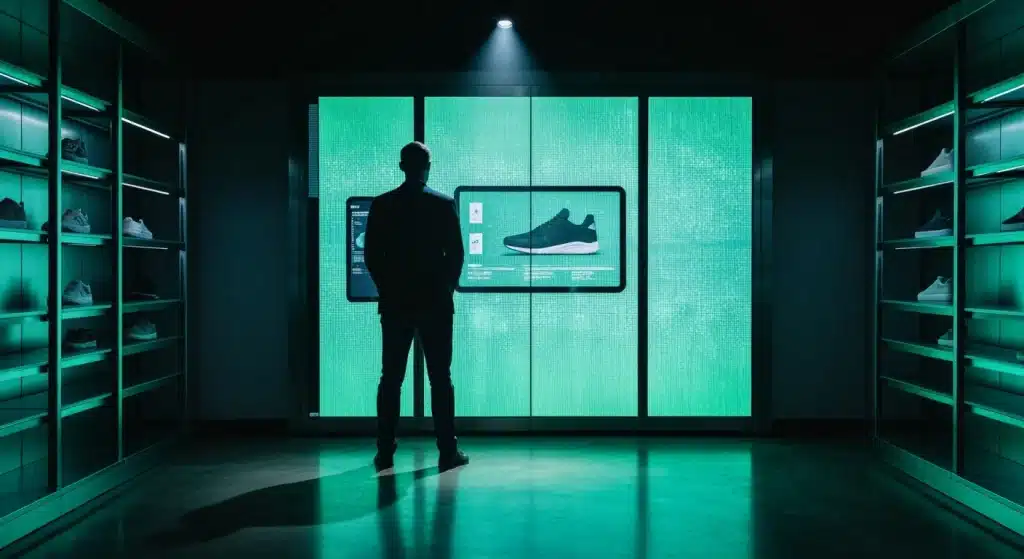
The traditional brand playbook is officially obsolete. For decades, building a brand was a game of repetition and consistency across siloed channels—a strong TV ad campaign, a recognizable logo, a predictable in-store experience. This model, built for a world that no longer exists, is now a liability. The lines between a physical shelf and a digital storefront have not just blurred; they have been completely erased by a new kind of consumer who navigates both worlds simultaneously and expects the brand to keep up.
This core shift isn’t driven by technology alone, but by a radical evolution in customer expectations. Today’s consumers are armed with historic access to information and a low tolerance for friction. They demand more than just a product; they seek personalized engagement, ethical transparency, and experiences that flow seamlessly from their phone screen to a physical location and back again. A brand that fails to deliver this fluid, context-aware journey is not just inconvenient—it’s irrelevant.
So, how does a modern business build a brand that can not only survive but thrive in this dynamic environment? This article moves beyond buzzwords to provide an operational blueprint for the new era of retail. We will deconstruct the three non-negotiable pillars of contemporary brand building: the integration of physical and digital into a single ‘phygital’ reality, the use of data to drive predictive personalization, and the critical role of authentic sustainability as a core business function, not a marketing gimmick. This is the new foundation for creating lasting brand equity.
Redefining Brand Equity in a Phygital World
Let’s be blunt: “Phygital” is an overused buzzword that masks a brutal operational reality. Most companies treat it as a marketing gimmick, a flimsy digital overlay on a decaying physical retail model. They install interactive mirrors and QR codes, expecting a revolution in customer engagement. They are fundamentally mistaken. True phygital integration isn’t about technology; it’s a complete re-architecting of how a brand creates and delivers value.
The old model of brand equity, built on consistency and repetition across siloed channels, is obsolete. Today, equity is earned through contextual fluidity—the ability of a brand’s identity to seamlessly transition between physical and digital states without friction. This demands more than a unified CRM. It requires a radical rethinking of the strategic blueprint for modern enterprises.
This is where most legacy brands stumble.
The Blurring Lines: Online to Offline Integration
The most forward-thinking brands no longer see a distinction between their app and their flagship store. Consider Nike’s House of Innovation stores, where the company’s mobile app becomes a remote control for the physical space. Customers can scan mannequins to see available sizes, send items directly to a fitting room, and complete their purchase without ever interacting with a cashier. This isn’t just convenient; it transforms the physical store from a simple transaction point into a dynamic brand experience hub.
What most people miss is that the data flows both ways. Dr. Evelyn Reed, a behavioral economist at Stanford, notes that “Nike isn’t just selling shoes; it’s collecting high-fidelity data on in-store customer behavior, which then informs its e-commerce personalization algorithms.” This continuous feedback loop creates a powerful competitive moat. The physical experience enhances the digital one, and vice versa, building an ecosystem that is incredibly difficult for competitors to replicate. It’s a masterclass in brand building for sustainable scaling.
Measuring Phygital Brand Impact
If your organization still measures success with disconnected metrics like foot traffic, online conversion rates, and basket size, you are flying blind. These KPIs are artifacts of a bygone era. How do you accurately attribute a sale to a customer who discovered a product on Instagram, tried it on in-store, and ultimately purchased it on their laptop a week later using a discount code from a podcast? The answer is you can’t—not with traditional measurement frameworks.
The data suggests—though not conclusively—that a new set of metrics is required. Think in terms of “blended customer lifetime value” or “journey friction score.” A recent report from Forrester Consulting found that brands with unified phygital analytics platforms achieve a 31% higher rate of repeat purchases within 90 days. Tracking these journeys is like mapping a complex public transit system; knowing how many people get on at one station and off at another is useless without understanding the transfers they made in between.
This challenge is particularly acute for growing companies attempting to balance physical expansion with digital maturity. Many of the advanced strategies for sustainable brand building now center on creating a single, unified data architecture from day one. Without it, your brand perception is left fragmented, and your equity will inevitably erode as customers encounter jarring inconsistencies between your digital promises and your physical reality.
Data-Driven Personalization: The Core of Future Retail Brands
Most executives believe that simply centralizing customer data into a single architecture is the finish line. This is a fatal error. That unified view is merely the foundation; the real operational challenge is activating that data to create brand experiences so deeply personal they feel predictive. Without this, your brand is just another vendor shouting into the void, indistinguishable from the competition.
The transition from generic brand messaging to individualized dialogue is no longer optional. A recent Forrester analysis revealed that companies using advanced personalization engines report a 17% higher customer lifetime value and a 21% improvement in conversion rates. The market has spoken. Generic is dead.
Leveraging AI for Hyper-Personalized Engagements
Artificial intelligence is the engine that transforms raw data into meaningful customer interactions. What most people miss is that its application goes far beyond simplistic chatbots or email automation. We are talking about using machine learning models to interpret subtle behavioral cues—hesitation on a product page, cursor movement patterns, or the time of day a user is most active—to dynamically alter the brand experience in real-time. This is not just personalization; it is sentience.
This approach treats the customer journey not as a pre-planned route but as an interactive, improvisational conversation. The brand learns and adapts with every click. Is this computationally expensive? Absolutely. But the cost of irrelevance is infinitely higher.
Predictive Analytics for Customer Needs
Standard recommendation engines are rearview mirrors, showing customers what they have already liked or what others have bought. It’s a low-value interaction. Predictive analytics, by contrast, functions like a GPS for customer intent, forecasting future needs before the customer has even articulated them. This system analyzes purchase cycles, browsing history, and external triggers (like seasonal changes or even local weather patterns) to anticipate the next logical purchase.
Think of it like a master mechanic who orders a specific gasket for your car weeks before you even notice a problem, simply by knowing the vehicle’s mileage and service history. That’s the level of foresight required. For B2B applications, this could mean proactively offering API integration support to a client whose usage data suggests they are about to hit a scaling threshold. This is the new standard for a strategic brand blueprint.
Dynamic Content and Product Recommendations
A static website is a relic. In a data-first retail model, every digital touchpoint should be a unique instance tailored to the individual user. This means the homepage hero image, the order of product categories, and even the copy in a promotional banner should be dynamically generated based on the user’s data profile. Amazon’s homepage, for example, is famously a unique configuration for virtually every visitor.
This requires a modular content system and an AI engine capable of making millions of micro-decisions per second. The goal is to make the user feel as if the entire brand was built specifically for them — because, in that moment, it was.
Ethical Data Use and Consumer Trust
Here is the paradox: the more data you collect to personalize, the greater the risk of destroying customer trust. A single misstep in data privacy can obliterate years of brand equity overnight. The undiscussed truth is that regulations like GDPR and CCPA are not the primary threat; the real danger is violating the unspoken social contract with your customer. They offer their data in exchange for value, not for exploitation.
Transparency is the only viable strategy. This means clear, human-readable privacy policies, easy opt-out processes, and an explicit declaration of what data is being collected and why. Using customer data ethically is not a compliance issue; it is a core component of building a sustainable and resilient brand for the long term.
Building this trust is non-negotiable.
A Founder’s Checklist for Data Integration
For founders looking to implement a data-driven personalization strategy, the task can seem monumental. focusing on a core set of data points and applications provides a clear path forward. This checklist represents the minimum viable stack for any startup serious about competing on experience.
- Unified Customer Profile: Integrate data from all touchpoints (website, mobile app, in-store, customer service) into a single, persistent ID for each customer. Do not proceed until this is complete.
- Behavioral Tracking: Go beyond page views. Track on-site search queries, product comparison behavior, cart abandonment reasons, and engagement with specific content types.
- Transactional History: Analyze not just what was bought, but also the frequency, average order value (AOV), and product affinities (i.e., which products are commonly purchased together).
- AI-Powered Segmentation: Move past basic demographic segments. Use machine learning to create dynamic “micro-segments” based on predicted behavior, such as “high-intent researchers” or “at-risk of churn.”
- Real-Time Recommendation Engine: Implement an engine that can process user behavior in the current session to adjust product recommendations on the fly. Many founders delay this — a critical error in their brand scaling strategy.
- Feedback and Sentiment Analysis: Systematically collect and analyze product reviews, support tickets, and social media mentions to feed qualitative insights back into your quantitative models.
Integrating these systems is not a one-time project but a continuous operational discipline. The brands that master this will not just participate in the future of retail; they will define it.
Consumers have a technical radar for disingenuous marketing. The backlash from a failed greenwashing campaign is often more damaging than having a neutral environmental stance to begin with.
— Dr. Elena Vance, Behavioral Economist
| Pillar | Old Approach | New Mandate | Key Metric |
|---|---|---|---|
| Customer Experience | Channel consistency (siloed) | Contextual fluidity (phygital) | Journey Friction Score |
| Data Strategy | Demographic segmentation | AI-driven predictive personalization | Blended Customer Lifetime Value |
| Brand Ethics | Marketing-led CSR initiatives | Radical supply chain transparency | Trust & Authenticity Score |
Sustainability and Authenticity: Non-Negotiables for Modern Consumers
Let’s be blunt: treating sustainability as a mere marketing initiative is a terminal diagnosis for a modern brand. The previous generation’s playbook of slapping a green leaf on packaging is now an open invitation for ridicule and revenue loss. Consumers, armed with more data than ever, are not just buying products; they are investing in value systems. Your brand’s ethical posture is no longer a footnote in an annual report—it’s a primary driver of purchase decisions.
Failing to integrate this reality is not just a missed opportunity; it’s a core misunderstanding of market dynamics. This shift demands a radical re-evaluation of how you communicate your brand’s core purpose, moving from broadcasted claims to demonstrated proof. The strategic blueprint for a modern enterprise must have ethics woven into its very fabric, not just painted on the surface. A failure here will cost you customers. It is that simple.
Building Trust Through Transparent Supply Chains
The concept of a “black box” supply chain is obsolete. Today, trust is built on a foundation of radical transparency. Consumers increasingly demand to know the origin of their products, the conditions under which they were made, and the environmental cost of their journey. A recent study from the Retail Futures Institute found that 68% of Millennial and Gen Z consumers are willing to pay a premium for products with fully traceable supply chains. This isn’t a niche preference; it’s the new standard.
Think of it like an open kitchen in a high-end restaurant. When customers can see the chefs working, the cleanliness of the station, and the quality of the ingredients, their confidence in the final dish skyrockets. Is your supply chain clean enough to put on display? If the answer is no, you have a much bigger problem than marketing. The operational and ethical integrity of your backend processes is now a frontline brand attribute.
The Pitfalls of Greenwashing: Authenticity Matters
The corporate graveyard is filled with brands that attempted to fake their ethical commitment. Greenwashing—the practice of making unsubstantiated or misleading claims about the environmental benefits of a product or company—is more than just a PR blunder. It is a profound betrayal of consumer trust that can inflict permanent damage. Once authenticity is compromised, rebuilding it is a monumental task, often requiring years of effort and investment in verifiable change.
The market’s response to inauthenticity is swift and severe. Dr. Elena Vance, a behavioral economist specializing in consumer trends, notes, “Consumers have a technical radar for disingenuous marketing. The backlash from a failed greenwashing campaign is often more damaging than having a neutral environmental stance to begin with.” This is a critical lesson for any founder focused on sustainable brand building strategies for long-term growth.
The difference between genuine commitment and shallow marketing is stark, as demonstrated by the diverging paths of different brand archetypes.
| Brand Archetype | Communication Strategy | Outcome |
|---|---|---|
| The Transparent Leader (e.g., Patagonia) | Radical transparency; publishing repair guides; detailed supply chain reports and admitting shortcomings. | Cult-like brand loyalty; commands premium prices; sets the standard for the entire industry. |
| The Greenwasher (e.g., various fast-fashion entities) | Launches a small “conscious collection” while the core business model remains unsustainable; uses vague terms like “eco-friendly” without certification. | Short-term PR gains followed by intense media scrutiny and consumer backlash; trust erosion and accusations of hypocrisy. |
Ultimately, a brand’s values are not what it says, but what it does. This principle is central to architecting a resilient brand that can withstand market volatility and shifting consumer expectations. The real challenge is not just communicating your values, but ensuring your operations, from sourcing to logistics, reflect them without compromise.
Agile Brand Frameworks for Dynamic Market Shifts
The traditional brand bible is a corporate relic. Founders who commission a hundred-page document detailing every conceivable use of their logo, only to lock it in a digital vault, are preparing for a market that no longer exists. This rigid approach to identity is a death sentence in a retail environment defined by relentless, high-velocity change. What most people miss is that brand building is no longer an act of permanent construction; it is an exercise in continuous, intelligent adaptation.
Static brands die.
An agile framework treats a brand not as a finished monument but as a living system. It prioritizes feedback loops, rapid iteration, and market responsiveness over dogmatic consistency. According to a recent report from Gartner, companies deploying iterative brand campaigns see a 28% higher engagement rate on new product launches compared to those with fixed annual strategies. But how does a lean startup actually implement this? It begins by defining a core, unshakeable brand purpose while allowing its expression—its voice, visuals, and channel strategy—to be fluid. This is the core of architecting resilience into your brand’s DNA from day one.
This means your marketing team should operate more like a software development squad, using sprints to test messaging and deploying A/B tests on everything from ad creative to packaging. The goal is to build a system of constant learning, where consumer behavior data directly informs the next micro-adjustment in brand communication. This isn’t chaos; it’s a disciplined blueprint for modern enterprises that are built to last. Many startups, confuse this flexibility with a lack of direction—a critical error that dilutes equity.
The real challenge isn’t adopting agile tactics but maintaining that nimbleness as you grow. The very processes that enable advanced strategies for sustainable growth can introduce the bureaucracy that strangles the adaptability that got you there in the first place.
The Ecosystem Approach: Partnerships and Collaborative Branding
The lone-wolf mentality in brand building is officially obsolete. Believing your brand can achieve market dominance in isolation is not a sign of strength; it’s a fatal miscalculation. The future of retail isn’t about building a fortress but about cultivating a thriving ecosystem. Brands that refuse to engage in collaborative branding are actively choosing to limit their own reach and relevance.
Success is no longer measured by what you own, but by what you can access. A recent Forrester analysis suggests that brands participating in integrated retail ecosystems report a 47% higher customer lifetime value compared to their siloed counterparts. Why? Because partnerships unlock shared data, new audiences, and enriched customer experiences that are impossible to generate alone. Designing these collaborations requires more than a handshake; it demands a strategic blueprint for brand building that aligns incentives and protects brand equity for all parties involved.
Consider the partnership between Spotify and Starbucks, which integrated their loyalty programs to offer tangible value to a shared customer base. This wasn’t just co-branded advertising; it was a deep operational integration that enhanced the daily rituals of millions. That kind of thinking is primary for sustainable startup scaling. The underrated factor here is the trust transfer—a customer’s positive association with one brand immediately extends to the other.
A brand operating alone is like a chef trying to cook a gourmet meal with only salt.
The real challenge isn’t finding potential partners; it’s identifying the right ones and executing a smooth integration without diluting your core identity. Are their operational values compatible with yours? What does the data-sharing agreement actually look like? Answering these questions is central to deploying advanced brand building strategies and ensuring your brand doesn’t just survive, but thrives in a connected marketplace.
The Next Frontier: From Predictive to Prescriptive Branding
Mastering phygital integration, data personalization, and authentic sustainability is no longer a forward-thinking strategy—it is the current cost of entry. The brands that successfully weave these elements into their operational fabric will dominate the next decade. But what lies beyond this new standard? The next true disruption will emerge as brands shift from a predictive model to a prescriptive one.
Imagine a brand that doesn’t just anticipate your needs but helps you discover and articulate them, guiding you toward better outcomes before you’ve even defined the problem. This requires a level of data synthesis and ethical consideration that few are prepared for. As brands gain the power to not only reflect but also shape consumer intent, the most critical question will no longer be ‘What do our customers want?’ but rather, ‘What should we help them become?’ The answer will define the next generation of iconic brands.
Frequently Asked Questions
How does the ‘phygital’ trend impact traditional brand building principles?
The ‘phygital’ trend fundamentally shifts brand building from channel consistency to contextual fluidity. Instead of just repeating a message, brands must create a fluid, interconnected experience where the digital and physical worlds enhance each other. This requires a unified data architecture to ensure a customer’s journey is frictionless, whether they are in-app or in-store.
What are the most effective metrics for measuring brand equity in a digital-first retail environment?
Traditional metrics like foot traffic and online conversion rates are no longer sufficient. Effective measurement requires blended KPIs that capture the entire customer journey, such as ‘blended customer lifetime value’ and ‘journey friction score.’ These metrics help attribute value across multiple touchpoints, providing a more accurate picture of brand equity.
How can small businesses and startups compete with large retailers in data-driven personalization?
Startups can compete not on the volume of data, but on its quality and agility. By implementing a unified customer data profile from day one, they can avoid the data silos that plague larger, legacy companies. Focusing on niche behavioral insights and real-time recommendation engines allows them to create deeply personal experiences for a specific audience.
What are the biggest risks associated with inauthentic sustainability claims for a brand?
The primary risk of ‘greenwashing’ is the catastrophic and often permanent erosion of consumer trust. Modern consumers can easily detect inauthenticity, and the resulting backlash can be more damaging to brand equity than having no sustainability stance at all. Rebuilding that broken trust is a monumental challenge that can take years and significant investment.
How often should a brand’s core messaging be re-evaluated in the current retail climate?
A brand’s core purpose and values should remain stable as a long-term anchor. its tactical messaging and execution must be continuously evaluated and adapted in near real-time. Instead of periodic reviews, brands should use agile frameworks that allow for constant adjustment based on performance data, market trends, and consumer sentiment.