Agile Methodologies: Boost Project Delivery Speed by 30% in US Operations by 2026

In today’s fast-paced business landscape, the ability to deliver projects swiftly and efficiently is no longer a competitive advantage – it’s a fundamental necessity. For US operations, the push to enhance productivity and accelerate time-to-market is particularly pronounced. This article delves into the strategic imperative of implementing Agile Methodologies to boost project delivery speed by an ambitious 30% in US operations by 2026. We will explore the core tenets of Agile, its profound benefits, the practical steps for successful adoption, and how to navigate common challenges to achieve this transformative goal.
The global market demands agility, responsiveness, and continuous innovation. Traditional project management methodologies, while having their merits, often struggle to keep pace with rapid market changes and evolving customer expectations. Agile, on the other hand, embraces change, fosters collaboration, and prioritizes iterative development, making it an ideal framework for organizations striving for accelerated delivery and sustained growth. The goal of a 30% increase in project delivery speed by 2026 is ambitious but entirely achievable with a well-planned and executed Agile transformation.
Understanding Agile Methodologies: The Foundation for Speed
Before embarking on an Agile transformation, it’s crucial to grasp the fundamental principles that underpin Agile Methodologies. At its heart, Agile is a set of values and principles outlined in the Agile Manifesto, emphasizing:
- Individuals and interactions over processes and tools
- Working software over comprehensive documentation
- Customer collaboration over contract negotiation
- Responding to change over following a plan
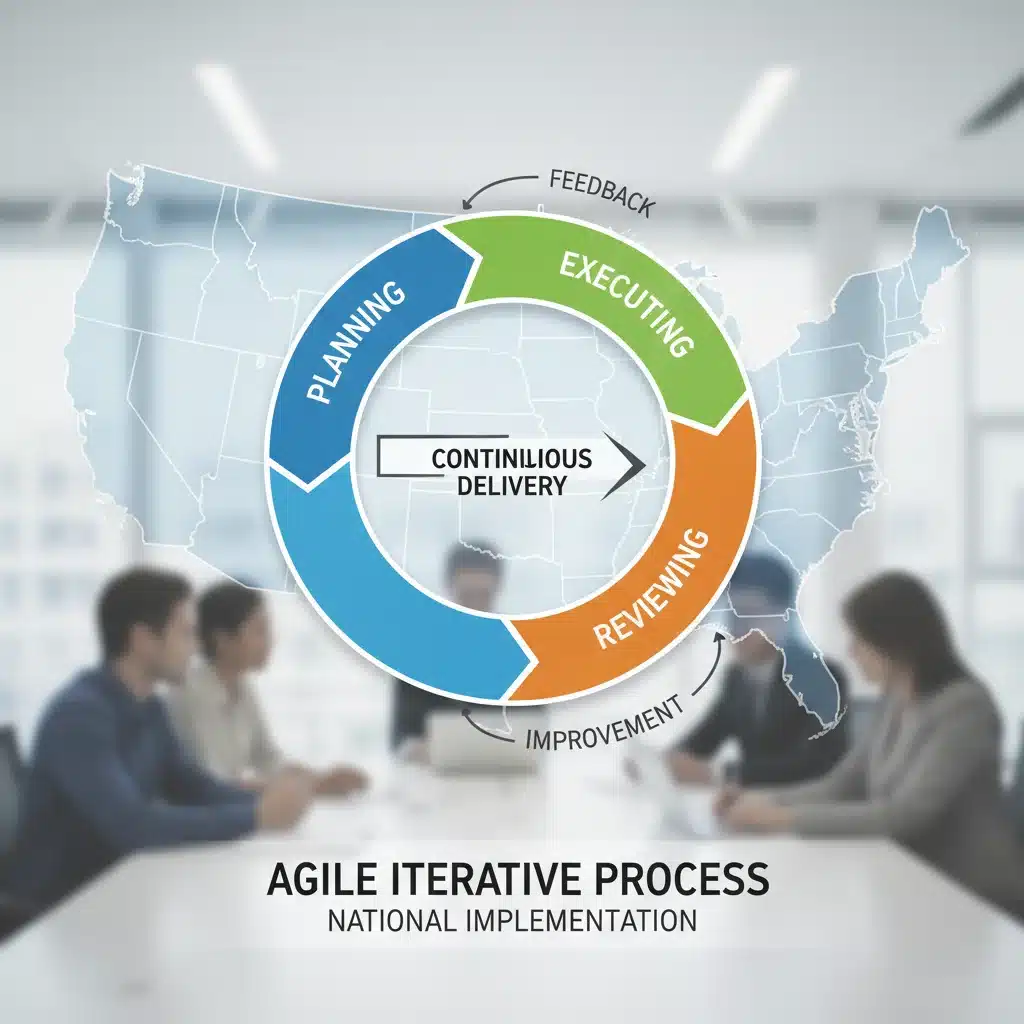
These values translate into practices that promote flexibility, continuous improvement, and customer-centricity. Unlike the linear, sequential approach of Waterfall, Agile breaks down projects into smaller, manageable iterations or ‘sprints.’ Each sprint typically lasts 1-4 weeks and results in a potentially shippable increment of the product. This iterative nature allows for early and frequent feedback, enabling teams to adapt to changes quickly and deliver value incrementally.
Key Agile Frameworks
While Agile is a broad philosophy, several frameworks provide specific guidelines for its implementation:
- Scrum: The most popular Agile framework, Scrum is characterized by time-boxed sprints, daily stand-up meetings (Scrums), sprint reviews, and sprint retrospectives. It defines specific roles like Product Owner, Scrum Master, and Development Team. Scrum is highly effective for complex projects where requirements are likely to evolve.
- Kanban: Focusing on visualizing workflow, limiting work-in-progress (WIP), and maximizing efficiency, Kanban is ideal for processes with continuous flow and varying priorities. It uses a Kanban board to track tasks through different stages.
- Lean Software Development: Derived from Lean manufacturing principles, Lean Agile aims to eliminate waste, amplify learning, decide as late as possible, deliver as fast as possible, empower the team, build integrity in, and see the whole.
- Extreme Programming (XP): XP emphasizes technical practices like pair programming, test-driven development (TDD), continuous integration, and frequent releases to improve software quality and responsiveness to changing customer requirements.
Choosing the right framework, or a hybrid approach, depends on the specific needs, culture, and goals of your US operations. The ultimate aim is to foster a culture of continuous delivery and adaptation, which is paramount for boosting Agile Project Delivery speed.
The Business Case for Agile: Why Speed Matters in US Operations
The target of a 30% increase in project delivery speed by 2026 is ambitious but grounded in significant business benefits. For US operations, enhanced delivery speed translates directly into a multitude of competitive advantages:
Faster Time-to-Market
In competitive markets, being the first to market with a new product or feature can capture significant market share and establish brand leadership. Agile’s iterative approach allows for faster release cycles, meaning new functionalities can reach customers sooner, providing immediate value and gathering crucial feedback for subsequent iterations. This rapid feedback loop is a cornerstone of boosting Agile Project Delivery.
Increased Customer Satisfaction
By involving customers throughout the development process and delivering working increments frequently, Agile ensures that the final product closely aligns with customer needs and expectations. This collaborative approach leads to higher customer satisfaction and loyalty, as customers feel heard and see tangible progress regularly.
Higher Quality Products
Agile promotes continuous testing and integration, identifying and addressing defects early in the development cycle. This proactive approach significantly reduces the cost and effort associated with fixing bugs later, ultimately leading to higher quality and more robust products. The focus on quality directly contributes to the efficiency of Agile Project Delivery.
Greater Flexibility and Adaptability
The business environment is constantly evolving. New technologies emerge, market trends shift, and customer preferences change. Agile’s inherent flexibility allows teams to respond quickly to these changes, pivot strategies, and incorporate new requirements without derailing the entire project. This adaptability is crucial for long-term success in dynamic US markets.
Improved Team Morale and Productivity
Agile empowers self-organizing teams, giving them autonomy and ownership over their work. This fosters a sense of purpose, boosts morale, and leads to greater productivity. Cross-functional teams working collaboratively also enhance knowledge sharing and skill development, further contributing to efficient Agile Project Delivery.
Reduced Project Risk
By breaking down large projects into smaller, manageable iterations, Agile reduces the overall project risk. Potential issues are identified and addressed early, preventing them from escalating into major problems. This incremental approach allows for course correction and minimizes the impact of unforeseen challenges.
Strategic Implementation: Achieving the 30% Boost in US Operations
Achieving a 30% boost in Agile Project Delivery speed by 2026 requires a strategic and systematic approach. It’s not merely about adopting a new framework; it’s about fostering a cultural shift within the organization. Here are key steps for successful implementation in US operations:
1. Leadership Buy-in and Sponsorship
Any significant organizational change, especially one as transformative as Agile adoption, requires strong leadership buy-in and continuous sponsorship. Leaders must champion the Agile vision, communicate its benefits, and provide the necessary resources and support. Without this top-down commitment, efforts to implement Agile may falter.
2. Start Small and Scale Gradually
Instead of attempting a big-bang Agile transformation across the entire organization, start with a pilot project or a few small teams. This allows the organization to learn, adapt, and refine its Agile processes in a controlled environment. Once successful patterns emerge, gradually scale Agile across more teams and departments. This incremental approach minimizes disruption and builds confidence.
3. Invest in Training and Coaching
Agile requires a different mindset and skillset. Comprehensive training and ongoing coaching are essential for teams, product owners, and Scrum Masters. This includes understanding Agile principles, specific framework practices (e.g., Scrum events, Kanban boards), and soft skills like communication, collaboration, and conflict resolution. External Agile coaches can provide invaluable guidance during the initial phases.
4. Foster a Culture of Transparency and Collaboration
Agile thrives on transparency. Information should flow freely within and between teams. Tools like shared dashboards, visible backlogs, and daily stand-ups promote this transparency. Collaboration is equally crucial, encouraging cross-functional teams to work together, share knowledge, and collectively solve problems. This collaborative environment is key to accelerating Agile Project Delivery.
5. Empower Self-Organizing Teams
Agile teams are most effective when they are self-organizing and self-managing. While leaders set the vision and priorities, teams should have the autonomy to decide how best to achieve those goals. This empowerment fosters ownership, innovation, and ultimately, faster delivery. Trusting teams to make decisions is a critical component of successful Agile Project Delivery.
6. Embrace Continuous Improvement (Retrospectives)
One of Agile’s most powerful mechanisms for continuous improvement is the sprint retrospective. After each sprint, teams reflect on what went well, what could be improved, and what actions they will take in the next sprint. This iterative feedback loop is vital for optimizing processes, resolving impediments, and steadily increasing Agile Project Delivery speed over time.
7. Implement Appropriate Tools and Technologies
While Agile emphasizes individuals and interactions over tools, the right tools can significantly enhance efficiency. Project management software (e.g., Jira, Asana, Trello), collaboration platforms (e.g., Slack, Microsoft Teams), and continuous integration/continuous delivery (CI/CD) pipelines can streamline workflows, automate repetitive tasks, and improve communication. These tools support and amplify the benefits of Agile Project Delivery.
8. Define Clear Metrics and Track Progress
To achieve a 30% boost, it’s essential to define clear, measurable metrics and consistently track progress. Key performance indicators (KPIs) might include:
- Cycle Time/Lead Time: The time it takes for a task to move from start to finish.
- Velocity: The amount of work a team can complete in a sprint.
- Defect Density: The number of defects found per unit of code or functionality.
- Customer Satisfaction Scores: Measured through surveys or direct feedback.
- Release Frequency: How often new features or products are deployed.
Regularly reviewing these metrics allows organizations to identify bottlenecks, celebrate successes, and make data-driven decisions to further optimize Agile Project Delivery.
Anticipating and Overcoming Challenges in US Agile Adoption
While the benefits of Agile are compelling, its implementation is not without challenges, especially within the context of US operations. Addressing these proactively is crucial for achieving the 30% delivery speed target.
1. Resistance to Change
People are naturally resistant to change. Employees accustomed to traditional methodologies may find the shift to Agile uncomfortable or even threatening. Overcome this by clearly communicating the ‘why’ behind the change, providing adequate training, involving employees in the process, and celebrating early successes to build momentum. Emphasize how Agile Project Delivery benefits everyone.
2. Lack of Understanding or Misapplication of Agile Principles
Some organizations may adopt Agile terminology without fully grasping its underlying principles, leading to ‘pseudo-Agile’ where the benefits are not realized. This often manifests as rigid adherence to ceremonies without understanding their purpose. Continuous education, coaching, and a focus on the Agile Manifesto’s values can help prevent this. True Agile Project Delivery requires deep understanding.
3. Siloed Organizational Structures
Traditional hierarchical and siloed structures can hinder cross-functional collaboration, a cornerstone of Agile. Breaking down these silos requires intentional effort, including reorganizing teams, fostering shared goals, and promoting communication across departments. Agile Project Delivery thrives in a collaborative, integrated environment.
4. Insufficient Product Owner Role Definition
The Product Owner is a critical role in Scrum, responsible for defining and prioritizing the product backlog. A poorly defined or under-resourced Product Owner can lead to unclear requirements, shifting priorities, and ultimately, slower delivery. Ensure Product Owners are empowered, have a deep understanding of customer needs, and are available to the team. This clarity is vital for effective Agile Project Delivery.
5. Over-Commitment and Unrealistic Expectations
Teams new to Agile may over-commit in sprints, leading to burnout and missed targets. It’s crucial to empower teams to estimate their capacity realistically and protect them from external pressure to take on too much. Focusing on sustainable pace is more important than short-term bursts of activity for consistent Agile Project Delivery.
6. Scaling Agile in Large Enterprises
Implementing Agile across a large enterprise with multiple teams, complex dependencies, and legacy systems presents unique challenges. Frameworks like SAFe (Scaled Agile Framework), LeSS (Large-Scale Scrum), or Disciplined Agile (DA) can provide guidance, but require careful planning and adaptation to the specific organizational context. Scaling Agile Project Delivery effectively is a complex undertaking.
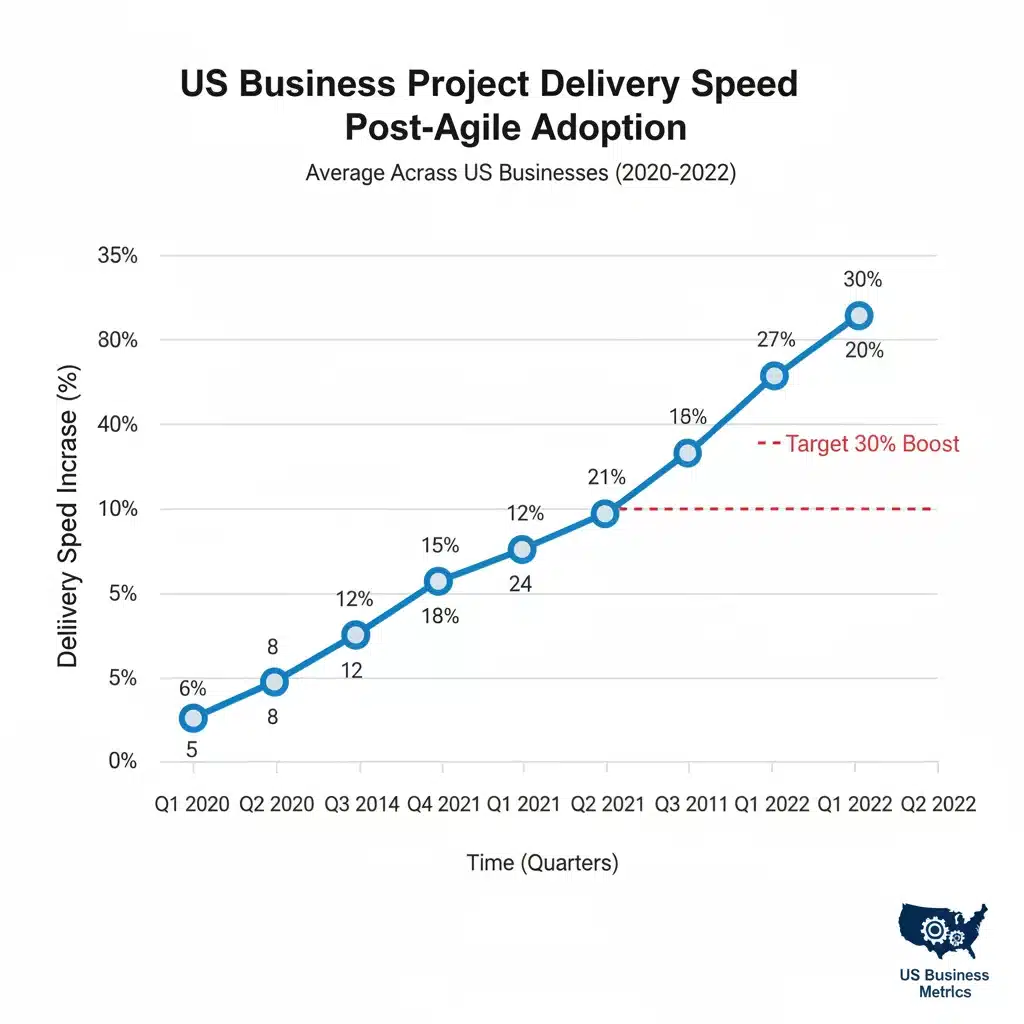
Measuring Success: Tracking the 30% Boost in Delivery Speed
To confirm the 30% boost in Agile Project Delivery speed, robust measurement is indispensable. Beyond the KPIs mentioned earlier, consider:
- Baseline Measurement: Before implementing Agile, establish clear baselines for project delivery speed using existing metrics (e.g., average time to complete a feature, number of releases per quarter).
- Regular Reporting: Implement a system for regular reporting on Agile metrics, making the data visible to all stakeholders. This transparency helps in identifying trends and areas for improvement.
- Qualitative Feedback: Supplement quantitative data with qualitative feedback from teams, customers, and stakeholders. Surveys, interviews, and direct observations can provide valuable insights into the effectiveness of Agile practices.
- Benchmarking: Compare your organization’s Agile performance against industry benchmarks or similar organizations to gain perspective on your progress and identify best practices.
The 30% target for Agile Project Delivery speed is a significant milestone, and tracking progress towards it should be an ongoing, iterative process, much like Agile itself.
The Future of Agile in US Operations: Beyond 2026
Achieving a 30% boost in Agile Project Delivery speed by 2026 is not an endpoint but a stepping stone towards continuous improvement. The future of Agile in US operations will likely involve:
- Advanced AI and Automation Integration: Leveraging AI for predictive analytics in project management, automating repetitive tasks, and enhancing decision-making will further accelerate delivery.
- DevOps Maturity: Deeper integration of development and operations (DevOps) practices will create seamless pipelines from code commit to deployment, minimizing friction and maximizing speed.
- Enterprise-Wide Agility: Extending Agile principles beyond IT to other business functions like marketing, HR, and finance, creating a truly agile enterprise that can respond holistically to market demands.
- Focus on Value Stream Management: A shift towards optimizing the entire value stream, from idea conception to customer delivery, ensuring every step adds value and eliminates waste.
- Enhanced Remote and Hybrid Agile: Further refining practices and tools to support effective Agile collaboration in remote and hybrid work environments, which have become a staple in US operations.
The journey to enhanced Agile Project Delivery is continuous, driven by a commitment to learning, adapting, and innovating. By embracing these future trends, US operations can not only sustain their accelerated delivery but continue to push the boundaries of efficiency and innovation.
Conclusion: Unleashing the Power of Agile for US Business Growth
The ambitious goal of boosting project delivery speed by 30% in US operations by 2026 through Agile Methodologies is not just a target; it’s a strategic imperative for sustained competitive advantage and business growth. By understanding the core principles of Agile, embracing its iterative and collaborative nature, and strategically implementing its frameworks, organizations can unlock unprecedented levels of efficiency and responsiveness.
The path to a 30% increase involves strong leadership, dedicated training, cultural transformation, and a relentless focus on continuous improvement. While challenges will inevitably arise, proactive planning and a commitment to the Agile mindset will enable US businesses to navigate these hurdles successfully. The investment in Agile Project Delivery is an investment in faster time-to-market, higher quality products, increased customer satisfaction, and ultimately, a more resilient and innovative organization prepared for the future. Embrace Agile, and watch your US operations accelerate towards unparalleled success.