Gig Economy’s Impact on US Retail Logistics: 15% Cost Reduction Goal
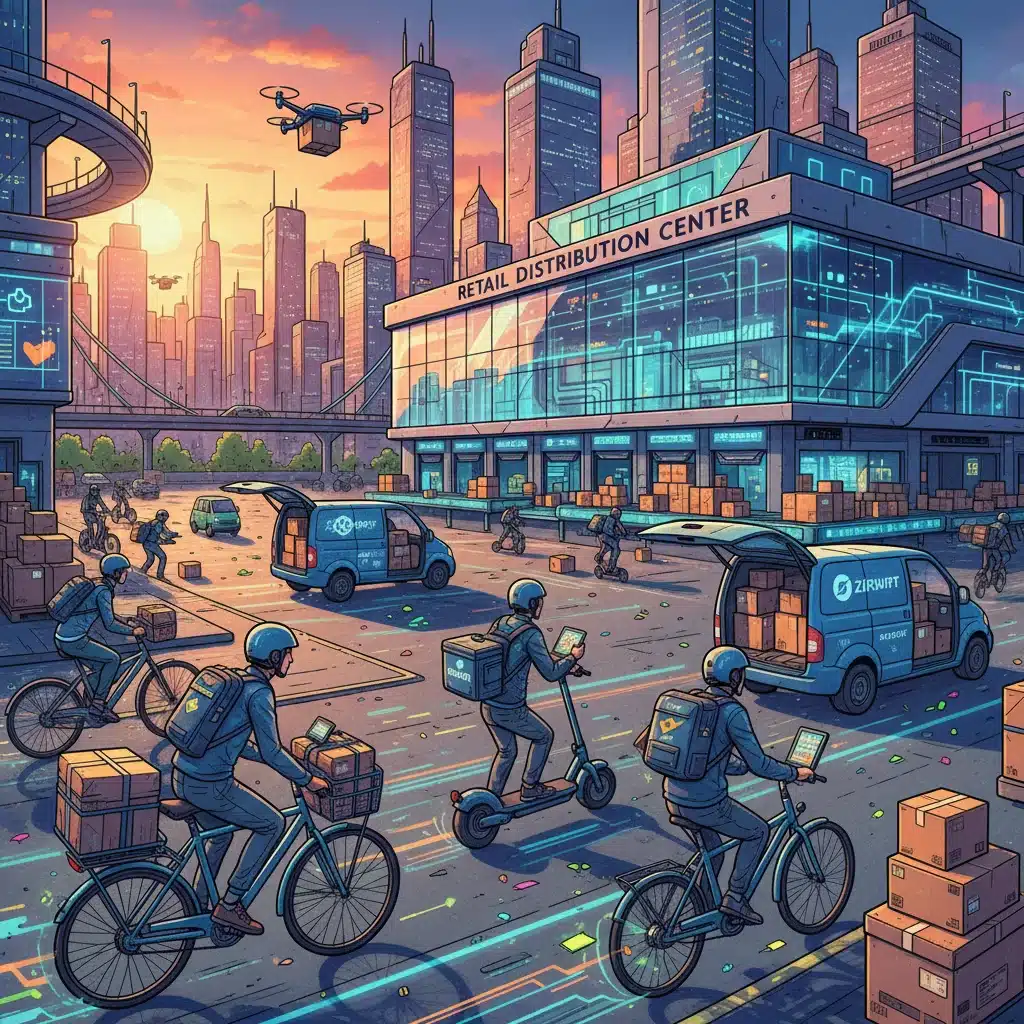
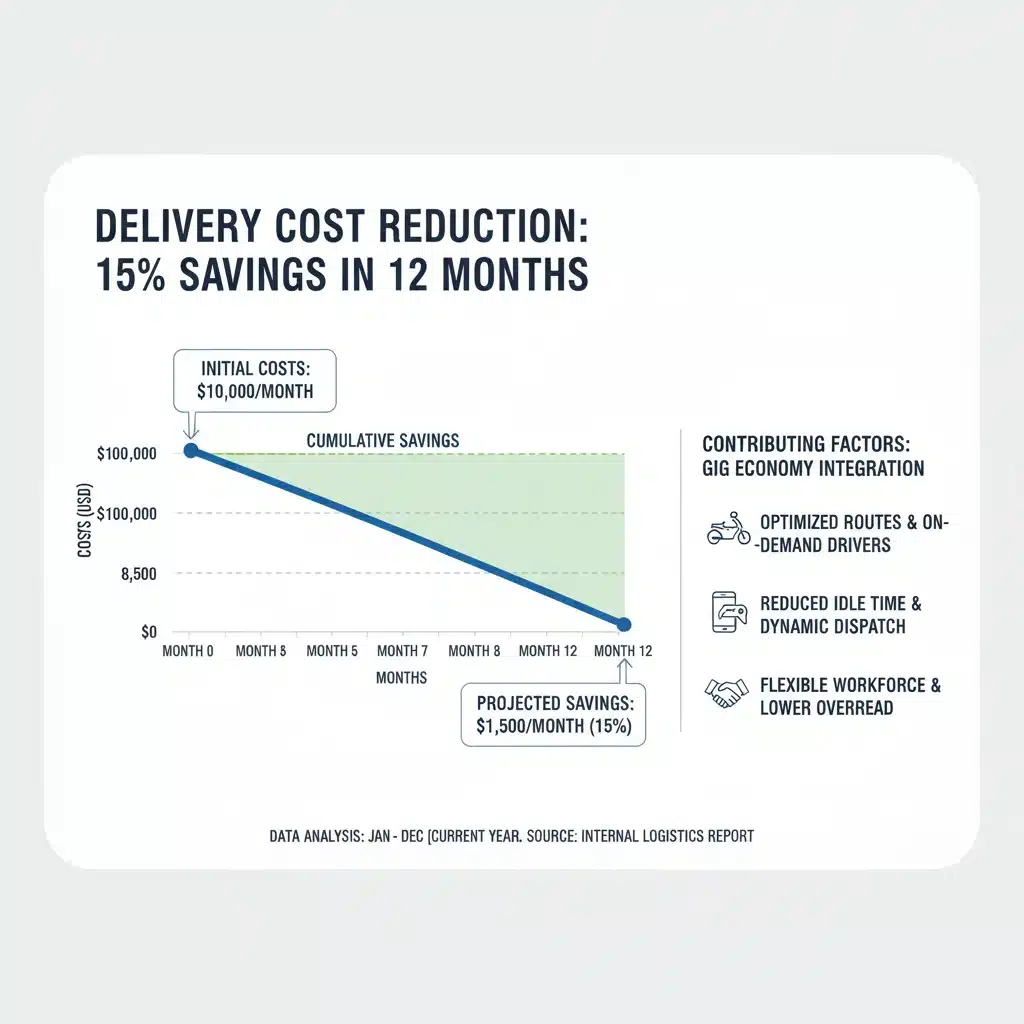
The landscape of retail is in constant flux, driven by technological advancements, evolving consumer expectations, and the relentless pursuit of efficiency. In the United States, one of the most significant disruptors in recent years has been the ascendance of the gig economy logistics model, particularly its profound impact on retail logistics. This dynamic shift offers an unprecedented opportunity for businesses to not only adapt but to thrive, specifically by optimizing delivery costs. Our ambitious goal for retailers in the US is to achieve a remarkable 15% reduction in delivery expenses within the next 12 months, a target made increasingly attainable through strategic integration of gig economy principles.
Retail logistics, traditionally a capital-intensive and often rigid operation, is undergoing a transformation. The last-mile delivery, the final leg of the supply chain journey where goods reach the customer’s doorstep, has historically been the most expensive and complex part. It’s here that the gig economy offers its most compelling value proposition. By leveraging a flexible, on-demand workforce, retailers can circumvent many of the fixed costs associated with traditional delivery methods, such as maintaining large fleets, managing full-time drivers, and operating extensive distribution networks.
This article will delve deep into the mechanisms through which the gig economy can revolutionize US retail logistics. We will explore the tangible benefits, dissect the challenges that need to be navigated, and provide actionable strategies for retailers aiming to significantly cut their delivery costs. Our focus remains steadfast on the 15% reduction target, demonstrating how a well-executed gig economy strategy is not just a trend but a critical business imperative for sustained profitability and customer satisfaction in the modern retail environment.
Understanding the Gig Economy in Retail Logistics
Before we dive into cost optimization, it’s crucial to define what the gig economy logistics entails in the context of retail. At its core, the gig economy refers to a labor market characterized by the prevalence of short-term contracts or freelance work, as opposed to permanent jobs. When applied to logistics, this translates to a system where retailers utilize independent contractors, often referred to as ‘gig workers’ or ‘freelance drivers,’ to handle delivery tasks. These workers typically use their own vehicles and are compensated per delivery or for a specific period, offering unparalleled flexibility and scalability.
The Evolution of Last-Mile Delivery
The demand for faster and more flexible delivery options has skyrocketed, largely fueled by the exponential growth of e-commerce. Consumers now expect same-day or even hourly deliveries, a stark contrast to the multi-day shipping windows that were once standard. Traditional delivery models, with their fixed routes and schedules, often struggle to meet these dynamic demands without incurring exorbitant costs. This is where the gig economy steps in as a game-changer.
The shift towards gig economy logistics is not merely about cost-cutting; it’s about agility. Retailers can scale their delivery capacity up or down almost instantly, responding to peak seasons, unexpected surges in demand, or even localized events without the overhead of maintaining a redundant workforce or fleet during slower periods. This inherent flexibility is a powerful tool in managing operational expenses and improving service levels.
Key Characteristics of Gig Logistics for Retailers
- On-Demand Workforce: Access to a large pool of independent drivers ready to take on tasks as needed.
- Variable Costs: Transition from fixed labor and fleet costs to a pay-per-delivery model, directly linking expenses to actual delivery volume.
- Technological Integration: Reliance on sophisticated platforms and mobile apps for dispatching, tracking, and managing deliveries.
- Decentralized Operations: Less reliance on centralized depots, enabling deliveries from multiple points, including individual store locations.
- Customer Experience Enhancement: Potential for faster delivery times and more flexible delivery windows, directly improving customer satisfaction.
By understanding these fundamental aspects, retailers can begin to envision how integrating gig economy logistics can be a strategic move, not just a tactical adjustment, towards achieving their ambitious cost reduction goals.
The 15% Cost Reduction Challenge: How Gig Economy Logistics Delivers
Achieving a 15% reduction in delivery costs within 12 months is an aggressive but entirely feasible goal for many US retailers, provided they adopt a well-structured gig economy strategy. This section will break down the specific avenues through which the gig economy contributes to such significant savings.
Eliminating Fixed Overhead Costs
One of the most substantial benefits of gig economy logistics is the transition from fixed to variable costs. Traditional delivery models require significant upfront and ongoing investments:
- Fleet Maintenance: Purchasing, leasing, fueling, and maintaining a fleet of delivery vehicles.
- Driver Salaries and Benefits: Full-time employee wages, health insurance, retirement plans, and other benefits.
- Insurance and Liabilities: Comprehensive commercial insurance for vehicles and employees.
- Facility Costs: Warehousing and depot expenses for vehicle storage and package sorting.
By contrast, gig workers typically use their own vehicles and are responsible for their own expenses and insurance. Retailers pay for the service of delivery, not the underlying infrastructure or employment costs. This drastically reduces fixed overhead, allowing for immediate and substantial savings, especially for businesses with fluctuating delivery volumes.
Optimizing Last-Mile Efficiency
The last mile is notoriously inefficient and expensive. Gig economy platforms are designed to optimize this segment:
- Dynamic Routing: Advanced algorithms on gig platforms can dynamically route drivers, taking into account real-time traffic, delivery density, and customer locations. This minimizes fuel consumption and driver time.
- Batching Deliveries: Platforms can efficiently group multiple deliveries in close proximity, allowing a single driver to complete several tasks in one trip, maximizing efficiency and reducing per-package cost.
- Proximity Dispatching: Orders can be dispatched to the closest available gig worker, significantly cutting down travel time from the pickup point to the customer. This is particularly effective for same-day or urgent deliveries from local stores.
These efficiencies directly translate into lower operational costs per delivery, making the 15% reduction target more attainable.
Scalability and Flexibility
Retail demand is rarely constant. Peak seasons (holidays, sales events) can see delivery volumes skyrocket, while off-peak periods can be significantly slower. Traditional logistics struggles with this variability, leading to either underutilized resources during slow times or insufficient capacity during peak times.
Gig economy logistics offers inherent scalability. Retailers can tap into a larger pool of drivers when demand is high and scale back during slower periods, paying only for the capacity they use. This eliminates the costs associated with maintaining excess capacity or paying overtime to a fixed workforce during surges. The ability to flex capacity dynamically is a powerful cost-saving lever, preventing wasted resources and ensuring that delivery operations remain lean and responsive.
Reduced Infrastructure Investment
Setting up and maintaining a proprietary delivery infrastructure, including warehouses, sorting centers, and vehicle depots, requires massive capital investment. By partnering with gig economy platforms, retailers can offload much of this burden. Gig platforms often have established networks of drivers and sophisticated technological infrastructure, allowing retailers to leverage these existing assets without making their own substantial investments.
This reduction in capital expenditure frees up resources that can be allocated to core retail competencies, product development, or marketing, further enhancing overall business profitability.
Strategies for Implementing Gig Economy Logistics for Maximum Savings
To truly unlock the 15% cost reduction potential, retailers must adopt a strategic approach to integrating gig economy logistics. It’s not simply about hiring gig workers; it’s about optimizing the entire delivery ecosystem.
1. Hybrid Delivery Models
Few retailers will fully abandon traditional logistics overnight. A hybrid model often proves most effective. This involves using a core fleet for planned, high-volume routes or specialized deliveries, while leveraging gig workers for:
- Peak Demand: Supplementing capacity during holidays, sales, or unexpected spikes.
- Same-Day/Express Deliveries: Meeting urgent customer requests that traditional routes cannot accommodate efficiently.
- Geographic Expansion: Reaching new areas without establishing permanent infrastructure.
- Returns: Efficiently handling customer returns, which can be a costly reverse logistics challenge.
By strategically allocating delivery tasks, retailers can ensure their most expensive assets (their own fleet) are used for their most efficient purposes, while gig workers fill the gaps and handle the variable demand.
2. Strategic Partnership with Gig Platforms
Choosing the right gig logistics partner is paramount. Retailers should evaluate platforms based on:
- Geographic Coverage: Does the platform operate in all target delivery areas?
- Driver Network Size and Quality: A large, reliable pool of drivers is essential.
- Technology Integration: Seamless API integration with existing order management and inventory systems is crucial for efficiency.
- Pricing Structure: Transparent and competitive pricing models that align with the 15% cost reduction goal.
- Customer Service and Support: Robust support for both retailers and customers.
- Insurance and Compliance: Ensuring the platform and its drivers meet all legal and insurance requirements.
A strong partnership can unlock advanced features like real-time tracking, proof of delivery, and customer communication tools, all contributing to a smoother, more cost-effective operation.
3. Optimizing In-Store Fulfillment for Gig Pickups
For many retailers, local stores can double as mini-distribution centers for gig economy logistics. This ‘ship-from-store’ model drastically reduces the distance for last-mile deliveries, leading to faster service and lower costs. To maximize this, retailers should:
- Streamline In-Store Picking: Implement efficient processes for store associates to quickly pick and pack online orders.
- Dedicated Pickup Zones: Create specific areas in stores for gig drivers to easily and quickly pick up orders, minimizing wait times.
- Inventory Accuracy: Ensure real-time, accurate inventory data across all store locations to prevent order cancellations or delays.
By treating stores as critical nodes in the gig delivery network, retailers can significantly enhance efficiency and customer satisfaction.
4. Data Analytics and Performance Monitoring
To achieve and sustain a 15% cost reduction, continuous monitoring and optimization are vital. Retailers should leverage data provided by gig platforms and their own systems to:
- Track Key Performance Indicators (KPIs): Monitor metrics like cost per delivery, delivery time, on-time delivery rate, and customer satisfaction.
- Identify Inefficiencies: Use data to pinpoint bottlenecks, inefficient routes, or areas where costs are higher than expected.
- Negotiate Better Rates: Armed with performance data and volume insights, retailers can negotiate more favorable terms with gig platforms.
- Forecast Demand: Better forecasting allows for more strategic allocation of gig resources, preventing both overspending and service failures.

Addressing Challenges and Mitigating Risks in Gig Logistics
While the benefits of gig economy logistics are clear, retailers must also be mindful of potential challenges and proactively implement strategies to mitigate risks. Overlooking these aspects could undermine the targeted 15% cost reduction.
Quality Control and Driver Reliability
One common concern is the consistency of service quality from independent contractors. Unlike employed drivers, gig workers are not directly managed, which can lead to variations in professionalism, adherence to delivery instructions, or customer interaction.
- Vetting Processes: Partner with gig platforms that have robust background checks and driver vetting processes.
- Rating Systems: Utilize and contribute to driver rating and feedback systems to ensure high-performing drivers are prioritized.
- Clear Instructions: Provide gig drivers with clear, concise, and easy-to-follow delivery instructions, including specific customer preferences.
- Training Modules: Some retailers offer short, optional training modules on brand standards or specific product handling to gig workers handling their deliveries.
Brand Representation
Gig drivers are often the only human touchpoint a customer has with a retailer during the delivery process. Their demeanor and efficiency directly reflect on the brand.
- Branded Packaging: Use consistent, high-quality branded packaging.
- Communication Protocols: Establish clear communication protocols for drivers, especially regarding customer interactions and issue resolution.
- Feedback Loops: Create channels for customer feedback specifically on the delivery experience to identify areas for improvement.
Legal and Regulatory Landscape
The legal status of gig workers is an evolving area, with ongoing debates and legislation regarding independent contractor classification versus employee status. This can impact benefits, wages, and liabilities.
- Stay Informed: Keep abreast of federal, state, and local regulations concerning gig workers.
- Partner with Compliant Platforms: Choose gig platforms that demonstrate a commitment to legal compliance and fair treatment of their drivers.
- Contractual Clarity: Ensure contracts with gig platforms clearly define responsibilities and liabilities.
Technology Dependence and Integration Issues
The efficiency of gig economy logistics heavily relies on seamless technology. Integration challenges or platform outages can disrupt operations.
- Robust API Integration: Invest in strong API connections between your order management system and the gig platform.
- Redundancy: Consider having relationships with multiple gig platforms to provide redundancy in case of issues with a primary partner.
- Testing: Thoroughly test all integrations before full deployment.
By proactively addressing these challenges, retailers can harness the power of the gig economy while safeguarding their brand reputation and operational stability, ensuring that the 15% cost reduction can be achieved sustainably.
The Future of US Retail Logistics with the Gig Economy
The integration of the gig economy logistics is not a temporary fix but a fundamental shift in how US retail logistics will operate moving forward. The trends indicate an even deeper embedding of this model into the core strategies of retailers.
Hyper-Personalized Delivery Experiences
As competition intensifies, consumers will demand not just speed, but also personalization. Gig workers, with their inherent flexibility, can facilitate:
- Scheduled Deliveries: Allowing customers to choose precise delivery windows.
- In-Home/In-Trunk Deliveries: Advanced options requiring trusted access.
- Returns at Pickup: Combining delivery with a return pickup for ultimate convenience.
These personalized services, often difficult and costly with traditional methods, become more feasible and cost-effective through dynamic gig networks, further enhancing customer loyalty and potentially driving repeat business.
Expansion Beyond Last-Mile
While last-mile delivery is the most prominent application, the gig economy’s principles are beginning to extend to other parts of the supply chain. We might see gig workers involved in:
- First-Mile Logistics: Picking up goods from suppliers or manufacturers.
- Micro-Fulfillment Centers: Managing inventory or preparing orders in smaller, localized hubs.
- Reverse Logistics: Handling returns and repairs more efficiently.
This broader application could unlock even greater efficiencies and cost savings across the entire retail supply chain.
Technological Advancements and AI Integration
The underlying technology supporting gig economy logistics will continue to evolve rapidly. Artificial intelligence (AI) and machine learning (ML) will play an even larger role in:
- Predictive Analytics: More accurately forecasting demand and optimizing driver allocation.
- Enhanced Routing: Real-time, highly granular route optimization considering even more variables.
- Automated Dispatch: Minimizing human intervention in assigning and managing deliveries.
- Fraud Detection: Improving security and reliability of the network.
These advancements will refine the efficiency of gig models, making the 15% cost reduction not just a one-time achievement but a continuous benchmark for improvement.
Sustainability and Green Logistics
As environmental concerns grow, the gig economy can contribute to more sustainable logistics. Many gig workers use fuel-efficient vehicles, bicycles, or even walk, especially in dense urban areas. Platforms can also incentivize environmentally friendly delivery methods.
- Optimized Routes: Reducing mileage and fuel consumption.
- Electric Vehicle Adoption: Encouraging gig workers to use EVs.
- Consolidated Deliveries: Reducing the number of trips for multiple packages.
This focus on sustainability not only benefits the planet but can also enhance a retailer’s brand image and appeal to eco-conscious consumers.
Conclusion: A Path to 15% Cost Savings with Gig Economy Logistics
The gig economy is undeniably a transformative force in US retail logistics, offering a clear and achievable pathway to significant cost reductions. The ambitious goal of optimizing delivery costs by 15% within the next 12 months is not merely aspirational but a strategic imperative for retailers facing intense competition and evolving consumer demands.
By judiciously leveraging the flexible, scalable, and technology-driven nature of gig economy logistics, retailers can dramatically reduce fixed overheads, enhance last-mile efficiency, and adapt to fluctuating market demands with unprecedented agility. While challenges related to quality control, brand representation, and regulatory compliance exist, these can be effectively managed through strategic partnerships, robust vetting processes, and continuous performance monitoring.
Looking ahead, the gig economy’s role in retail logistics is poised to expand further, driven by technological advancements, increasing consumer expectations for personalized services, and a growing emphasis on sustainability. Retailers who embrace this paradigm shift, integrate it thoughtfully into their existing operations, and commit to continuous optimization will not only achieve their 15% cost reduction target but will also build a more resilient, efficient, and customer-centric supply chain for the future. The time to act is now, to ensure your retail business remains competitive and profitable in this dynamic new era of delivery.