US Tech Startup Compliance: 2026 Operational Framework Guide

Ensuring Regulatory Compliance: A 2026 Operational Framework for US Tech Startups
The technological landscape is an ever-evolving frontier, marked by rapid innovation and disruptive ideas. For US tech startups, this dynamism brings immense opportunities but also presents a formidable challenge: navigating the intricate web of regulatory compliance. As we look towards 2026, the regulatory environment is set to become even more complex, with new laws and heightened enforcement impacting everything from data privacy to artificial intelligence governance. Establishing a robust operational framework for US Tech Compliance 2026 is not merely a legal obligation; it is a strategic imperative for sustainable growth, investor confidence, and market credibility.
The consequences of non-compliance can be severe, ranging from hefty fines and reputational damage to operational disruptions and even legal injunctions. For nascent startups, such setbacks can be existential. Therefore, proactive engagement with regulatory requirements, embedded within the very fabric of the company’s operations, is crucial. This comprehensive guide will delve into the essential components of an effective operational framework for US Tech Compliance 2026, offering actionable insights and strategies for tech startups to thrive in a regulated future.
The Evolving Regulatory Landscape: What’s New for US Tech in 2026?
Understanding the current and anticipated regulatory shifts is the first step in building a resilient compliance framework. The trend points towards increased scrutiny, broader scope, and higher penalties. Key areas of focus for US Tech Compliance 2026 include:
Data Privacy and Protection
While the European Union’s GDPR set a global precedent, the US has seen a patchwork of state-level data privacy laws emerge, with more expected by 2026. Beyond the California Consumer Privacy Act (CCPA) and its successor, the California Privacy Rights Act (CPRA), states like Virginia (VCDPA), Colorado (CPA), Utah (UCPA), and Connecticut (CTDPA) have enacted their own versions. The potential for a federal data privacy law remains a significant discussion, and even without one, the cumulative effect of state laws creates a labyrinth for startups operating nationwide.
- Expansion of Consumer Rights: Expect more states to grant consumers rights regarding access, deletion, correction, and portability of their personal data.
- Stricter Consent Requirements: The shift from implied consent to explicit, informed consent for certain data processing activities will likely continue to tighten.
- Data Minimization and Purpose Limitation: Regulators are increasingly emphasizing that companies should only collect data that is necessary for a specific purpose and not retain it longer than required.
- Cross-Border Data Transfers: For startups with international operations or user bases, navigating the complexities of data transfer mechanisms and ensuring adequacy will remain critical.
Cybersecurity Resilience
Cyber threats are growing in sophistication and frequency, making robust cybersecurity not just good practice but a regulatory mandate. Federal agencies like the National Institute of Standards and Technology (NIST) continue to update their frameworks, and sector-specific regulations (e.g., HIPAA for healthcare, GLBA for financial services) are becoming more stringent. The Securities and Exchange Commission (SEC) has also introduced new rules requiring public companies to disclose material cybersecurity incidents and manage cybersecurity risk.
- Incident Reporting Obligations: Expect more prescriptive requirements for reporting data breaches and cyber incidents within specific timeframes to regulatory bodies and affected individuals.
- Supply Chain Security: Regulators are increasingly holding companies accountable for the cybersecurity posture of their third-party vendors and supply chain partners.
- Proactive Risk Management: Emphasis will be placed on continuous monitoring, vulnerability assessments, and proactive measures to prevent attacks, rather than just reactive responses.
Artificial Intelligence (AI) Governance
The rapid advancement of AI technologies is prompting governments worldwide to consider regulatory frameworks. While the US has not yet adopted a comprehensive federal AI law akin to the EU’s AI Act, discussions and proposed guidelines are plentiful. States are also beginning to explore regulations concerning AI’s use in hiring, lending, and other sensitive areas. For US Tech Compliance 2026, startups leveraging AI must be aware of emerging principles around:
- Transparency and Explainability: The ability to understand how AI models make decisions, especially in critical applications, will be crucial.
- Fairness and Bias Mitigation: Regulations will likely address the potential for AI algorithms to perpetuate or amplify existing biases, leading to discriminatory outcomes.
- Accountability and Human Oversight: Establishing clear lines of responsibility for AI systems and ensuring human intervention capabilities will be paramount.
- Data Provenance and Quality: The quality and ethical sourcing of training data for AI models will come under increased scrutiny.
Consumer Protection and Deceptive Practices
The Federal Trade Commission (FTC) continues to be a vigilant enforcer of consumer protection laws, particularly concerning digital products and services. Misleading claims, dark patterns in user interfaces, and unfair business practices related to subscriptions, data usage, and advertising will remain high-priority areas. Startups must ensure their marketing, terms of service, and user experiences are transparent and fair.
Environmental, Social, and Governance (ESG) Reporting
While often associated with larger corporations, ESG considerations are increasingly impacting startups, particularly those seeking investment from ESG-focused funds. While not strictly regulatory in all aspects, emerging standards and investor expectations can create de facto compliance requirements, especially regarding data on environmental impact, labor practices, and corporate governance.
Building Your 2026 Operational Compliance Framework
An effective operational framework for US Tech Compliance 2026 is not a one-time project but an ongoing process that integrates compliance into the company’s culture and daily operations. Here are the core pillars:
1. Establish a Culture of Compliance
Compliance starts at the top. Leadership must champion a culture where regulatory adherence is seen as a core value, not just a burden. This involves:
- Leadership Commitment: The CEO and executive team must visibly support and allocate resources for compliance initiatives.
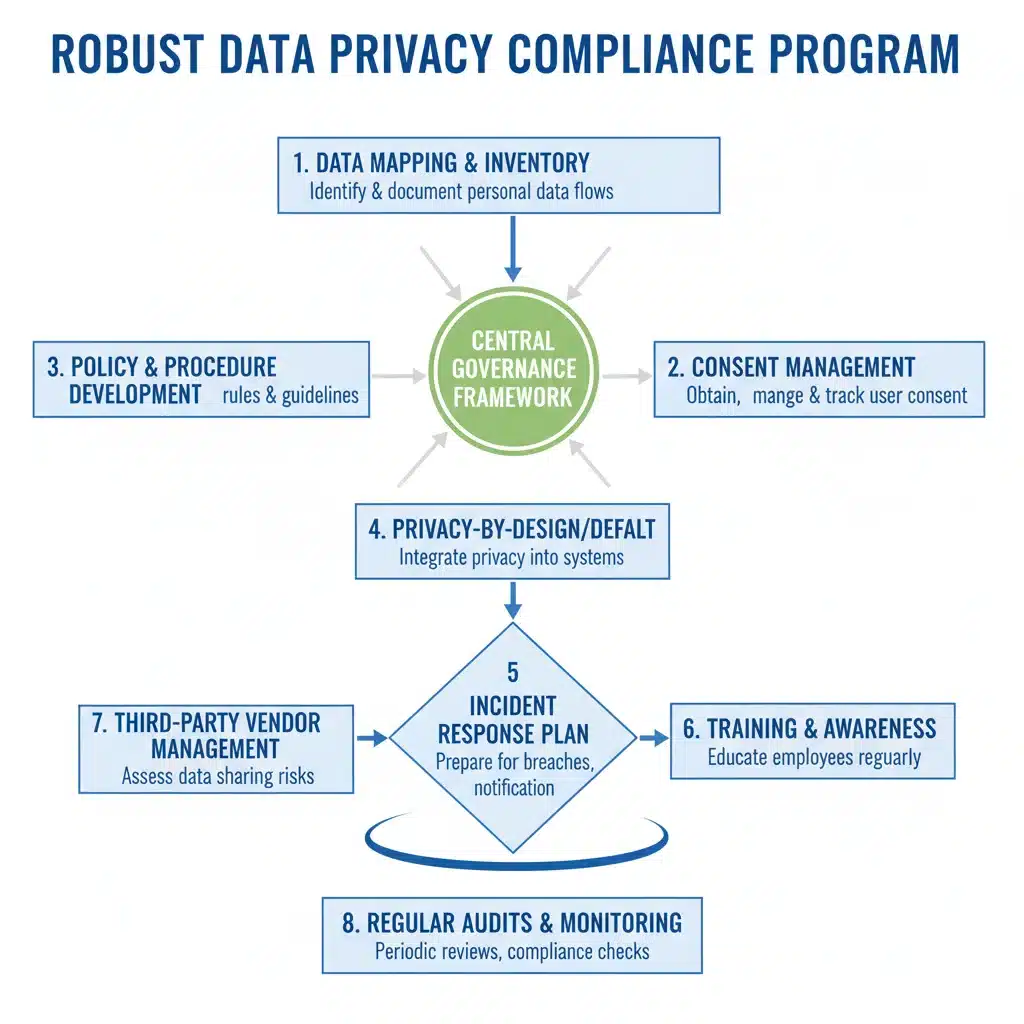
- Training and Awareness: Regular, tailored training for all employees on relevant regulations, company policies, and best practices is essential. This includes onboarding new hires and refresher courses for existing staff.
- Clear Communication Channels: Employees should know who to approach with compliance questions or concerns and feel safe reporting potential issues without fear of retaliation.
2. Conduct a Comprehensive Risk Assessment
Before implementing controls, startups must understand their specific risk profile. This involves:
- Identify Applicable Regulations: Determine which federal, state, and international laws apply to your specific technology, data, and business operations. Consider industry-specific regulations as well.
- Data Mapping and Inventory: Understand what data you collect, where it’s stored, how it’s processed, who has access to it, and its lifecycle. This is foundational for data privacy compliance.
- Vulnerability Assessments: Regularly assess your systems, networks, and applications for cybersecurity vulnerabilities.
- AI Impact Assessments: For AI systems, conduct assessments to identify potential biases, fairness concerns, and ethical implications.
- Third-Party Risk Management: Evaluate the compliance and security posture of all vendors and partners who handle your data or are critical to your operations.
3. Develop and Implement Policies and Procedures
Once risks are identified, formal policies and procedures must be put in place to mitigate them. These should be clear, concise, and accessible to all relevant employees.
- Data Privacy Policy: Outline how personal data is collected, used, stored, and protected, in compliance with CCPA/CPRA, other state laws, and potentially federal guidelines. Include provisions for data subject rights requests.
- Information Security Policy: Detail cybersecurity controls, access management, incident response plans, data encryption standards, and acceptable use policies.
- AI Ethics and Governance Policy: Establish principles for responsible AI development and deployment, addressing fairness, transparency, accountability, and human oversight.
- Vendor Management Policy: Define due diligence processes for selecting and monitoring third-party vendors, including contractual clauses for data protection and security.
- Incident Response Plan: A detailed plan for responding to data breaches, cyber incidents, or other compliance failures, including communication protocols, forensic analysis, and remediation steps.
- Employee Code of Conduct: Integrate compliance expectations into the overall code of conduct, emphasizing ethical behavior and adherence to policies.
4. Leverage Technology for Compliance
Technology can be a powerful ally in managing US Tech Compliance 2026. Consider solutions for:
- Consent Management Platforms (CMPs): Automate the process of obtaining, tracking, and managing user consent for data collection and processing, especially for websites and mobile apps.
- Data Loss Prevention (DLP) Tools: Prevent sensitive data from leaving your organization’s control.
- Security Information and Event Management (SIEM) Systems: Monitor and analyze security events in real-time, aiding in threat detection and incident response.
- Automated Policy Management: Tools that help distribute, track acknowledgment of, and update internal policies.
- AI Governance Platforms: Emerging tools that help monitor AI models for bias, explainability, and adherence to ethical guidelines.
5. Implement Regular Monitoring and Auditing
Compliance is not static. Continuous monitoring and periodic auditing are essential to ensure the framework remains effective and adapts to new threats and regulations.
- Internal Audits: Regularly review your compliance program’s effectiveness, identify gaps, and ensure adherence to internal policies.
- External Audits/Certifications: Consider third-party certifications (e.g., SOC 2, ISO 27001) to demonstrate your commitment to security and compliance, which can be a significant differentiator for investors and clients.
- Regulatory Intelligence: Stay informed about new and impending regulations through legal counsel, industry associations, and specialized compliance news services.
- Performance Metrics: Track key performance indicators (KPIs) related to compliance, such as the number of privacy requests handled, incident response times, or training completion rates.
6. Appoint a Dedicated Compliance Resource
For many startups, a full-time Chief Compliance Officer (CCO) might not be feasible initially. However, designating a specific individual or team (even if part-time) to oversee compliance efforts is crucial. This could be a legal counsel, an operations lead, or a dedicated compliance manager. Their responsibilities include:
- Ownership of the Compliance Framework: Ensuring the framework is developed, implemented, and maintained.
- Regulatory Horizon Scanning: Keeping abreast of new laws and advising the leadership team on potential impacts.
- Training and Awareness Programs: Coordinating and delivering compliance training.
- Incident Response Coordination: Leading the response to compliance incidents.
- Liaison with Legal Counsel: Working closely with internal or external legal experts.
Key Challenges and How to Overcome Them
While the benefits of a robust compliance framework are clear, startups often face specific challenges in implementing one:
Limited Resources (Time, Money, Expertise)
Startups notoriously operate with lean teams and tight budgets. Compliance can seem like an expensive overhead. To mitigate this:
- Prioritize Risks: Focus on the highest-impact, most probable compliance risks first. Not everything needs to be perfect on day one.
- Leverage Technology: Automated tools can reduce manual effort and costs in the long run.
- Outsource Strategically: Consider engaging fractional compliance officers or specialized legal counsel for specific tasks or advice rather than full-time hires initially.
- Build incrementally: Start with foundational policies and expand as the company grows and resources become available.
Rapid Growth and Shifting Business Models
Tech startups often pivot or scale rapidly, which can quickly render existing compliance frameworks outdated. To address this:
- Agile Compliance: Design the framework to be flexible and adaptable. Regular reviews and updates should be built into the process.
- Integrate Compliance into Product Development: Adopt a ‘privacy by design’ and ‘security by design’ approach, embedding compliance considerations from the earliest stages of product development.
- Cross-functional Collaboration: Ensure compliance teams (or individuals) are integrated with product, engineering, and sales teams to understand changes and update policies accordingly.

Lack of Awareness and Understanding
Many technical founders and early employees may prioritize innovation over regulation, often due to a lack of understanding of the implications. To counter this:
- Clear Justification: Communicate the ‘why’ behind compliance – protecting the company, building trust, attracting investment, and avoiding penalties.
- Accessible Training: Provide training that is engaging, relevant, and tailored to different roles within the company. Avoid overly legalistic jargon.
- Lead by Example: When leadership demonstrates a commitment to compliance, it sets the tone for the entire organization.
The Strategic Advantage of Proactive Compliance
While the focus on US Tech Compliance 2026 often centers on avoiding penalties, a proactive approach offers significant strategic advantages:
- Enhanced Trust and Reputation: Customers and partners are increasingly concerned about data privacy and security. A strong compliance posture builds trust and differentiates your startup in a competitive market.
- Investor Confidence: Investors conduct thorough due diligence. Demonstrating a mature approach to compliance can significantly increase your attractiveness and valuation.
- Reduced Risk and Operational Stability: By mitigating legal and cyber risks, you prevent costly disruptions, allowing your team to focus on innovation and growth.
- Market Access: Certain markets, industries, or enterprise clients may require specific certifications or compliance levels before engaging in business.
- Competitive Edge: While competitors might view compliance as a hindrance, a well-executed framework can become a core strength, enabling secure and ethical product development.
Looking Ahead: Preparing for 2026 and Beyond
The regulatory environment for US tech startups in 2026 will be defined by continued evolution, particularly in areas like AI and data privacy. Startups must cultivate a mindset of continuous adaptation and learning. Here are some forward-looking strategies:
- Stay Engaged with Industry Groups: Participate in relevant industry associations and working groups to stay ahead of emerging standards and advocate for balanced regulation.
- Invest in Talent: As the company grows, consider bringing in dedicated legal and compliance expertise.
- Scenario Planning: Anticipate potential regulatory changes and conduct scenario planning to understand their impact on your business model and product roadmap.
- Ethical Frameworks: Beyond strict legal compliance, consider developing internal ethical frameworks for technology development and deployment, particularly for AI. This can often put you ahead of future regulations.
Conclusion
For US tech startups, navigating the regulatory complexities of 2026 is a journey that requires foresight, diligence, and strategic planning. By establishing a robust operational framework for US Tech Compliance 2026 that encompasses a culture of compliance, thorough risk assessment, clear policies, technological enablement, and continuous monitoring, startups can transform potential liabilities into strategic assets. Embracing compliance not as a burden, but as an integral part of responsible innovation, will be key to unlocking sustainable growth and achieving long-term success in the dynamic world of technology.
The future belongs to those who innovate responsibly. By prioritizing compliance now, US tech startups can build a resilient foundation that supports their vision for tomorrow.