Visual Branding Trends 2026: US Market Design Strategies Comparison

Visual Branding Trends 2026: A US Market Comparison of Effective Design Strategies
In the rapidly evolving landscape of consumer preferences and digital interaction, visual branding remains the cornerstone of effective communication and market differentiation. As we look ahead to 2026, the US market is poised for significant shifts in how brands connect with their audiences through design. Understanding these visual branding trends is not just about staying current; it’s about strategizing for future success, building resilient brand identities, and fostering deeper connections with consumers. This comprehensive analysis delves into the anticipated visual branding trends for 2026, offering a comparative look at the most effective design strategies that will shape the US market.
The power of visual branding extends far beyond a logo or a color palette. It encompasses the entire sensory experience a brand offers, from its typography and imagery to its digital interfaces and physical environments. In an increasingly saturated market, where consumers are bombarded with information, a distinctive and memorable visual identity is paramount. For businesses operating within the dynamic US market, keeping a pulse on emerging visual branding trends is crucial for maintaining relevance and competitive advantage. This article aims to equip marketers, designers, and business leaders with the insights needed to navigate these changes effectively.
The Evolving Landscape of Visual Branding
Before diving into specific trends, it’s essential to acknowledge the foundational shifts influencing visual branding. The digital transformation, accelerated by recent global events, has permanently altered consumer behavior. Expectations for personalized, immersive, and authentic brand experiences are higher than ever. Furthermore, societal values, particularly around sustainability, inclusivity, and transparency, are increasingly reflected in consumer choices, demanding that brands embody these principles not just in their messaging but also in their visual representation.
Personalization and Hyper-Targeting
The days of one-size-fits-all branding are long gone. In 2026, personalization will move beyond tailored content to include dynamic visual elements that adapt to individual user preferences and demographics. This means brands will leverage AI and data analytics to present customized visual experiences, from website layouts and ad creatives to product packaging. The challenge lies in maintaining brand consistency while offering a highly individualized visual journey. Effective strategies will involve modular design systems and flexible brand guidelines that allow for adaptation without dilution of core identity. This is a critical area for understanding future visual branding trends.
Authenticity and Transparency Through Design
Consumers are increasingly wary of overly polished, inauthentic representations. In 2026, visual branding will lean heavily into authenticity, using design to convey transparency and trustworthiness. This translates to more raw, unfiltered photography, hand-drawn elements, and natural textures. Brands will opt for visual styles that feel approachable and human, rather than corporate and sterile. Storytelling through visuals will be key, showcasing the brand’s journey, values, and the real people behind the products or services. This trend directly influences the direction of visual branding trends.
Key Visual Branding Trends for 2026 in the US Market
1. Dynamic and Interactive Visual Identities
Static logos and brand assets will give way to dynamic, animated, and interactive visual identities. Brands will invest in motion graphics, 3D elements, and augmented reality (AR) experiences that allow consumers to engage with their visual identity in new and exciting ways. This trend is particularly potent in the US market, known for its embrace of technological innovation. Imagine a logo that subtly animates on a website, or a product label that comes to life through an AR app. This adds a layer of immersion and memorability that traditional static visuals cannot achieve. The push towards dynamic visuals is a defining characteristic of the upcoming visual branding trends.
- Motion Graphics: Beyond simple animations, brands will use sophisticated motion design to convey brand personality and narrative.
- 3D and Immersive Experiences: As the metaverse and AR/VR technologies become more mainstream, brands will create three-dimensional visual assets and immersive brand environments.
- Interactive Elements: Visuals that respond to user input, creating a more personalized and engaging brand interaction.
2. Neo-Minimalism and Strategic Complexity
While minimalism has been a dominant trend for years, 2026 will see its evolution into ‘neo-minimalism.’ This isn’t just about stripping away elements; it’s about strategic simplification that allows for moments of deliberate, impactful complexity. Brands will use clean lines and ample white space to create a sense of sophistication and clarity, but they’ll also incorporate unexpected textures, subtle gradients, or a single bold, intricate element to add depth and intrigue. This approach ensures that while the overall aesthetic is streamlined, it doesn’t become generic. This nuanced approach is a key component of future visual branding trends.
3. Vibrant Gradients and Chromatic Abundance
Moving away from muted palettes, 2026 will embrace vibrant gradients and rich, complex color schemes. These aren’t the soft, subtle gradients of the past, but bold, energetic transitions that evoke emotion and capture attention. Brands will experiment with unexpected color combinations and chromatic abundance to stand out in a crowded digital space. This trend reflects a desire for optimism and energy, and it’s particularly effective in digital environments where colors can truly pop. Expect to see brands using these vibrant palettes to differentiate and create a distinct visual signature within the visual branding trends of 2026.
4. Retro-Futurism and Nostalgia Reimagined
The cyclical nature of trends means that nostalgia will continue to play a role, but with a twist. ‘Retro-futurism’ will emerge, blending classic aesthetic elements from the past (think 70s sci-fi, 80s arcade graphics, or early internet aesthetics) with modern design sensibilities. This creates a unique visual language that feels both familiar and innovative. Brands will tap into collective nostalgia while presenting it through a fresh, contemporary lens, appealing to both older generations and younger audiences who appreciate the aesthetic without the direct memory. This fusion is a fascinating aspect of upcoming visual branding trends.
- Pixel Art & Voxel Graphics: A playful nod to early digital aesthetics, reimagined with modern rendering.
- Bold Typography: Display fonts reminiscent of vintage signage or early tech interfaces, but with refined kerning and modern applications.
- Vaporwave Aesthetics: The continued influence of neon, gradients, and dreamlike imagery, evolving into more sophisticated interpretations.
5. Data Visualization as a Branding Tool
In an increasingly data-driven world, brands will leverage data visualization not just for conveying information, but as an integral part of their visual brand identity. Elegant and insightful infographics, interactive data dashboards, and dynamic charts will become branded assets, demonstrating transparency and expertise. This trend is particularly relevant for tech companies, financial institutions, and educational platforms, but its principles can be applied broadly to convey complex information in an engaging and visually appealing manner, reinforcing the brand’s commitment to clarity and innovation. This smart use of information is a powerful component of future visual branding trends.
6. Inclusivity and Diversity in Visuals
Beyond being a moral imperative, inclusivity and diversity will be a crucial visual branding trend. Brands will consciously move away from tokenism, embedding diverse representation seamlessly across all visual assets – from photography and illustrations to campaign imagery. This includes showcasing diverse body types, ethnicities, ages, abilities, and gender identities in an authentic and respectful manner. The visual language will also reflect cultural nuances and avoid stereotypes, ensuring that the brand resonates with a broad and heterogeneous audience. This commitment to representation is a non-negotiable element of effective visual branding trends.
Comparative Analysis of Effective Design Strategies in the US Market
Understanding the trends is one thing; implementing effective strategies is another. The US market, with its vast diversity and competitive landscape, demands a nuanced approach. Here, we compare several overarching design strategies that will prove effective in 2026, examining their strengths and ideal applications.
Strategy 1: The ‘Human-Centric’ Approach
This strategy prioritizes authenticity, empathy, and connection. It leverages visual elements that evoke genuine emotion and highlight the human element of a brand. This aligns perfectly with trends like authenticity and inclusivity. Brands adopting this strategy will invest heavily in quality photography featuring real people, relatable scenarios, and diverse perspectives. They will use warm color palettes, organic shapes, and approachable typography. This strategy is particularly effective for consumer goods, healthcare, non-profits, and service-based businesses where trust and rapport are paramount. Its strength lies in its ability to build deep emotional connections, making it a powerful force in visual branding trends.
Strengths:
- High Emotional Resonance: Creates strong bonds with consumers.
- Authenticity: Perceived as trustworthy and relatable.
- Inclusivity: Naturally integrates diverse representation.
Challenges:
- Can be difficult to scale: Requires a consistent stream of authentic content.
- Risk of appearing ‘too casual’: May not suit all luxury or highly formal brands.
Strategy 2: The ‘Techno-Progressive’ Approach
This strategy champions innovation, modernity, and a forward-thinking vision. It leans into dynamic visuals, 3D elements, and data visualization. Brands employing this approach will often use cooler color palettes, sharp geometric shapes, and sleek, futuristic typography. This is ideal for technology companies, fintech, automotive industries, and any brand aiming to position itself as a leader in innovation. The US market’s appetite for technological advancement makes this a highly effective strategy for many sectors. It’s a direct response to the cutting-edge aspects of visual branding trends.
Strengths:
- Perceived as innovative: Positions the brand as a leader.
- Highly engaging: Dynamic elements capture attention effectively.
- Scalable in digital spaces: Well-suited for online platforms and interactive media.
Challenges:
- Risk of appearing cold or impersonal: May need to balance with human elements.
- Requires significant investment: In advanced design tools and talent.
Strategy 3: The ‘Heritage-Modern Blend’ Approach
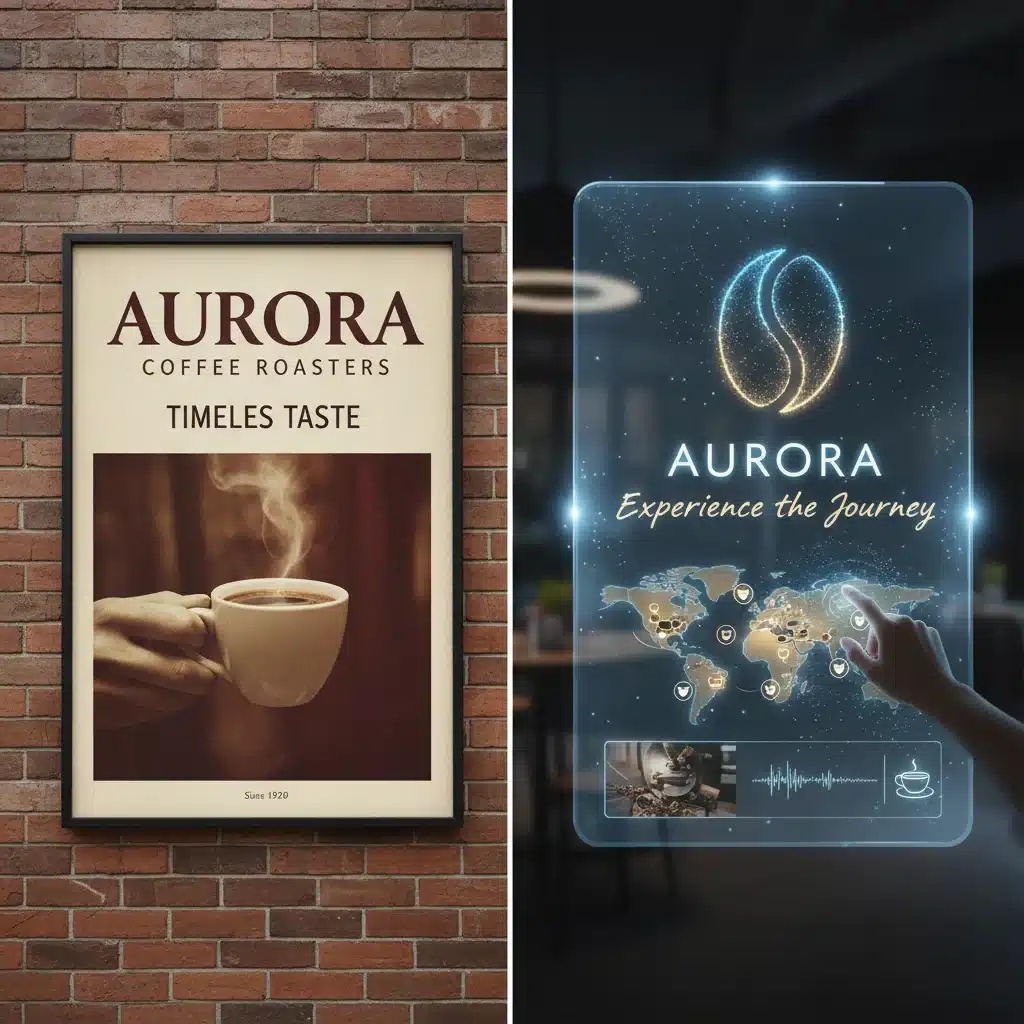
This strategy artfully combines elements of tradition and heritage with contemporary design. It often incorporates retro-futurism or reimagined nostalgic elements. Brands will use classic motifs, historical typography, or vintage color palettes, but always with a modern twist – perhaps through a minimalist layout, a dynamic animation, or an unexpected material pairing. This approach is excellent for brands with a rich history, luxury goods, or those aiming to evoke a sense of timeless quality combined with modern relevance. It offers a unique position within the complex array of visual branding trends.
Strengths:
- Timeless Appeal: Bridges classic elegance with modern aesthetics.
- Distinctive Identity: Creates a unique brand story.
- Broad Appeal: Can resonate with multiple generations.
Challenges:
- Can be difficult to execute: Requires a sophisticated understanding of design history and contemporary trends.
- Risk of appearing outdated: If the ‘modern twist’ isn’t strong enough.
Integrating Visual Branding Trends into Your Strategy
For US businesses, the key to success in 2026 lies not in blindly following every trend, but in strategically integrating those that align with their brand’s core values, target audience, and business objectives. Here’s how to approach this integration effectively:
1. Conduct a Visual Brand Audit
Before making any changes, assess your current visual branding. Does it still resonate with your audience? Does it accurately reflect your brand’s mission and values? Identify areas where your brand might be falling behind or where there’s an opportunity to innovate. This audit should consider all touchpoints, from your website and social media to packaging and physical spaces. A thorough audit is the first step in aligning with emerging visual branding trends.
2. Understand Your Audience Deeply
Trends are universal, but their reception is audience-specific. What resonates with Gen Z in urban centers might differ from what appeals to Gen X in suburban areas. Utilize market research and consumer insights to understand how your target demographic responds to different visual aesthetics and communication styles. This will inform which visual branding trends are most relevant for your brand in the US market.
3. Embrace Flexibility and Modularity
The pace of change means that visual identities need to be adaptable. Develop a brand system that is flexible enough to accommodate new trends and technologies without requiring a complete overhaul every few years. This means establishing strong core brand assets (logo, primary colors, key typography) while allowing for variation and experimentation in secondary elements, giving your brand agility in responding to new visual branding trends.
4. Invest in Digital-First Design
With the continued dominance of digital platforms, visual branding must be optimized for screens of all sizes and interactive experiences. This means prioritizing vector graphics, responsive design, and motion-friendly assets. Consider how your brand translates across websites, social media, apps, and even emerging metaverse platforms. Digital-first thinking is paramount for navigating the future of visual branding trends.
5. Prioritize Storytelling Through Visuals
No matter the trend, the most effective visual branding tells a compelling story. Use your design elements to communicate your brand’s purpose, values, and personality. Whether through authentic photography, dynamic animations, or evocative color palettes, ensure your visuals are not just aesthetically pleasing but also narratively rich. This deepens consumer engagement and fosters brand loyalty, a timeless strategy within the context of changing visual branding trends.
6. Collaborate with Expert Designers
Navigating these complex trends requires expertise. Partner with designers and branding agencies that have a deep understanding of current and future visual branding landscapes. Their insights and creative capabilities will be invaluable in translating these trends into a cohesive and impactful visual identity for your brand in the competitive US market.
The Impact of AI on Visual Branding in 2026
It would be remiss to discuss 2026 visual branding trends without addressing the burgeoning influence of Artificial Intelligence. AI is not just a tool; it’s a transformative force reshaping every aspect of design and marketing. In the US market, brands are rapidly exploring AI’s capabilities to enhance their visual identities and engagement strategies.
AI for Personalization and Dynamic Visuals:
AI algorithms are becoming incredibly sophisticated at analyzing user data to predict preferences. This means that in 2026, AI will power hyper-personalized visual experiences at an unprecedented scale. Imagine a brand website where the hero image, color scheme, and even typography subtly shift based on a user’s past interactions, location, or declared interests. AI can generate variations of visual content on the fly, ensuring that each consumer receives a visual message that is most likely to resonate with them. This moves beyond simple A/B testing to continuous, adaptive optimization, making personalization a much more dynamic aspect of visual branding trends.
AI-Powered Design Tools:
Designers will increasingly leverage AI-powered tools for tasks ranging from initial concept generation to asset optimization. AI can assist in creating multiple logo variations, suggesting color palettes based on emotional associations, or even generating entire visual campaigns from text prompts. This doesn’t replace human creativity but augments it, allowing designers to focus on strategic thinking and refinement. Such tools will democratize access to high-quality design, but also raise the bar for originality and strategic input in the visual branding space.
Ethical Considerations and Authenticity:
As AI becomes more prevalent in visual content creation, ethical considerations regarding authenticity and transparency will come to the forefront. Consumers value genuine connections, and there’s a risk that AI-generated visuals, if not handled carefully, could feel artificial or soulless. Brands will need to strike a balance, using AI to enhance efficiency and personalization while ensuring that their core visual identity retains its human touch and reflects genuine values. Transparency about the use of AI in content creation might even become a branding differentiator, aligning with the broader trend of authenticity in visual branding trends.
Predictive Analytics for Visual Impact:
AI can also analyze vast datasets of visual content to predict which designs are most likely to achieve specific marketing objectives, such as increased click-through rates or higher brand recall. This allows brands to make more data-informed decisions about their visual strategies, optimizing everything from ad creatives to social media posts for maximum impact. This predictive capability will become an indispensable tool for brands aiming to stay ahead in the competitive US market.
Conclusion: Crafting a Future-Forward Visual Identity
The visual branding landscape of 2026 in the US market will be characterized by a compelling blend of technological innovation, human-centric design, and a renewed emphasis on authenticity and inclusivity. From dynamic and interactive visuals to neo-minimalism and vibrant chromatic palettes, the opportunities for brands to differentiate themselves are immense. The integration of AI will further revolutionize how brands create, personalize, and optimize their visual communications, demanding a strategic and adaptive approach from businesses.
To thrive in this evolving environment, brands must move beyond superficial aesthetic updates. Instead, they need to cultivate a visual identity that is not only aesthetically appealing but also deeply resonant with their audience, reflective of their values, and agile enough to adapt to future shifts. By understanding and strategically implementing these visual branding trends, US businesses can craft identities that not only capture attention but also build lasting relationships and drive sustained growth in a dynamic and competitive market. The future of visual branding is exciting, challenging, and full of potential for those willing to embrace innovation and stay true to their brand’s essence.
The journey to a future-forward visual identity is continuous. It requires constant observation, experimentation, and a willingness to evolve. As 2026 approaches, the brands that succeed will be those that view their visual branding not as a static asset, but as a living, breathing component of their overall business strategy.