E-commerce Growth Hacks 2026: Boost Revenue 30% This Quarter

The e-commerce landscape is in a perpetual state of evolution, a dynamic arena where innovation is not just an advantage but a fundamental requirement for survival and prosperity. For e-commerce startups, the challenge is amplified: how do you not only survive but thrive, scaling rapidly and achieving significant revenue growth in a competitive environment? The answer lies in strategic implementation of proven E-commerce Growth Hacks. As we look towards 2026, the businesses that will dominate are those that can adapt, personalize, and leverage data to their advantage. This comprehensive guide will unveil five crucial e-commerce growth hacks designed to help your startup achieve an ambitious 30% revenue increase this quarter.
The digital marketplace has matured, and customers are more discerning than ever. Generic approaches no longer cut it. To stand out, you need to offer exceptional value, tailor experiences, and build lasting relationships. This isn’t just about fleeting trends; it’s about embedding sustainable growth mechanisms into the very fabric of your business. From hyper-personalization to community building, each growth hack presented here is actionable and designed to yield tangible results, propelling your e-commerce startup forward.
Understanding the E-commerce Landscape in 2026
Before diving into specific E-commerce Growth Hacks, it’s vital to grasp the prevailing trends and customer expectations that define the 2026 e-commerce environment. Mobile commerce is no longer an emerging trend; it’s the dominant shopping channel. Voice search optimization is gaining traction, and augmented reality (AR) experiences are becoming more sophisticated and accessible. Customers expect seamless, intuitive, and highly personalized shopping journeys across all devices and platforms. Data privacy concerns are also paramount, requiring businesses to be transparent and responsible with customer information.
Moreover, ethical consumption and sustainability are increasingly influencing purchasing decisions. Consumers are looking beyond price and convenience, choosing brands that align with their values. This shift necessitates a holistic approach to branding, supply chain management, and customer communication. Your e-commerce startup must not only offer great products but also tell a compelling story and demonstrate genuine commitment to social and environmental responsibility. Ignoring these foundational shifts would be a critical misstep for any aspiring e-commerce venture.
The Rise of AI and Automation
Artificial intelligence (AI) and automation are no longer futuristic concepts; they are integral components of modern e-commerce operations. From intelligent chatbots handling customer service inquiries to AI-powered recommendation engines personalizing product suggestions, these technologies are streamlining processes and enhancing the customer experience. For startups, leveraging AI can level the playing field, allowing smaller teams to achieve efficiencies typically associated with larger enterprises. This includes automating inventory management, optimizing pricing strategies, and even generating marketing copy. Embracing AI is a non-negotiable E-commerce Growth Hack for 2026.
The Importance of Customer Experience (CX)
In a saturated market, customer experience has emerged as the ultimate differentiator. It encompasses every interaction a customer has with your brand, from the initial website visit to post-purchase support. A frictionless checkout process, responsive customer service, and engaging content all contribute to a positive CX. Happy customers are not only repeat customers but also powerful brand advocates. Investing in CX improvements is a direct investment in customer loyalty and, consequently, long-term revenue growth. Your E-commerce Growth Hacks must prioritize an exceptional customer journey.
Growth Hack 1: Hyper-Personalization at Every Touchpoint
The era of one-size-fits-all marketing is long gone. Today’s consumers expect brands to understand their individual preferences, needs, and behaviors. Hyper-personalization goes beyond simply addressing a customer by their first name; it involves tailoring the entire shopping experience, from product recommendations and website content to email communications and even pricing, based on real-time data and predictive analytics. This is a powerful E-commerce Growth Hack that significantly boosts conversion rates and average order value (AOV).
Imagine a customer browsing your site for running shoes. A hyper-personalized experience would not only show them shoes but also relevant accessories like performance socks, GPS watches, or hydration packs, based on their past purchases, browsing history, and even demographic data. This level of foresight makes the customer feel understood and valued, fostering a deeper connection with your brand. Implementing this requires robust data collection and analysis tools, alongside sophisticated AI algorithms that can interpret patterns and make intelligent recommendations.
Leveraging AI for Personalized Recommendations
AI-powered recommendation engines are at the heart of hyper-personalization. These algorithms analyze vast amounts of data – including past purchases, browsing behavior, search queries, and even social media activity – to suggest products that are highly likely to appeal to individual customers. This can be implemented on product pages, in cart recommendations, and within email marketing campaigns. The more accurate and timely these recommendations are, the higher the chances of conversion and increased AOV.
Dynamic Website Content and Email Marketing
Beyond product recommendations, hyper-personalization extends to dynamic website content. This means showing different banners, promotions, or even landing page layouts to different visitors based on their segmentation. For example, a first-time visitor might see a welcome offer, while a returning customer might view products related to their previous purchases. Similarly, email marketing campaigns should be segmented and personalized, sending targeted messages that resonate with specific customer groups rather than generic newsletters. This strategic application of E-commerce Growth Hacks ensures every communication is relevant.
Growth Hack 2: Cultivating Community and User-Generated Content (UGC)
In an age of digital noise, trust is a precious commodity. Consumers often rely more on peer recommendations and authentic experiences than traditional advertising. This makes cultivating a strong brand community and actively encouraging user-generated content (UGC) an incredibly effective E-commerce Growth Hack. UGC, such as customer reviews, photos, videos, and social media posts featuring your products, serves as powerful social proof, building credibility and driving purchase decisions.
A thriving brand community fosters loyalty and creates a sense of belonging among your customers. This can be achieved through dedicated online forums, social media groups, or even exclusive loyalty programs that encourage interaction and shared experiences. When customers feel connected to your brand and to each other, they become your most ardent advocates, organically spreading the word about your products and services. This word-of-mouth marketing is invaluable and often more impactful than paid advertising.
Implementing Review and Rating Systems
The simplest yet most powerful form of UGC is customer reviews and ratings. Ensure your e-commerce platform has robust systems for collecting and displaying these. Actively solicit reviews post-purchase, and make it easy for customers to submit them. Positive reviews build trust, while even negative reviews, when handled professionally and transparently, can demonstrate your commitment to customer satisfaction. Displaying product reviews prominently on your product pages can significantly influence conversion rates, making it a key element of your E-commerce Growth Hacks strategy.
Encouraging Visual UGC on Social Media
Visual content is king on social media. Encourage customers to share photos and videos of themselves using your products by running contests, creating branded hashtags, or featuring the best UGC on your own social channels and website. This not only generates authentic content but also expands your reach to new audiences through your customers’ networks. Consider offering incentives, such as discounts or early access to new products, to motivate participation. This taps into the power of social influence and organic marketing.
Growth Hack 3: Optimizing for Mobile-First E-commerce Experiences
With the vast majority of online shopping now occurring on mobile devices, a mobile-first approach is no longer optional; it’s fundamental. This E-commerce Growth Hack means designing your website and entire user experience primarily for smartphones and tablets, then adapting it for larger screens. A clunky, slow, or difficult-to-navigate mobile site will lead to high bounce rates and lost sales, regardless of how good your products are. Optimizing for mobile encompasses speed, responsiveness, intuitive navigation, and simplified checkout processes.
Consider the entire mobile user journey: from discovery through search or social media, to browsing products, adding to cart, and finally completing the purchase. Each step must be streamlined and optimized for touch interactions and smaller screens. This includes large, tappable buttons, minimal text input, and progress indicators during checkout. Furthermore, explore mobile-specific features like one-click payments (Apple Pay, Google Pay) and augmented reality (AR) product previews to enhance the shopping experience.
Website Speed and Responsiveness
Mobile users have little patience for slow-loading websites. Every second of delay can significantly increase bounce rates. Invest in optimizing your website’s speed by compressing images, leveraging content delivery networks (CDNs), and minimizing unnecessary code. Ensure your website is fully responsive, meaning it automatically adjusts its layout and content to fit any screen size, providing a consistent and enjoyable experience across all devices. This technical optimization is a foundational E-commerce Growth Hack.
Streamlined Mobile Checkout Process
The checkout process is often where mobile users abandon their carts. Minimize the number of steps required to complete a purchase. Offer guest checkout options, integrate popular mobile payment methods, and auto-fill forms where possible. A clear, concise, and secure mobile checkout is paramount to converting mobile browsers into paying customers. Test your mobile checkout rigorously on various devices to identify and eliminate any friction points.
Growth Hack 4: Leveraging Subscription Models and Loyalty Programs
Acquiring new customers can be significantly more expensive than retaining existing ones. This makes subscription models and robust loyalty programs incredibly powerful E-commerce Growth Hacks for sustainable revenue growth. Subscription services provide predictable recurring revenue, while loyalty programs incentivize repeat purchases and foster long-term customer relationships. Both strategies are designed to increase customer lifetime value (CLTV) and reduce churn.
Subscription models work well for consumable products, curated boxes, or services that require regular replenishment. They offer convenience to customers and guaranteed revenue for your business. Loyalty programs, on the other hand, can take many forms: point-based systems, tiered VIP programs, or exclusive access to products and events. The key is to offer genuine value that encourages customers to stay engaged and continue purchasing from your brand. The more integrated and valuable these programs are, the more effective they will be in driving repeat business.
Implementing Effective Subscription Services
If your products lend themselves to recurring purchases, consider offering a subscription option. This could be a monthly delivery of a consumable product (e.g., coffee, beauty supplies), a curated box of themed items, or access to exclusive digital content. Clearly communicate the benefits of subscribing, such as cost savings, convenience, and exclusive perks. Make it easy for customers to manage their subscriptions, including pausing or canceling, to build trust and flexibility. This is a direct pathway to stable, recurring revenue.
Designing Engaging Loyalty Programs
A well-designed loyalty program rewards customers for their continued patronage. Points-based systems where customers earn points for every dollar spent, which can then be redeemed for discounts or exclusive products, are common. Tiered programs, where customers unlock increasing benefits as they spend more, create a sense of aspiration and exclusivity. Beyond discounts, consider offering early access to new products, free shipping, birthday gifts, or exclusive content to truly make your loyalty program compelling. These programs are vital E-commerce Growth Hacks for fostering enduring customer relationships.
Growth Hack 5: Data-Driven Performance Marketing and A/B Testing
In the digital age, every marketing dollar spent should be measurable and optimized. Data-driven performance marketing, combined with rigorous A/B testing, is a non-negotiable E-commerce Growth Hack for maximizing your return on investment (ROI) and achieving that 30% revenue increase. This involves continuously tracking key performance indicators (KPIs), analyzing campaign effectiveness, and making data-informed adjustments to your marketing strategies. It’s about being agile and responsive to what the data tells you.
Performance marketing focuses on results – clicks, conversions, sales – and often involves channels like paid search, social media advertising, and affiliate marketing. A/B testing, also known as split testing, allows you to compare two versions of a webpage, ad, or email to see which performs better. By systematically testing different headlines, images, calls-to-action, or landing page layouts, you can continuously optimize your marketing efforts for maximum impact. This iterative process of testing, analyzing, and refining is the cornerstone of effective digital growth.
Utilizing Analytics for Campaign Optimization
Implement robust analytics tools (like Google Analytics 4) to track user behavior, conversion funnels, and marketing campaign performance. Regularly review this data to identify trends, pinpoint areas for improvement, and understand which channels and campaigns are delivering the best ROI. For example, if you notice a high cart abandonment rate, you can investigate potential friction points in your checkout process. If a particular ad creative is outperforming others, you can allocate more budget to it. Data analysis is the compass guiding your E-commerce Growth Hacks.
Systematic A/B Testing for Conversion Rate Optimization
Make A/B testing a regular part of your marketing and website optimization strategy. Test everything: product descriptions, button colors, banner images, email subject lines, call-to-action (CTA) wording, and even entire landing page layouts. Even small, incremental improvements from A/B tests can lead to significant gains in conversion rates over time. Document your findings to build a knowledge base of what works best for your audience. This continuous optimization loop is crucial for sustained growth.

Integrating E-commerce Growth Hacks for Maximum Impact
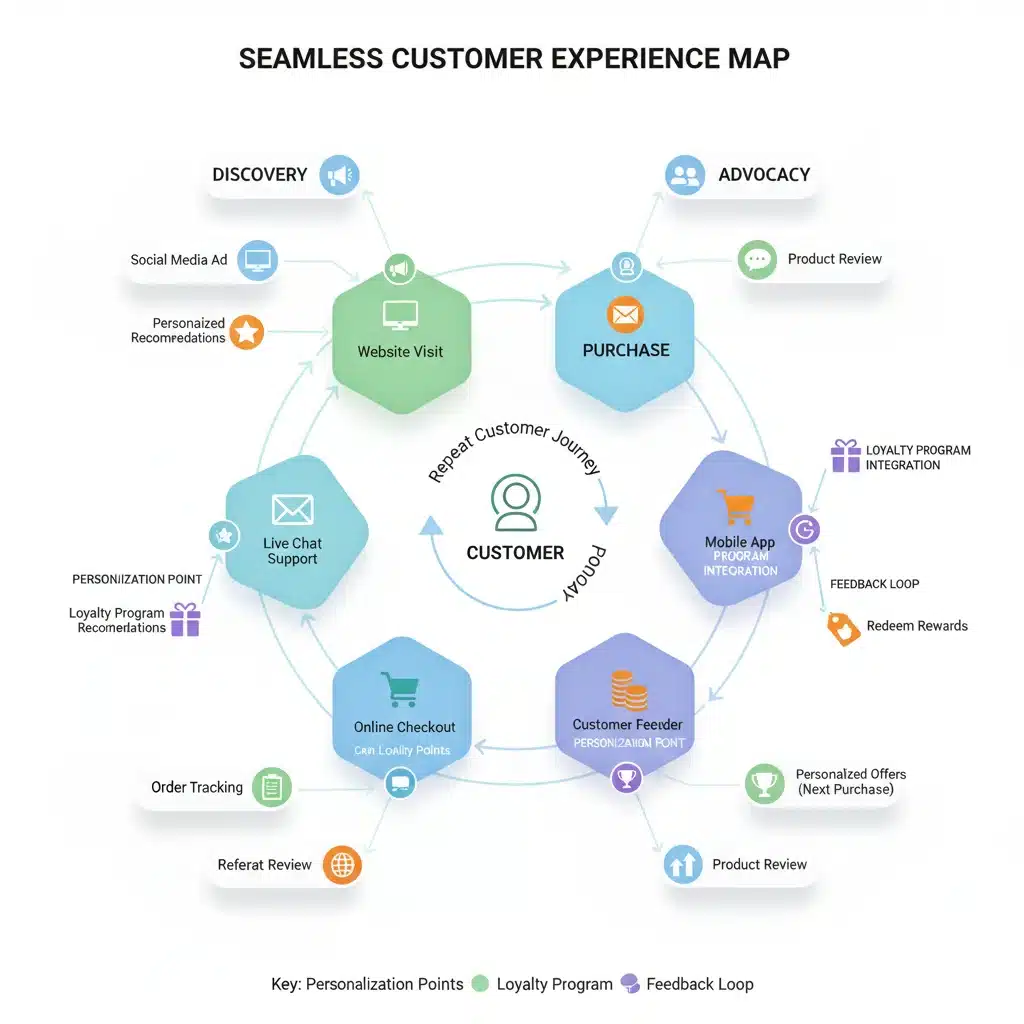
While each of these E-commerce Growth Hacks is powerful on its own, their true potential is unlocked when they are integrated into a cohesive strategy. Imagine a customer who receives a hyper-personalized email recommendation (Hack 1) based on their browsing history. They click through to a mobile-optimized product page (Hack 3), where they see glowing user-generated reviews (Hack 2). They decide to purchase, and during checkout, they’re offered the option to subscribe for a discount and join a loyalty program (Hack 4). All of this is underpinned by continuous A/B testing and data analysis (Hack 5) to ensure every touchpoint is optimized.
This synergistic approach creates a seamless, engaging, and highly effective customer journey that drives conversions and fosters loyalty. It’s about building an ecosystem of growth where each element reinforces the others. For your e-commerce startup, this means developing a clear roadmap that outlines how you will implement and measure each hack, ensuring they work in harmony to achieve your ambitious 30% revenue growth target this quarter.
Building a Culture of Experimentation
To successfully implement these E-commerce Growth Hacks, your team needs to embrace a culture of experimentation. Encourage testing, learning, and iterating. Not every hack will work perfectly from day one, and some might require significant tweaking. The ability to quickly pivot based on data and insights is a hallmark of successful, fast-growing startups. Empower your teams to run experiments, analyze results, and share their learnings across the organization. This agile mindset is key to unlocking continuous improvement.
Monitoring and Adapting to Market Changes
The e-commerce landscape is constantly shifting. New technologies emerge, customer preferences evolve, and competitors innovate. Therefore, it’s crucial to continuously monitor market trends and adapt your E-commerce Growth Hacks accordingly. Stay informed about the latest developments in AI, mobile technology, and consumer behavior. Be prepared to adjust your strategies and explore new hacks as the market dictates. Agility and foresight are your greatest assets in maintaining a competitive edge and ensuring sustained growth.
Conclusion: Unleashing Your E-commerce Startup’s Potential
Achieving a 30% revenue increase in a single quarter for an e-commerce startup is an ambitious but entirely attainable goal with the right strategies. By focusing on these five powerful E-commerce Growth Hacks – hyper-personalization, community building and UGC, mobile optimization, subscription models and loyalty programs, and data-driven performance marketing – your business can create a robust framework for rapid and sustainable growth. Each hack addresses a critical aspect of the modern e-commerce journey, designed to enhance customer experience, build trust, and ultimately drive sales.
Remember, success in 2026 and beyond hinges on your ability to understand and anticipate customer needs, leverage cutting-edge technology, and continuously optimize your operations based on data. It requires a commitment to innovation, a customer-centric approach, and a willingness to adapt. By diligently applying these growth hacks, your e-commerce startup can not only meet but exceed its revenue targets, solidifying its position in the competitive digital marketplace. Start implementing these strategies today and watch your revenue soar this quarter!