Unlocking Efficiency: A Comparative Analysis of Top Process Automation Tools for U.S. Operations in 2026
In the rapidly evolving landscape of modern business, the ability to streamline operations and maximize efficiency is no longer a luxury but a necessity. As we approach 2026, U.S. businesses are increasingly turning to advanced Process Automation Tools to stay competitive, reduce costs, and enhance customer satisfaction. The market is flooded with solutions, each promising a myriad of benefits. But how do you choose the right one for your specific needs? This comprehensive guide delves into a comparative analysis of three leading Process Automation Tools poised to dominate the U.S. market in 2026, offering insights into their core functionalities, unique selling points, and ideal applications.
The imperative for automation has never been stronger. From repetitive administrative tasks to complex data processing, businesses across various sectors are grappling with the challenge of doing more with less. Process Automation Tools provide the answer, enabling organizations to automate workflows, integrate disparate systems, and free up human capital for more strategic initiatives. This article aims to cut through the noise, providing a clear, actionable roadmap for U.S. decision-makers seeking to invest in the most impactful automation technologies.
Our focus will be on understanding the nuances of these platforms, examining their scalability, ease of implementation, integration capabilities, and the return on investment (ROI) they offer. Whether you’re a small business looking to automate basic tasks or a large enterprise seeking an end-to-end digital transformation, this analysis of Process Automation Tools will equip you with the knowledge to make an informed decision.
The Evolution of Process Automation: A 2026 Perspective
The journey of process automation has been one of continuous innovation. What began with simple macros and scripts has evolved into sophisticated platforms leveraging artificial intelligence (AI), machine learning (ML), and robotic process automation (RPA). In 2026, the convergence of these technologies is creating a new generation of Process Automation Tools that are more intelligent, adaptive, and capable than ever before.
For U.S. businesses, this means an opportunity to not only automate existing processes but also to reimagine how work is done. Predictive analytics, intelligent document processing (IDP), and low-code/no-code development are becoming standard features, enabling even non-technical users to design and deploy automation solutions. The goal is to create truly autonomous operations, where human intervention is only required for exceptions and strategic decision-making.
The impact of these advanced Process Automation Tools extends beyond mere efficiency gains. They are powerful drivers of agility, allowing businesses to quickly adapt to market changes, regulatory shifts, and evolving customer demands. In a dynamic global economy, this adaptability is a key differentiator. Furthermore, by eliminating manual errors and ensuring consistent execution, automation significantly improves data quality and compliance, mitigating risks for U.S. companies operating in highly regulated industries.
Key Trends Shaping Process Automation in 2026
- Hyperautomation: The combination of multiple technologies, including RPA, AI, ML, and BPM, to automate as many business and IT processes as possible.
- AI-Powered Automation: Enhanced capabilities for unstructured data processing, natural language understanding (NLU), and intelligent decision-making.
- Low-Code/No-Code Platforms: Democratizing automation by allowing business users to build and deploy solutions without extensive coding knowledge.
- Cloud-Native Solutions: Increased adoption of cloud-based Process Automation Tools for scalability, flexibility, and reduced infrastructure costs.
- Process Mining and Discovery: Tools that automatically identify and map business processes, pinpointing automation opportunities and bottlenecks.
- Human-in-the-Loop Automation: Systems designed to seamlessly integrate human oversight and intervention into automated workflows for complex scenarios.
Understanding Your Needs: Before Choosing Process Automation Tools
Before diving into specific product comparisons, it’s crucial for U.S. businesses to conduct a thorough self-assessment. What are your primary pain points? Which processes consume the most resources or are prone to errors? What are your long-term strategic goals? Answering these questions will help you define your requirements and narrow down the vast array of available Process Automation Tools.
Consider the scale of your operations, your existing IT infrastructure, and the technical expertise of your team. Some tools are designed for enterprise-level deployments, offering robust features and complex integrations, while others cater to small and medium-sized businesses with simpler, more user-friendly interfaces. The cost-benefit analysis is also paramount. While automation offers significant ROI, initial investments can vary widely.
A successful automation strategy isn’t just about implementing technology; it’s about cultural transformation. Prepare your workforce for the change, emphasizing how automation will augment their capabilities, not replace them. Training and change management are vital components of any successful automation initiative, ensuring that your team can effectively utilize the chosen Process Automation Tools.
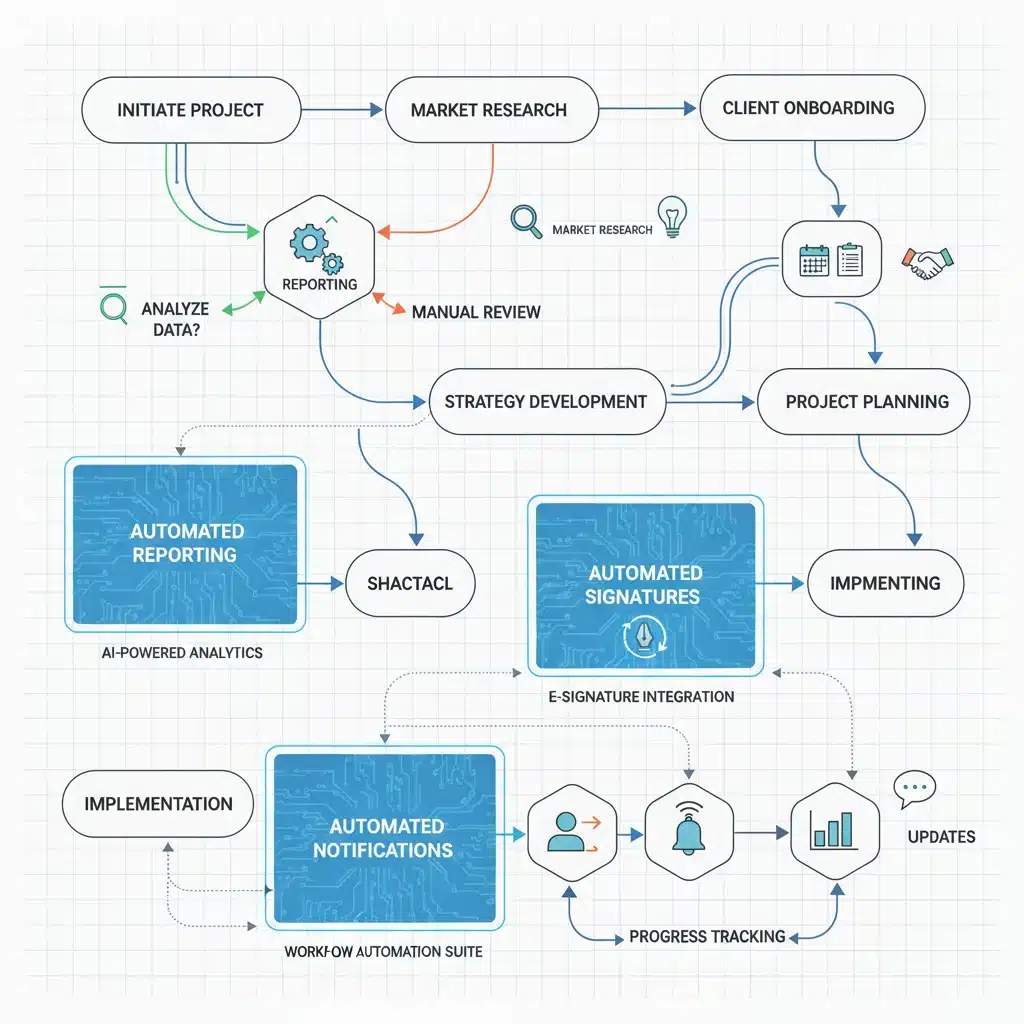
Key Considerations for U.S. Businesses:
- Process Identification: Which processes are most suitable for automation (repetitive, rule-based, high volume)?
- Scalability: Can the tool grow with your business needs?
- Integration Capabilities: How well does it integrate with your existing systems (ERPs, CRMs, legacy systems)?
- Ease of Use: Is it user-friendly for business analysts and developers alike?
- Security and Compliance: Does it meet industry-specific regulations and data privacy standards relevant to the U.S. market?
- Vendor Support and Community: What level of support, training, and community resources are available?
- Pricing Model: Understand the licensing, subscription, and implementation costs.
- AI/ML Capabilities: Does it offer intelligent automation features for advanced use cases?
Top 3 Process Automation Tools for U.S. Operations in 2026: A Deep Dive
Based on market trends, industry reports, and projected capabilities for 2026, we’ve identified three standout Process Automation Tools that are set to make a significant impact on U.S. businesses. These platforms represent different approaches to automation, each with its strengths and ideal use cases.
Tool 1: UiPath (Intelligent RPA & End-to-End Automation)
UiPath has long been a leader in the Robotic Process Automation (RPA) space, and its evolution into an end-to-end hyperautomation platform makes it a formidable contender for 2026. For U.S. companies, UiPath offers a comprehensive suite designed to discover, automate, and manage processes at scale.
Core Features and Strengths:
- Advanced RPA Capabilities: Unmatched ability to automate highly repetitive, rule-based tasks across various applications, both desktop and web-based.
- AI Fabric: Seamless integration of AI and ML models into automation workflows, enabling intelligent document processing (IDP), natural language processing (NLP), and computer vision for complex, unstructured data.
- Process Mining and Task Mining: Tools like UiPath Process Mining and Task Capture help organizations identify automation opportunities by analyzing event logs and user interactions. This is crucial for U.S. businesses looking to pinpoint their most inefficient processes.
- Low-Code/No-Code Development: UiPath StudioX and Automation Cloud provide intuitive interfaces, empowering citizen developers to build automations, significantly accelerating deployment cycles for U.S. enterprises.
- Orchestrator: A centralized web-based platform for managing, monitoring, and scheduling robots, ensuring robust governance and scalability for large deployments.
- Integration Ecosystem: Extensive connectors to popular enterprise applications (SAP, Salesforce, Microsoft Dynamics) and robust APIs for custom integrations.
- Strong Community and Learning Resources: A vast global community, extensive documentation, and free online courses make it accessible for U.S. teams to upskill.
Ideal Use Cases for U.S. Businesses:
- Large enterprises with a high volume of repetitive tasks across multiple departments (finance, HR, IT, customer service).
- Organizations dealing with significant amounts of unstructured data (invoices, forms, emails) requiring intelligent processing.
- Companies seeking to establish a comprehensive automation center of excellence (CoE).
- Businesses requiring robust governance and scalability for thousands of automated processes.
Considerations:
While powerful, UiPath’s comprehensive nature can lead to a steeper learning curve for complete beginners. The cost can also be a significant factor for smaller businesses, although their flexible licensing models are improving. For U.S. companies, ensuring compliance with local data privacy regulations when using cloud components is also a key consideration.
Tool 2: Microsoft Power Automate (Integrated Cloud Automation)
Microsoft Power Automate, part of the Microsoft Power Platform, has rapidly gained traction as a versatile and accessible Process Automation Tool, especially for organizations already invested in the Microsoft ecosystem. Its deep integration with Dynamics 365, Office 365, and Azure makes it an attractive option for many U.S. businesses.
Core Features and Strengths:
- Deep Microsoft Ecosystem Integration: Unparalleled connectivity with Microsoft services, including SharePoint, Teams, Outlook, Excel, Azure, and Dataverse, enabling seamless workflows within familiar environments.
- Cloud-Native and Scalable: Built on Azure, offering inherent scalability, reliability, and global reach, which is highly beneficial for U.S. companies with distributed operations.
- Intuitive Low-Code Interface: Drag-and-drop visual designer allows business users and citizen developers to create complex workflows with minimal coding.
- RPA (UI Flows) & API-Based Automation: Combines UI-based RPA for legacy systems and desktop applications with API-based automation for modern cloud services, offering a hybrid approach.
- AI Builder: Integrates AI capabilities like form processing, object detection, and text recognition directly into workflows, empowering intelligent automation for various tasks.
- Cost-Effectiveness for Microsoft Users: Often more affordable for businesses already subscribing to Microsoft 365 or Azure services, as licensing can be bundled or discounted.
- Extensive Connector Library: Connects to hundreds of third-party services beyond Microsoft, expanding its utility significantly.
Ideal Use Cases for U.S. Businesses:
- Organizations heavily invested in Microsoft 365, Dynamics 365, or Azure.
- SMBs and departments within larger enterprises looking for an accessible, user-friendly automation solution.
- Workflows involving document approvals, data synchronization, notifications, and task management within the Microsoft environment.
- Businesses aiming to empower citizen developers to build their own automations.
Considerations:
While powerful within the Microsoft ecosystem, integrating with non-Microsoft legacy systems can sometimes be more challenging or require additional connectors/gateways compared to pure-play RPA vendors. For very complex, high-volume RPA scenarios across highly disparate systems, it might require more intricate design. Understanding the various licensing models can also be complex for U.S. businesses, as they vary based on usage and included features.
Tool 3: Appian (Intelligent Business Process Management Suite – iBPMS)
Appian stands out among Process Automation Tools as a leading intelligent Business Process Management Suite (iBPMS) with strong low-code development capabilities. It’s designed for end-to-end process orchestration, combining workflow automation, RPA, AI, and case management into a unified platform. For U.S. organizations focused on transforming core business processes, Appian offers a robust solution.
Core Features and Strengths:
- Unified Low-Code Platform: Enables rapid development of complex applications and workflows with minimal coding, significantly reducing time-to-market for new automation initiatives.
- Comprehensive Process Orchestration: Orchestrates human tasks, robotic processes, AI decisions, and system integrations across an entire business process, not just individual tasks.
- Intelligent Automation: Built-in AI capabilities for document understanding, sentiment analysis, predictive modeling, and intelligent routing, enhancing decision-making within workflows.
- Process Mining & Discovery: Appian Process Mining helps U.S. businesses analyze and optimize their processes, identifying bottlenecks and areas ripe for automation.
- Integrated RPA: While not a pure-play RPA vendor, Appian includes native RPA capabilities (via Appian RPA) to automate repetitive tasks alongside human-centric workflows.
- Case Management: Strong capabilities for managing dynamic, unstructured processes where human judgment and collaboration are critical.
- Enterprise-Grade Security & Scalability: Designed for large enterprises with high demands for security, compliance, and performance, meeting stringent U.S. regulatory requirements.
Ideal Use Cases for U.S. Businesses:
- Organizations looking for end-to-end digital transformation of core business processes (e.g., customer onboarding, claims processing, supply chain management).
- Companies requiring a unified platform to manage complex, dynamic workflows involving both human and robotic tasks.
- Businesses that need to rapidly develop custom applications with embedded automation and AI.
- Industries with high compliance requirements (e.g., financial services, healthcare, government) due to its strong governance and audit trails.
Considerations:
Appian is generally considered a premium solution, and its pricing reflects its comprehensive capabilities. While its low-code approach speeds development, the initial learning curve can be steeper than simpler RPA tools due to the breadth of its platform. It’s best suited for strategic, large-scale automation initiatives rather than isolated task automation. For U.S. businesses, a clear strategic vision for digital transformation is essential to maximize the value from Appian.
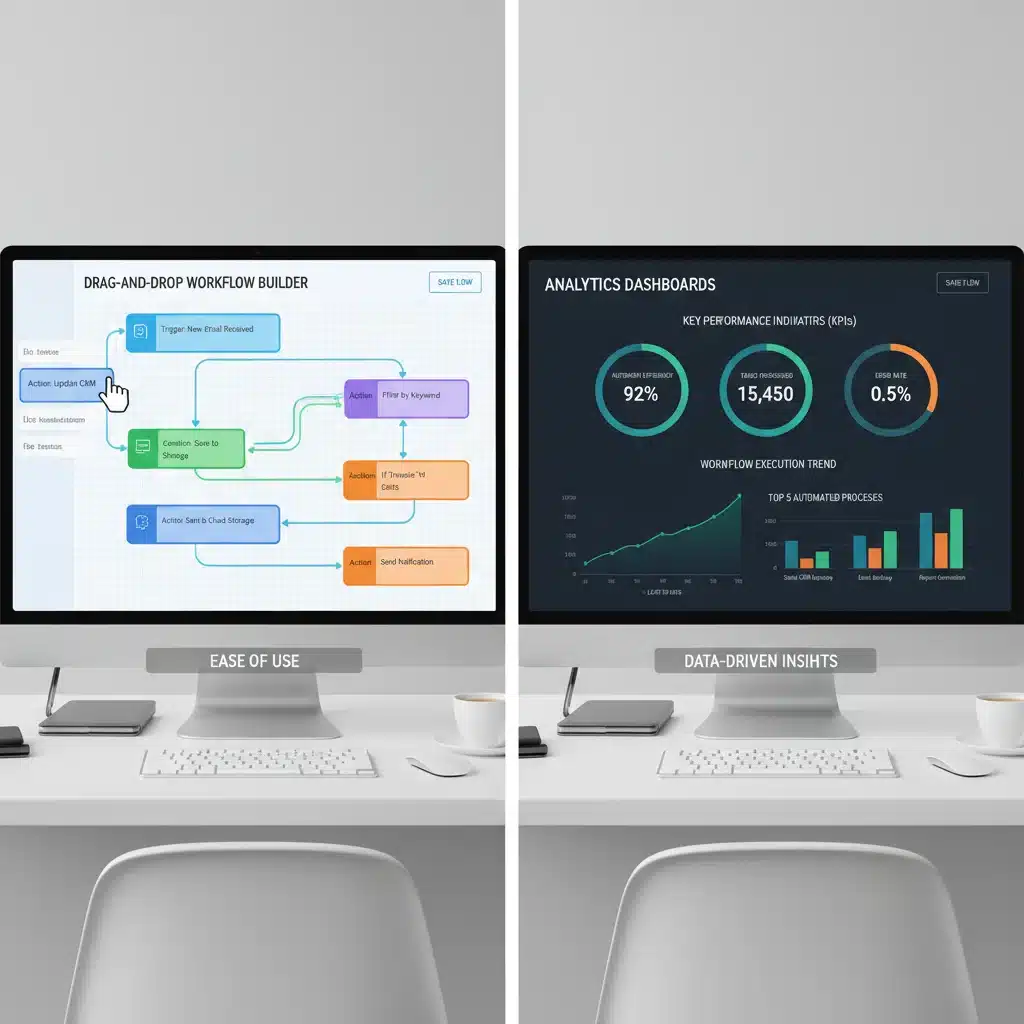
Comparative Summary: Choosing the Right Process Automation Tools for Your U.S. Business
The choice among these leading Process Automation Tools ultimately depends on your specific business context, strategic goals, and existing technology stack. Here’s a quick summary to help U.S. businesses differentiate:
- UiPath: Best for enterprises seeking robust, scalable RPA and hyperautomation capabilities, especially for automating high-volume, repetitive tasks and integrating AI for unstructured data. Strongest in pure-play RPA with a comprehensive ecosystem for process discovery and management.
- Microsoft Power Automate: Ideal for U.S. businesses already within the Microsoft ecosystem, looking for cost-effective, user-friendly automation that leverages existing investments. Excellent for citizen developers and departmental automation, offering a good balance of RPA and API-based flows.
- Appian: Suited for organizations focused on end-to-end digital transformation and complex business process orchestration. Its strength lies in combining low-code application development with BPM, RPA, and AI for human-centric and dynamic workflows, particularly in regulated industries.
Key Decision Factors Revisited:
- Automation Scope: Are you automating individual tasks (RPA), departmental workflows (Power Automate), or end-to-end enterprise processes (Appian)?
- Technical Expertise: Do you have dedicated developers, or do you need a platform for citizen developers?
- Existing Infrastructure: How well does the tool integrate with your current systems and cloud environment?
- Budget: What is your allocated budget for initial investment and ongoing maintenance?
- Industry Compliance: Does the tool meet specific regulatory requirements for your sector in the U.S.?
Implementation Strategies for Process Automation Tools in U.S. Businesses
Once you’ve selected your preferred Process Automation Tools, successful implementation is the next critical step. For U.S. businesses, a phased approach often yields the best results, allowing for learning and adaptation.
- Start Small, Think Big: Begin with a pilot project that has a clear, measurable ROI. This helps build internal confidence and demonstrates the value of automation.
- Build an Automation Center of Excellence (CoE): Establish a dedicated team or a cross-functional group responsible for identifying opportunities, developing automations, and governing the use of your chosen Process Automation Tools.
- Change Management and Training: Invest in training your employees. Emphasize that automation is a tool to empower them, not replace them. Communicate the benefits clearly and address concerns proactively.
- Monitor and Optimize: Automation is not a one-time project. Continuously monitor the performance of your automated processes, gather feedback, and look for opportunities to optimize and expand.
- Ensure Data Security and Compliance: Especially for U.S. businesses, adhere to all relevant data privacy laws (e.g., CCPA, HIPAA) and industry-specific regulations. Your chosen Process Automation Tools should support these requirements.
- Measure ROI: Track key metrics such as cost savings, error reduction, processing time, and employee satisfaction to demonstrate the tangible benefits of your automation initiatives.
The Future of Process Automation in the U.S. Market
Looking ahead to 2026 and beyond, the role of Process Automation Tools will only continue to grow. We anticipate even greater convergence of AI, ML, and automation, leading to truly autonomous systems that can learn, adapt, and even self-heal. The focus will shift from automating tasks to automating entire business functions, enabling U.S. businesses to operate with unprecedented agility and intelligence.
The rise of composable enterprises, where modular business capabilities can be quickly assembled and reassembled, will be heavily reliant on sophisticated automation platforms. Furthermore, ethical AI and responsible automation will become paramount, with greater emphasis on transparency, fairness, and accountability in automated decision-making processes.
U.S. businesses that embrace these trends and strategically invest in the right Process Automation Tools will be well-positioned to navigate future challenges, capitalize on new opportunities, and achieve sustainable growth in an increasingly competitive global marketplace.
Conclusion
The landscape of Process Automation Tools for U.S. operations in 2026 is rich with innovation and potential. UiPath, Microsoft Power Automate, and Appian each offer compelling solutions, catering to different scales, complexities, and strategic objectives. By carefully evaluating your business needs, understanding the strengths of each platform, and implementing a thoughtful automation strategy, you can unlock significant efficiencies, drive digital transformation, and secure a competitive edge.
The journey to hyperautomation is ongoing, and selecting the right partners and technologies is crucial. This comparative analysis serves as a starting point, empowering U.S. businesses to make informed decisions that will shape their operational future. Invest wisely in Process Automation Tools, and pave the way for a more efficient, agile, and intelligent enterprise.