First 1000 Customers: 90-Day Startup Action Plan

Securing Your First 1000 Customers: A 90-Day Action Plan for U.S. Startups
For any startup, the journey from ideation to impact is paved with milestones, and arguably none is more critical than acquiring your first 1000 customers. This initial cohort not only validates your product or service but also provides the foundational revenue and feedback necessary for sustainable growth. In the fast-paced, competitive landscape of the U.S. market, achieving this goal requires a strategic, aggressive, and well-executed plan. This article outlines a comprehensive 90-day action plan designed specifically for U.S. startups aiming to secure their first 1000 customers.
Understanding the importance of this milestone, we’ll delve into actionable strategies across market research, product refinement, marketing, sales, and customer retention. Each phase is designed to build upon the last, creating a robust framework for rapid customer acquisition and long-term success. By the end of these 90 days, your startup should not only have a significant customer base but also a clear understanding of its market, its value proposition, and its path forward.
Week 1-2: Laying the Foundation – Deep Dive into Market and Product
The first two weeks are crucial for solidifying your understanding of your market and ensuring your product is ready for prime time. This stage is about precision and preparation, minimizing wasted effort later on.
Define Your Ideal Customer Profile (ICP)
Before you can acquire your first 1000 customers, you need to know exactly who they are. This goes beyond basic demographics. Develop a detailed ICP that includes:
- Demographics/Firmographics: Age, location, industry, company size, revenue.
- Psychographics/Behavioral Traits: Goals, challenges, pain points, values, online behavior, purchasing habits.
- Needs and Desires: What problems does your product solve for them? What aspirations does it help them achieve?
- Where do they congregate? Online forums, social media groups, industry events, publications.
Conduct interviews, surveys, and analyze existing data to build a vivid picture of your ICP. This will inform all subsequent marketing and sales efforts.
Validate Your Value Proposition
Your value proposition is the core reason customers choose you over competitors. It needs to be clear, concise, and compelling. Test it rigorously:
- Problem-Solution Fit: Do potential customers acknowledge the problem you’re solving? Do they believe your solution is effective?
- Unique Selling Proposition (USP): What makes your offering different and better than alternatives?
- Messaging Clarity: Can your ICP understand your value proposition quickly and easily?
Use A/B testing on landing pages, conduct user interviews, and gather feedback from early adopters. Refine your messaging until it resonates powerfully with your target audience.
Optimize Your Minimum Viable Product (MVP)
Your MVP should be functional, solve a core problem, and offer a great user experience. While perfection is the enemy of progress, a buggy or confusing product will hinder your ability to acquire your first 1000 customers.
- Bug Resolution: Address any critical bugs that could impede user adoption or satisfaction.
- User Experience (UX) Review: Ensure the product is intuitive and easy to navigate. Conduct usability testing with real users.
- Essential Features Only: Resist the urge to add non-essential features. Focus on the core value proposition.
- Onboarding Process: Develop a smooth and engaging onboarding experience that quickly showcases your product’s value.
Remember, the goal is to provide enough value to encourage adoption and positive word-of-mouth.
Week 3-4: Building Awareness and Generating Early Leads
With a solid foundation, the next two weeks focus on getting your product in front of your ICP and starting to build a pipeline of interested prospects.
Content Marketing for Thought Leadership
Establish your startup as an authority in your niche. Create valuable content that addresses your ICP’s pain points and offers solutions.
- Blog Posts: Publish high-quality, SEO-optimized articles related to your industry and product. Aim for 2-3 posts per week.
- Guides/Ebooks: Develop in-depth resources that provide significant value in exchange for contact information (lead magnet).
- Webinars/Workshops: Host online events to demonstrate your expertise and engage directly with potential customers.
- Video Content: Create short, engaging videos for social media platforms and your website explaining your product or offering tips related to your industry.
Distribute this content widely across relevant platforms where your ICP spends their time.
Leverage Social Media Strategically
Social media is a powerful tool for building brand awareness and engaging with your target audience.
- Platform Selection: Focus on 1-2 platforms where your ICP is most active (e.g., LinkedIn for B2B, Instagram/TikTok for B2C).
- Consistent Posting: Share valuable content, behind-the-scenes glimpses, and engage with comments and messages.
- Community Building: Join relevant groups and participate in discussions to establish your presence and offer insights.
- Paid Social Campaigns: Run targeted ads to reach a wider, yet specific, audience based on your ICP. Experiment with different ad creatives and messaging.
Early Adopter Programs and Beta Testing
Offer exclusive access or incentives to early adopters to generate initial traction and valuable feedback.
- Beta Program: Invite a select group to test your product, providing direct feedback and bug reports.
- Referral Incentives: Encourage early users to refer others by offering discounts, extended features, or other rewards.
- Testimonials and Reviews: Actively solicit testimonials and reviews from satisfied early adopters to build social proof.
These programs are vital for refining your product and generating positive buzz as you work towards your first 1000 customers.
Week 5-8: Aggressive Customer Acquisition and Conversion
This four-week period is about scaling your efforts and relentlessly pursuing customer conversions. This is where your efforts to secure your first 1000 customers will truly accelerate.
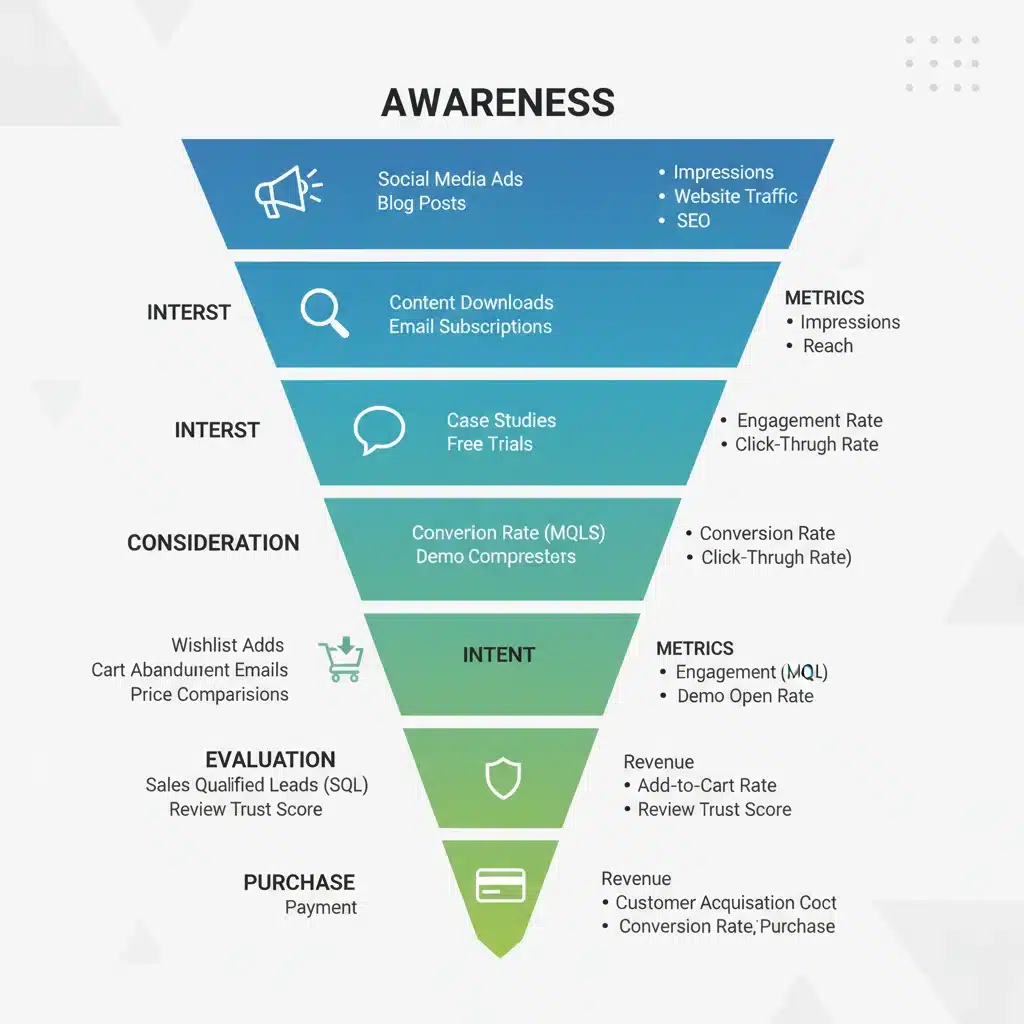
Refining Your Sales Funnel
A well-defined sales funnel guides prospects from initial awareness to becoming paying customers. Optimize each stage:
- Awareness: Content marketing, social media, PR.
- Interest: Lead magnets, webinars, email nurturing.
- Consideration: Product demos, free trials, case studies.
- Decision: Clear pricing, compelling calls to action, easy checkout.
- Retention: Excellent customer support, ongoing engagement.
Analyze your conversion rates at each stage and identify bottlenecks. Continuously iterate to improve efficiency.
Paid Advertising Campaigns
Paid ads can provide a rapid influx of targeted traffic. Invest strategically in platforms where your ICP is active.
- Google Ads: Target users actively searching for solutions your product offers. Focus on relevant keywords and compelling ad copy.
- Social Media Ads (Advanced): Utilize lookalike audiences, retargeting, and detailed demographic/interest targeting to maximize ROI.
- Industry-Specific Platforms: Explore advertising opportunities on niche websites, forums, or publications relevant to your industry.
Start with a manageable budget, continuously monitor performance, and optimize your campaigns based on data. A/B test ad creatives, landing pages, and CTAs to improve conversion rates.
Direct Outreach and Partnerships
Sometimes, the most effective way to reach your first 1000 customers is through direct engagement or leveraging existing networks.
- Personalized Cold Outreach: For B2B, identify key decision-makers and craft highly personalized emails or LinkedIn messages. Focus on solving their specific problems.
- Strategic Partnerships: Collaborate with complementary businesses or influencers who share your target audience. This could involve co-marketing, joint webinars, or cross-promotions.
- Referral Programs: Expand your early adopter referral program to current customers, incentivizing them to spread the word.
- Affiliate Marketing: If applicable, set up an affiliate program where partners earn a commission for driving sales.
Optimizing Your Website and Landing Pages
Your website and landing pages are critical conversion tools. Ensure they are optimized for performance and user experience.
- Clear Call-to-Actions (CTAs): Make it obvious what you want visitors to do next (e.g., "Sign Up Now," "Get a Free Demo").
- Mobile Responsiveness: Ensure your website functions perfectly on all devices.
- Fast Loading Speed: Slow websites lead to high bounce rates. Optimize images and code.
- Compelling Copy: Highlight benefits over features, address pain points, and build trust.
- Social Proof: Display testimonials, reviews, and trust badges prominently.
- A/B Testing: Continuously test different headlines, images, CTAs, and page layouts to improve conversion rates.
Week 9-12: Nurturing, Retention, and Scaling for the Future
Reaching your first 1000 customers is a huge achievement, but the work doesn’t stop there. These final weeks focus on retaining those customers, gathering feedback, and setting the stage for continued growth.
Customer Onboarding and Success
A smooth onboarding process is crucial for customer satisfaction and retention.
- Welcome Sequences: Send automated email sequences that guide new users through your product’s key features and benefits.
- Tutorials and Demos: Provide easy-to-understand resources to help users get started quickly.
- Dedicated Support: Offer accessible customer support channels (chat, email, phone) to address questions and issues promptly.
- Proactive Engagement: Reach out to customers to check in, offer tips, and gather feedback.
Happy customers are your best advocates and are more likely to stay with your product.
Gathering and Acting on Feedback
Your first 1000 customers are a goldmine of information. Actively solicit and analyze their feedback.
- Surveys: Use tools like Net Promoter Score (NPS) or Customer Satisfaction (CSAT) surveys.
- User Interviews: Conduct one-on-one interviews to gain deeper insights into their experiences.
- In-App Feedback: Implement direct feedback mechanisms within your product.
- Review Analysis: Monitor reviews on third-party platforms and app stores.
Use this feedback to identify areas for product improvement, refine your marketing messages, and enhance the overall customer experience. Prioritize changes that address common pain points or unlock significant value.
Building a Community
Foster a sense of community among your users. This can lead to increased engagement, loyalty, and organic referrals.
- Online Forums/Groups: Create a dedicated space for users to connect, share tips, and ask questions.
- User-Generated Content: Encourage customers to share their experiences with your product on social media or through case studies.
- Exclusive Content/Events: Offer special access or content to your most engaged users.
A thriving community can become a powerful engine for growth, helping you acquire even more customers beyond your initial first 1000 customers.
Analyzing Data and Optimizing for Scale
Data-driven decisions are paramount for sustainable growth. Continuously analyze your metrics to identify what’s working and what’s not.
- Key Performance Indicators (KPIs): Track customer acquisition cost (CAC), lifetime value (LTV), churn rate, conversion rates, and engagement metrics.
- Attribution Modeling: Understand which channels are most effective in driving customer acquisition.
- A/B Testing: Continue to A/B test all aspects of your marketing and sales funnel.
- Predictive Analytics: As your data grows, start using it to forecast future trends and customer behavior.
Use these insights to optimize your spending, refine your strategies, and make informed decisions about where to invest your resources for future growth.
Crucial Considerations Throughout the 90 Days
While the phased approach provides a structured roadmap, several overarching principles must be maintained throughout the entire 90-day period.
Agility and Iteration
The startup world is dynamic. Be prepared to pivot, adjust, and iterate based on market feedback and performance data. Your initial plan is a hypothesis; real-world results will guide its refinement. Don’t be afraid to change course if a strategy isn’t yielding the desired results. The ability to adapt quickly is a hallmark of successful startups.
Customer-Centricity
Every decision, from product development to marketing messaging, should revolve around your customer. Understand their needs, listen to their feedback, and strive to exceed their expectations. A customer-centric approach naturally leads to higher satisfaction, better retention, and more powerful word-of-mouth marketing, making it easier to secure your first 1000 customers and beyond.
Team Alignment and Motivation
Your team is your greatest asset. Ensure everyone is aligned with the goal of acquiring the first 1000 customers and understands their role in achieving it. Foster a culture of collaboration, transparency, and celebration of small wins. High team morale translates into greater productivity and innovation.
Financial Prudence
Startups often operate with limited resources. Be mindful of your budget throughout the 90 days. Prioritize initiatives that offer the highest potential ROI and continuously evaluate the cost-effectiveness of your marketing and sales efforts. Track your Customer Acquisition Cost (CAC) rigorously to ensure you’re acquiring customers profitably.
Legal and Compliance in the U.S. Market
Operating in the U.S. market requires adherence to various legal and compliance standards. This includes, but is not limited to, data privacy regulations (e.g., CCPA, state-specific laws), consumer protection laws, and industry-specific regulations. Ensure your marketing practices, data handling, and terms of service are fully compliant to avoid costly legal issues that could derail your progress towards your first 1000 customers.
- Data Privacy: Be transparent about data collection and usage. Ensure you have proper consent mechanisms.
- Accessibility: Consider web accessibility standards (ADA compliance) to ensure your product is usable by everyone.
- Terms of Service & Privacy Policy: Have clear, legally sound documents in place.
- Consumer Protection: Avoid deceptive advertising or marketing practices.
Consult with legal professionals to ensure your startup is fully compliant from day one.
Leveraging Analytics and CRM for Continuous Improvement
Throughout this 90-day sprint, data will be your most valuable ally. Implementing robust analytics and a Customer Relationship Management (CRM) system from the outset is non-negotiable.
Analytics Setup and Monitoring
Before you even launch your first campaign, ensure you have comprehensive analytics in place.
- Google Analytics 4 (GA4): Set up GA4 to track website traffic, user behavior, conversion events, and more. Understand your users’ journey from landing on your site to conversion.
- Heatmaps and Session Recordings: Tools like Hotjar or Crazy Egg can provide visual insights into how users interact with your website and product, highlighting areas of friction or confusion.
- A/B Testing Tools: Integrate tools like Google Optimize (or alternatives) to run systematic tests on your website, landing pages, and email campaigns.
- Ad Platform Analytics: Utilize the built-in analytics of platforms like Google Ads, Facebook Ads, and LinkedIn Ads to monitor campaign performance in real-time.
Regularly review your analytics dashboards. Identify trends, pinpoint areas for improvement, and make data-driven decisions to optimize your customer acquisition efforts.
Implementing a CRM System
A CRM system is essential for managing your leads, tracking customer interactions, and nurturing relationships. Even a basic CRM can make a significant difference in your ability to scale and acquire your first 1000 customers efficiently.
- Lead Management: Track where leads come from, their status in the sales funnel, and relevant contact information.
- Customer Communication: Centralize all communication with prospects and customers (emails, calls, meeting notes).
- Sales Pipeline Management: Visualize your sales pipeline, identify bottlenecks, and forecast future revenue.
- Customer Support: Integrate customer support functionalities to provide timely and personalized assistance.
- Marketing Automation: Use CRM data to segment your audience and automate personalized marketing campaigns.
Popular CRM options for startups include HubSpot (free tier available), Salesforce Essentials, Zoho CRM, and Pipedrive. Choose one that scales with your needs and integrates with your existing tools.
The Power of Feedback Loops
Establish continuous feedback loops between your sales, marketing, product, and customer success teams. This ensures that insights gained from customer interactions are shared and acted upon across the organization.
- Regular Cross-Functional Meetings: Schedule weekly or bi-weekly meetings to discuss customer feedback, sales performance, and marketing campaign results.
- Shared Dashboards: Create centralized dashboards that provide a holistic view of customer acquisition and retention metrics.
- Product Roadmap Alignment: Ensure that customer feedback directly influences your product development roadmap, leading to a product that truly meets market needs.
By fostering this collaborative environment, you can quickly adapt your strategies, refine your product, and accelerate your journey to your first 1000 customers.
Conclusion: The Path to Your First 1000 Customers and Beyond
Securing your first 1000 customers in 90 days is an ambitious but achievable goal for U.S. startups. It requires relentless focus, strategic planning, and the agility to adapt. By meticulously executing the steps outlined in this action plan – from deep market understanding and product optimization to aggressive acquisition, nurturing, and continuous data analysis – you can build a strong foundation for rapid and sustainable growth.
Remember, each customer gained is a testament to your value proposition and an opportunity to learn. Embrace the feedback, celebrate the wins, and continuously iterate. This initial sprint will not only provide you with a critical mass of users but also invaluable insights into your market and your business model, paving the way for your next 10,000 customers and beyond. Your journey to becoming a market leader begins with these first crucial steps. Good luck, and may your customer base flourish!