Startup Overhead Reduction: Cut Costs 20% in 90 Days

Startup Overhead Reduction: Cutting Costs by 20% in 90 Days for Sustainable Growth
In the fast-paced world of startups, growth is often the primary focus. However, unchecked growth can quickly lead to an unsustainable burn rate, jeopardizing even the most promising ventures. This is where strategic startup overhead reduction becomes not just beneficial, but critical. For many startups, the goal isn’t just to grow, but to grow efficiently, ensuring every dollar spent contributes directly to value creation. This comprehensive guide will walk you through actionable strategies to achieve a significant 20% reduction in your startup’s overhead within the next 90 days, setting you on a path to sustainable, profitable scaling.
The journey to effective startup overhead reduction begins with a clear understanding of where your money is going. Many founders are surprised to find how much of their budget is allocated to non-essential or underutilized resources. By systematically analyzing expenditures and implementing lean methodologies, you can free up capital that can be reinvested into core growth initiatives, product development, or simply extend your runway. This isn’t about penny-pinching; it’s about strategic financial management that fosters long-term health and resilience.
Understanding Your Current Overhead: The First Step to Reduction
Before you can cut costs, you need to know exactly what those costs are. Many startups operate with a vague understanding of their operational expenses. A detailed financial audit is not just for large corporations; it’s a vital exercise for any startup aiming for startup overhead reduction. This involves categorizing every expense, no matter how small, and understanding its purpose and necessity.
Categorizing Expenses: What to Look For
Start by breaking down your overhead into clear categories. Common categories include:
- Personnel Costs: Salaries, benefits, contractor fees, recruitment.
- Software and Subscriptions: SaaS tools, licenses, cloud hosting.
- Office Space & Utilities: Rent, electricity, internet, office supplies.
- Marketing & Sales: Advertising spend, CRM tools, sales enablement.
- Professional Services: Legal, accounting, consulting.
- Travel & Entertainment: Business trips, client dinners.
- Equipment & Technology: Laptops, monitors, specialized hardware.
Once categorized, assign a monetary value to each. This granular view will illuminate areas of potential waste and provide a baseline for your startup overhead reduction efforts. Don’t just look at the big numbers; often, numerous small, recurring expenses can add up to a significant drain on resources.
Analyzing Necessity and ROI
With your expenses categorized, the next step is to critically evaluate each one. Ask tough questions:
- Is this expense absolutely necessary for our core operations?
- What is the direct return on investment (ROI) for this expense?
- Are we getting the best value for money, or are there cheaper, equally effective alternatives?
- Is this expense scalable, or will it become a bottleneck as we grow?
- Can this function be outsourced more cost-effectively?
This analytical phase is crucial for identifying low-hanging fruit for startup overhead reduction. You might discover subscriptions for unused software, excessive spending on non-essential perks, or inefficient processes that inflate costs. Document your findings thoroughly; this data will be the backbone of your 90-day plan.
Phase 1: Immediate Wins (Days 1-30)
The first month of your startup overhead reduction initiative should focus on quick, impactful changes that don’t require significant strategic shifts or long implementation times. These immediate wins build momentum and demonstrate early success, motivating your team for further optimization.
Re-evaluating Software Subscriptions
Software-as-a-Service (SaaS) tools are indispensable for modern startups, but they can also be a significant hidden cost. Many companies accumulate subscriptions they no longer use, or pay for premium tiers when a basic plan would suffice. Conduct a thorough audit of all your SaaS tools.
- Identify Redundancies: Are you paying for multiple tools that perform the same function? Consolidate where possible.
- Check Usage: Use the analytics provided by the tools (or ask your team) to see if they are actively being used. Cancel subscriptions for unused tools.
- Downgrade Plans: If you’re on an enterprise plan but only using a fraction of its features, downgrade to a more appropriate tier.
- Negotiate: Don’t be afraid to contact vendors, especially for larger subscriptions, to negotiate better rates or annual discounts.
This can often lead to a 5-10% reduction in overall overhead within the first few weeks.
Optimizing Office and Utilities
For startups with physical office spaces, these costs can be substantial. Even small adjustments can lead to significant savings.
- Energy Efficiency: Implement energy-saving practices like turning off lights and electronics, using smart thermostats, and encouraging remote work a few days a week to reduce utility bills.
- Office Supplies: Implement a system for tracking and ordering office supplies to prevent over-ordering or purchasing unnecessary items. Consider bulk buying for common items.
- Space Utilization: If your office space is underutilized, consider subletting a portion, or if your lease is ending, look for a smaller, more cost-effective location.
Controlling Travel and Entertainment Expenses
While client meetings and team building are important, these expenses can quickly spiral. Implement clear policies:
- Virtual Meetings First: Encourage video conferencing over travel whenever possible.
- Travel Policies: Establish clear guidelines for flights (economy class), accommodation (mid-range hotels), and per diems.
- Entertainment Budgets: Set limits on client entertainment and team social events, ensuring they provide clear business value.
These initial steps are designed to yield immediate results, creating a positive feedback loop for your startup overhead reduction efforts.
Phase 2: Strategic Adjustments (Days 31-60)
After tackling the immediate wins, the second month shifts focus to more strategic adjustments that may require some planning and negotiation but offer substantial long-term savings. This phase delves deeper into operational efficiencies and vendor relationships.
Vendor Renegotiation and Consolidation
Review all your vendor contracts, not just software. This includes everything from internet providers and cleaning services to payment processors and HR platforms. Many vendors are open to renegotiating terms, especially if you’re a long-term client or if you can demonstrate you’re considering alternatives.
- Shop Around: Get quotes from competitors to leverage better deals.
- Bundle Services: See if multiple services can be consolidated with a single vendor for a volume discount.
- Long-Term Contracts: If you’re satisfied with a vendor, inquire about discounts for signing longer-term contracts.
Don’t underestimate the power of a simple phone call. Often, vendors would rather offer a discount than lose your business.
Optimizing Cloud and Infrastructure Costs
For tech-heavy startups, cloud infrastructure (AWS, Azure, Google Cloud) can be a major expense. These costs often grow unchecked. 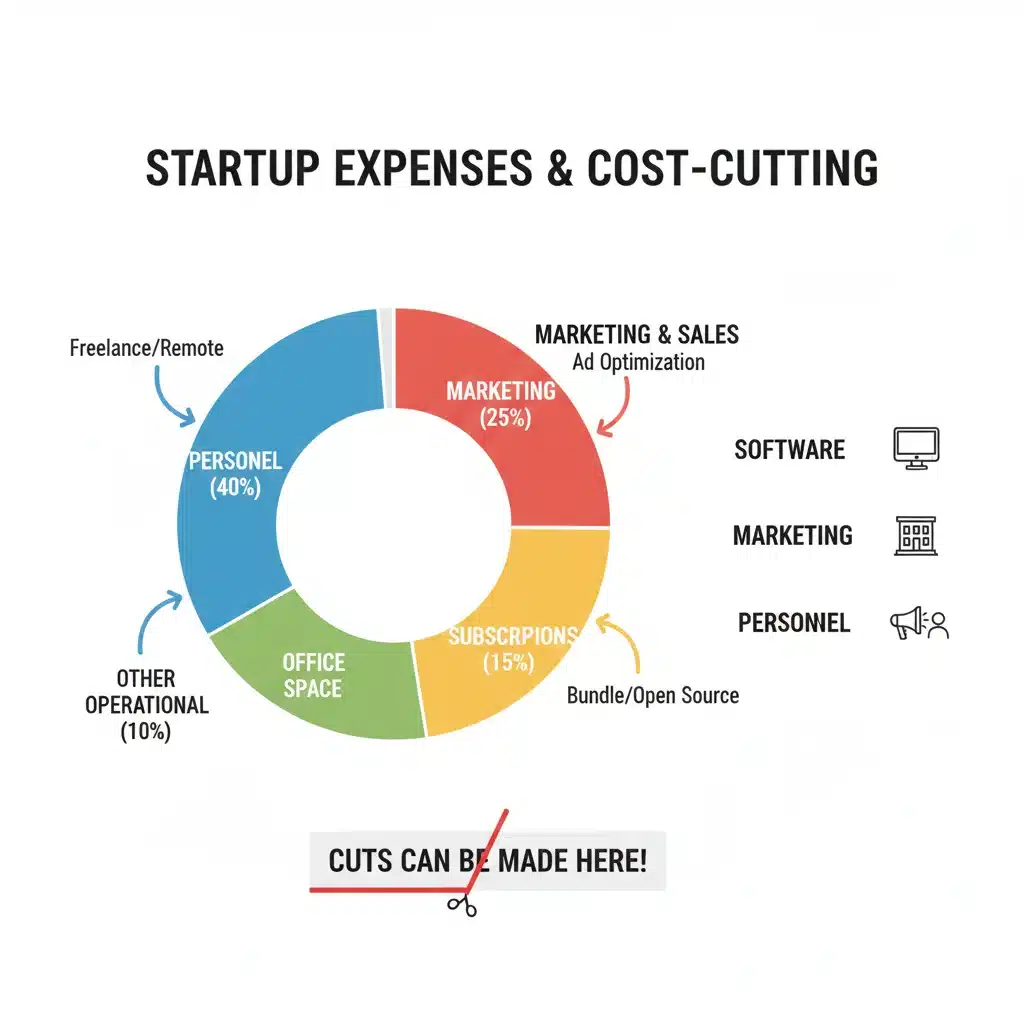
- Right-Sizing Instances: Ensure your virtual machines and databases are appropriately sized for your actual usage, not over-provisioned.
- Spot Instances/Reserved Instances: Utilize cost-saving options like spot instances for fault-tolerant workloads or reserved instances for predictable, long-term needs.
- Data Storage Optimization: Implement lifecycle policies to move less frequently accessed data to cheaper storage tiers.
- Monitoring and Alerts: Set up alerts for unexpected cost spikes to catch issues early.
- Serverless Architectures: Explore serverless options (Lambda, Cloud Functions) which can significantly reduce operational overhead for certain workloads.
This area often requires technical expertise but can yield massive reductions in your startup overhead reduction efforts.
Streamlining Marketing and Sales Spend
Marketing and sales are crucial for growth, but they are also areas where money can be easily wasted on ineffective campaigns or tools.
- Analyze Campaign ROI: Rigorously track the ROI of all your marketing campaigns. Cut or reallocate budget from underperforming channels.
- Content Efficiency: Repurpose existing content (blog posts into videos, infographics into social media snippets) to maximize its value without creating new assets from scratch.
- CRM Optimization: Ensure your CRM is fully utilized. Are you paying for features your sales team isn’t using?
- Free/Freemium Tools: Explore free or freemium versions of marketing tools before committing to paid subscriptions.
Every marketing dollar should be justified by its potential to generate leads or revenue directly.
Phase 3: Long-Term Structural Changes (Days 61-90)
The final month focuses on implementing more significant, structural changes that might involve process re-engineering, team structure adjustments, and a deeper dive into operational efficiency. These changes aim for sustained startup overhead reduction, not just temporary fixes.
Process Automation and Efficiency
Manual, repetitive tasks are not only time-consuming but also prone to errors, leading to downstream costs. Identify areas where automation can reduce labor costs and improve accuracy.
- Finance & HR: Automate invoicing, payroll, expense reporting, and onboarding processes.
- Customer Support: Implement chatbots for common queries, automate ticket routing, and create comprehensive self-service knowledge bases.
- Operations: Streamline workflows using project management tools, integrate different software systems to reduce manual data entry.
Investing in automation tools often has a rapid ROI through reduced personnel hours and increased efficiency.
Optimizing Personnel Costs and Productivity
Personnel is often the largest cost for any startup. This doesn’t necessarily mean layoffs, but rather optimizing how your team operates.
- Remote-First or Hybrid Models: Transitioning to a fully remote or hybrid work model can significantly reduce office space costs and associated utilities. It also opens up a wider talent pool.
- Freelancers/Contractors: For non-core functions or project-based work, consider hiring freelancers or contractors instead of full-time employees. This offers flexibility and reduces overheads like benefits.
- Cross-Training: Cross-train employees to handle multiple roles, increasing flexibility and reducing the need for specialized hires for every task.
- Performance Review: Conduct regular performance reviews to ensure every team member is contributing effectively and to identify training needs that can boost productivity.
The goal here is not to cut corners on talent, but to ensure that every role is essential and every employee is operating at peak efficiency.
Long-Term Financial Planning and Budgeting
For sustainable startup overhead reduction, cost-cutting cannot be a one-time event. It needs to be ingrained in your company culture and financial planning.
- Zero-Based Budgeting: Instead of incrementally adjusting previous budgets, consider zero-based budgeting where every expense must be justified from scratch each cycle.
- Regular Reviews: Schedule quarterly or bi-annual reviews of all expenses and vendor contracts.
- Cost-Conscious Culture: Foster a culture where every employee is encouraged to think about cost-effectiveness and suggest efficiency improvements. Reward initiatives that lead to significant savings.
By the end of 90 days, these structural changes will have cemented a more financially disciplined operation.
Measuring Success and Maintaining Momentum
Achieving a 20% startup overhead reduction in 90 days is a significant accomplishment. However, the work doesn’t stop there. Continuous monitoring and adaptation are key to maintaining these gains and finding new areas for optimization.
Key Performance Indicators (KPIs) for Cost Reduction
How do you know if your efforts are paying off? Track relevant KPIs:
- Burn Rate: The rate at which your company is spending its capital. A reduced burn rate is a direct indicator of successful cost reduction.
- Customer Acquisition Cost (CAC): Ensure your marketing cuts aren’t inadvertently increasing CAC. Ideally, you want to reduce overhead while maintaining or improving CAC.
- Gross Margin: Improved gross margins can indicate more efficient operations and cost structures.
- Operating Expenses Ratio: Your operating expenses as a percentage of revenue. A decreasing ratio is a positive sign.
Regularly review these metrics to understand the impact of your startup overhead reduction strategies.
Building a Culture of Efficiency
True long-term startup overhead reduction comes from embedding efficiency into your company’s DNA. 
- Empower Employees: Encourage team members at all levels to identify inefficiencies and propose solutions.
- Transparency: Be transparent about financial goals and the impact of cost-saving measures. This helps foster buy-in and shared responsibility.
- Celebrate Wins: Acknowledge and celebrate successful cost-saving initiatives and the individuals or teams behind them.
- Continuous Improvement: Treat cost optimization as an ongoing process, not a one-time project. Regularly review processes, tools, and expenditures.
Conclusion: A Leaner, Stronger Startup
Achieving a 20% startup overhead reduction in 90 days is an ambitious but entirely achievable goal. It requires discipline, strategic thinking, and a willingness to critically examine every aspect of your operations. By following the phased approach outlined in this guide – from immediate wins to strategic adjustments and long-term structural changes – you can transform your startup into a leaner, more resilient, and ultimately more successful enterprise.
This journey isn’t just about saving money; it’s about optimizing resources, enhancing operational efficiency, and building a foundation for sustainable growth. A startup that effectively manages its overhead is better positioned to weather economic uncertainties, invest in innovation, and ultimately achieve its vision. Start today, and witness the profound impact strategic startup overhead reduction can have on your business’s future.