Optimizing Burn Rate: Startup Financial Strategies 2026

Anúncios
Optimizing Your Burn Rate: Financial Strategies for Sustainable Startup Growth in 2026
In the fast-paced world of startups, the term "burn rate" is often whispered with a mix of fear and urgency. It represents the speed at which your company is spending its capital before generating positive cash flow. For many, it’s a ticking clock, a race against time to achieve profitability or secure the next round of funding. However, viewing your burn rate not as a threat but as a strategic lever can transform your approach to financial management. In 2026, with evolving market dynamics and increased investor scrutiny, mastering startup burn rate optimization is more critical than ever for sustainable growth.
Anúncios
This comprehensive guide will delve into the intricacies of burn rate management, offering actionable financial strategies designed to help your startup not just survive, but thrive. We’ll explore everything from meticulous cash flow projections to strategic fundraising and operational efficiency, ensuring your capital fuels genuine, long-term value. Let’s embark on this journey to transform your burn rate into a powerful tool for success.
Understanding Your Burn Rate: More Than Just Spending
Before we can optimize, we must first understand. Your burn rate isn’t just a single number; it’s a reflection of your operational costs, revenue trajectory, and strategic investments. It’s the net negative cash flow over a specific period, usually monthly. Understanding the components of your burn rate is the first step towards effective startup burn rate optimization.
Gross Burn vs. Net Burn
- Gross Burn: This is the total operating expenses your startup incurs each month. It includes everything from salaries and office rent to marketing spend and software subscriptions. While it gives a raw figure of your outflows, it doesn’t account for any incoming revenue.
- Net Burn: This is the more critical metric. Net burn is calculated by subtracting your monthly revenue from your gross burn. It tells you exactly how much cash your company is losing each month. If your net burn is positive, congratulations, you’re profitable! But for most early-stage startups, it’s a negative number, indicating how much capital you’re "burning."
Why Burn Rate Matters
Your burn rate directly impacts your "runway" – the amount of time your startup can survive before running out of cash. A high burn rate shortens your runway, putting immense pressure on your team to hit milestones and secure funding quickly. Conversely, a managed and optimized burn rate extends your runway, providing more time for product development, market penetration, and strategic pivots, all crucial for sustainable startup burn rate optimization.
Anúncios
Strategic Pillars of Startup Burn Rate Optimization
Effective burn rate management isn’t about cutting costs indiscriminately; it’s about strategic allocation of resources to maximize impact and extend your runway. Here are the key pillars:
1. Meticulous Financial Forecasting and Cash Flow Management
Accurate financial forecasting is the bedrock of any successful startup burn rate optimization strategy. Without a clear picture of your future cash inflows and outflows, you’re navigating blind.
Developing Robust Financial Models
- Detailed Revenue Projections: Base your revenue forecasts on realistic assumptions, considering market size, customer acquisition costs, conversion rates, and pricing strategies. Avoid overly optimistic projections.
- Expense Tracking and Categorization: Categorize your expenses meticulously into fixed costs (rent, salaries) and variable costs (marketing spend, cloud services that scale with usage). This helps identify areas for potential optimization.
- Scenario Planning: Create best-case, worst-case, and most-likely scenarios for your financial future. This prepares you for different market conditions and helps in proactive decision-making.
Implementing Effective Cash Flow Management
Cash flow is the lifeblood of your startup. Managing it effectively means ensuring you have enough liquidity to meet your obligations without tying up too much capital unnecessarily.
- Accounts Receivable Optimization: Streamline your invoicing process, offer early payment discounts, and follow up promptly on overdue invoices. Every day you wait for payment impacts your cash flow.
- Accounts Payable Management: Negotiate favorable payment terms with suppliers. While you want to pay on time, strategically delaying payments (within ethical and contractual bounds) can help manage your immediate cash outflow.
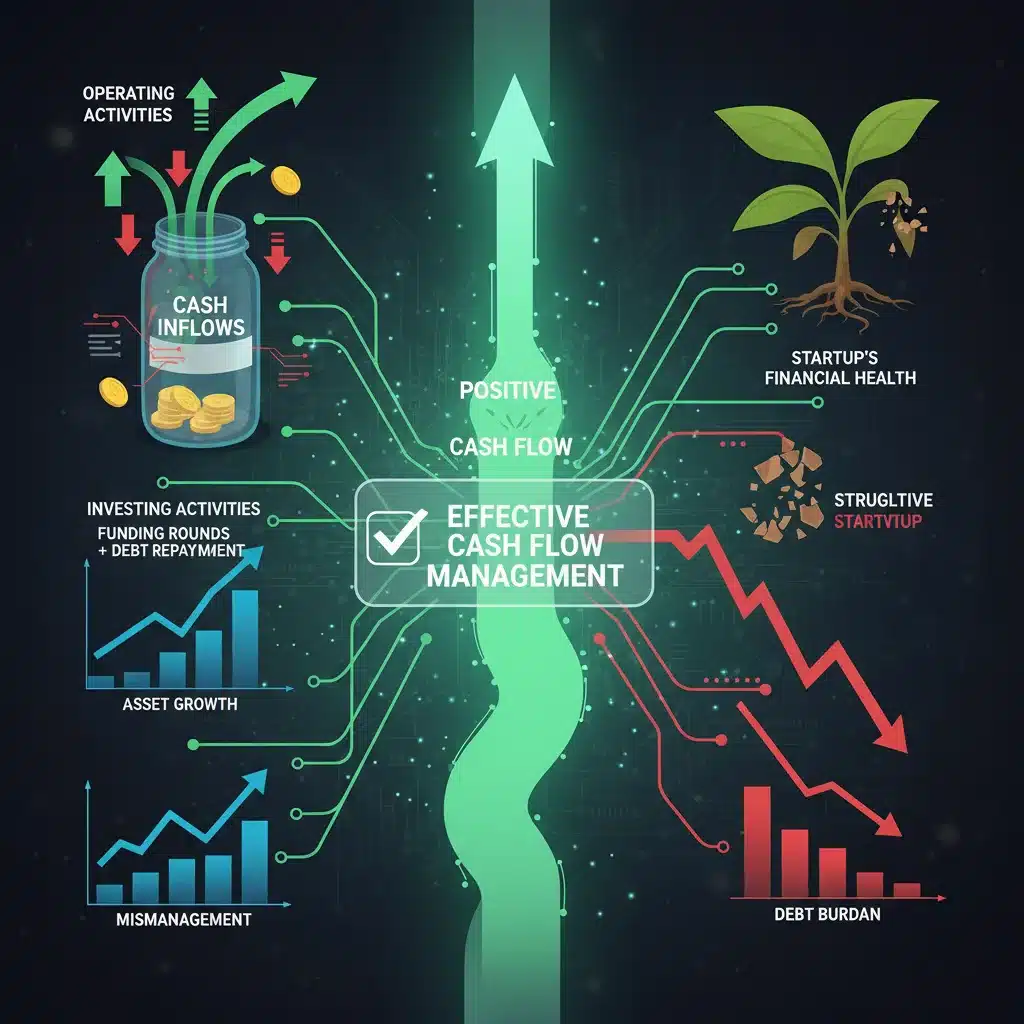
- Cash Flow Statements: Regularly review your cash flow statements. These reports provide a snapshot of your cash inflows and outflows over a period, highlighting trends and potential issues.
2. Ruthless Cost Control and Operational Efficiency
This pillar directly addresses the "burn" part of the equation. It’s not about being cheap, but about being smart with every dollar spent to achieve maximum impact. This is a crucial area for startup burn rate optimization.
Identifying and Reducing Non-Essential Expenses
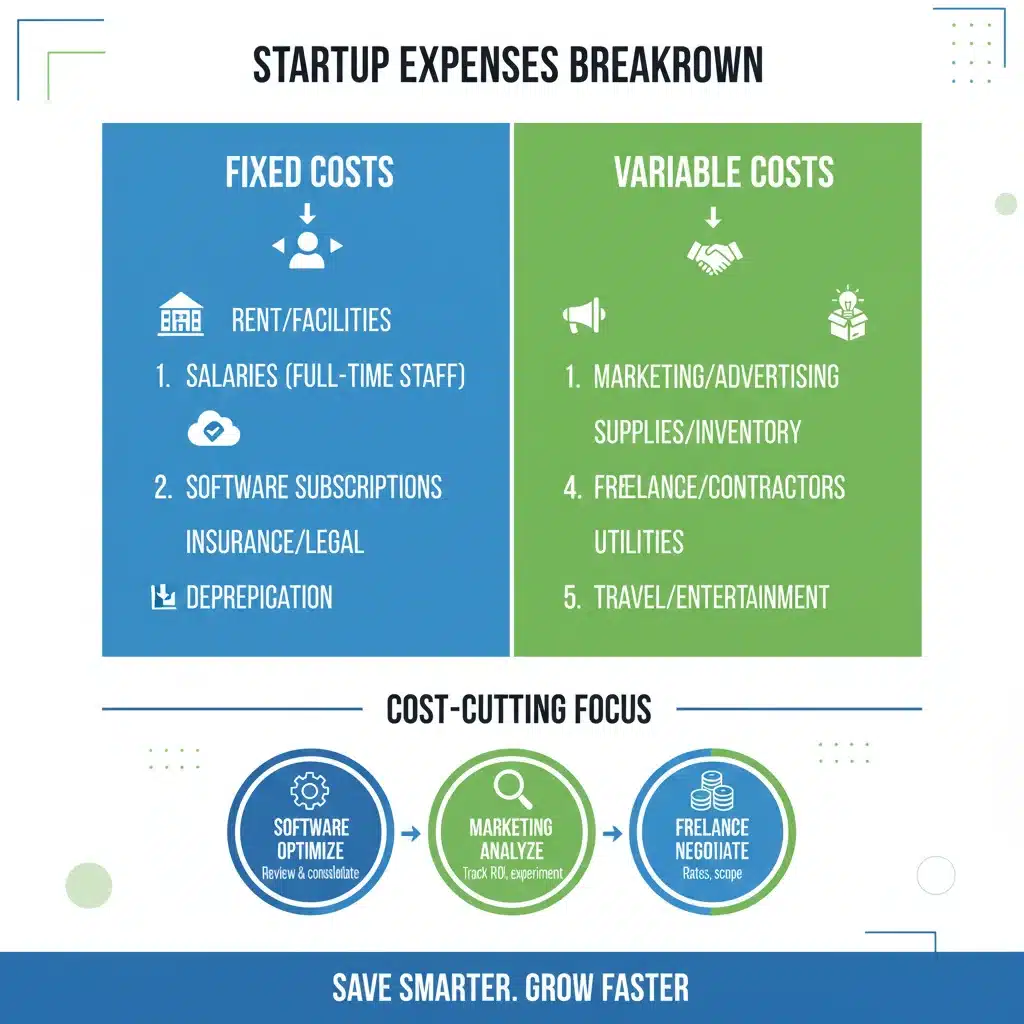
- Software Subscriptions: Audit all your software subscriptions. Are you using all of them? Can you consolidate tools or downgrade plans? Many startups accumulate unused or underutilized software.
- Office Space: Re-evaluate your office needs. With the rise of remote and hybrid work models, do you need a large, expensive physical office? Co-working spaces or smaller, more flexible arrangements can significantly reduce fixed costs.
- Travel and Entertainment: While networking is important, scrutinize travel and entertainment budgets. Are there more cost-effective ways to achieve the same results (e.g., virtual conferences)?
- Marketing Spend: Optimize your marketing channels. Focus on those with the highest ROI and consider A/B testing to ensure every dollar spent generates leads or conversions.
Boosting Operational Efficiency
Efficiency doesn’t just save money; it improves productivity and overall output. This is a powerful component of startup burn rate optimization.
- Automate Repetitive Tasks: Invest in automation tools for tasks like customer support, data entry, or social media scheduling. This reduces the need for manual labor and frees up your team for higher-value activities.
- Outsource Non-Core Functions: Consider outsourcing tasks like payroll, HR, or IT support. This can be more cost-effective than hiring full-time employees for these specialized roles.
- Optimize Supply Chains: If your startup involves physical products, optimize your supply chain for cost-effectiveness and speed. Negotiate better deals with suppliers and minimize inventory holding costs.
- Lean Product Development: Embrace a lean approach to product development. Focus on building a Minimum Viable Product (MVP) and iterate based on user feedback, avoiding over-engineering features that users may not need.
3. Strategic Fundraising and Investor Relations
While startup burn rate optimization focuses on managing outflows, securing capital is about managing inflows. Strategic fundraising is crucial, especially when your runway is finite.
Understanding Funding Cycles and Investor Expectations
- Plan Ahead: Don’t wait until you’re about to run out of cash to start fundraising. The fundraising process can take months. Start well in advance, ideally when you have 6-9 months of runway left.
- Know Your Metrics: Investors will scrutinize your burn rate, runway, customer acquisition cost (CAC), customer lifetime value (LTV), and other key performance indicators (KPIs). Be prepared to present these clearly and confidently.
- Demonstrate Capital Efficiency: Show investors that you are a responsible steward of capital. Highlight your efforts in startup burn rate optimization and how you’ve achieved significant milestones with minimal spend.
Building Strong Investor Relationships
- Regular Updates: Keep your existing investors informed about your progress, challenges, and financial health. Transparency builds trust.
- Strategic Partnerships: Seek out investors who bring more than just capital – those who offer strategic guidance, industry connections, and mentorship.
- Clear Use of Funds: Articulate precisely how you plan to use the raised capital and how it will contribute to extending your runway and achieving specific milestones.
4. Revenue Generation and Growth Strategies
Ultimately, the most effective way to reduce your net burn is to increase your revenue. This goes hand-in-hand with startup burn rate optimization.
Accelerating Sales and Customer Acquisition
- Optimize Sales Funnel: Analyze your sales funnel to identify bottlenecks and improve conversion rates at each stage.
- Customer Retention: It’s often cheaper to retain existing customers than to acquire new ones. Focus on customer satisfaction, loyalty programs, and upselling/cross-selling opportunities.
- Pricing Strategy: Regularly review and optimize your pricing strategy. Are you leaving money on the table? Can you offer tiered pricing or value-added services?
Exploring New Revenue Streams
- Diversification: Can you offer complementary products or services? Explore partnerships that can open up new markets or revenue channels.
- Monetization Models: Experiment with different monetization models (subscription, freemium, pay-per-use) to find what resonates best with your target audience and maximizes revenue.
The Role of Culture in Burn Rate Management
While financial models and operational strategies are crucial, the underlying culture of your startup plays a significant role in effective startup burn rate optimization. A culture of fiscal responsibility and awareness can permeate every decision and action within the company.
Fostering Financial Awareness Across the Team
- Educate Your Employees: Help your team understand the importance of burn rate and how their daily decisions impact the company’s financial health.
- Transparency (where appropriate): Share high-level financial goals and progress with your team. This fosters a sense of shared ownership and responsibility.
- Empower Cost-Saving Initiatives: Encourage employees to identify and propose cost-saving measures or efficiency improvements within their departments.
Making Data-Driven Decisions
In 2026, data is king. Every decision, especially those impacting your burn rate, should be backed by data. This means:
- KPI Tracking: Continuously monitor key financial and operational KPIs. Set clear targets and review progress regularly.
- A/B Testing: For marketing campaigns or product features, use A/B testing to ensure you’re investing in what works best and provides the highest ROI.
- Post-Mortems: After significant expenditures or strategic initiatives, conduct post-mortems to evaluate their effectiveness and learn for future decisions.
Common Pitfalls to Avoid in Burn Rate Optimization
Even with the best intentions, startups can fall into common traps that derail their startup burn rate optimization efforts.
1. "Hope is Not a Strategy"
Over-reliance on future funding rounds or optimistic sales projections without concrete plans can be fatal. Always have a contingency plan and be prepared for less-than-ideal scenarios.
2. Indiscriminate Cost-Cutting
Cutting costs without understanding their strategic impact can damage your product, customer experience, or team morale. Focus on "smart cuts" that don’t compromise core value propositions or long-term growth potential.
3. Ignoring Early Warning Signs
Don’t bury your head in the sand if your burn rate is increasing faster than expected or if revenue targets are missed. Address issues proactively before they become critical.
4. Lack of Financial Literacy
Founders, especially those from non-financial backgrounds, must invest time in understanding their financials. If this isn’t your strength, hire or consult with someone who has expertise in startup finance.
Tools and Technologies for Burn Rate Management in 2026
The technological landscape in 2026 offers an array of tools to assist with startup burn rate optimization.
Financial Planning and Analysis (FP&A) Software
Modern FP&A tools can automate forecasting, budgeting, and scenario planning, providing real-time insights into your financial health. Examples include Cube, Vena Solutions, and Planful.
Expense Management Platforms
These platforms simplify expense tracking, approval workflows, and reconciliation, giving you better control over your outflows. Consider tools like Expensify, Ramp, or Brex.
Business Intelligence (BI) Dashboards
BI tools like Tableau, Power BI, or even customized Google Sheets dashboards can consolidate data from various sources, providing a holistic view of your KPIs and burn rate. This allows for quick, data-driven decisions.
Case Study: The Impact of Strategic Burn Rate Optimization
Consider "InnovateTech," a SaaS startup in early 2025. They had raised a seed round but were burning through cash quickly due to high marketing spend and an aggressive hiring plan. Their runway was shrinking rapidly, causing investor concern.
InnovateTech implemented a rigorous startup burn rate optimization strategy:
- Re-evaluated Marketing Channels: They paused underperforming ad campaigns and doubled down on content marketing and SEO, which had a higher long-term ROI.
- Streamlined Operations: They automated customer onboarding and support processes, reducing the need for additional hires.
- Negotiated Vendor Contracts: They re-negotiated terms with their cloud providers and software vendors, securing better rates.
- Focused on Customer Retention: They launched a new customer success program, leading to a significant reduction in churn and an increase in upsells.
Within six months, InnovateTech significantly reduced their net burn by 30%, extended their runway by an additional 10 months, and demonstrated capital efficiency to their investors. This strategic shift not only saved the company but also positioned them for a successful Series A round, securing capital at a higher valuation due to their disciplined financial management.
Conclusion: Your Burn Rate as a Strategic Asset
In the dynamic landscape of 2026, startup burn rate optimization is not merely a defensive tactic; it’s a proactive, strategic imperative for sustainable growth. By meticulously managing your cash flow, ruthlessly controlling costs without stifling innovation, strategically approaching fundraising, and relentlessly focusing on revenue generation, you can transform your burn rate from a liability into a powerful asset.
Remember, the goal isn’t to eliminate your burn rate entirely, especially in early growth stages. It’s about ensuring that every dollar spent contributes meaningfully to your long-term vision and propels your startup towards profitability and sustained success. Embrace these financial strategies, cultivate a culture of fiscal awareness, and navigate the future with confidence, knowing your burn rate is optimized for the journey ahead.
By taking control of your burn rate, you’re not just buying more time; you’re building a more resilient, efficient, and ultimately, a more successful startup.