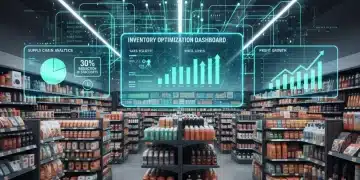
AI for Supply Chain: Cutting Retail Costs 10% by 2026

Implementing AI for Supply Chain Optimization: Reducing Costs by 10% in US Retail by Mid-2026
In the dynamic and often unpredictable world of US retail, supply chain efficiency is no longer just an advantage – it’s a necessity. Businesses are constantly seeking innovative solutions to trim operational expenses, enhance customer satisfaction, and gain a competitive edge. Enter Artificial Intelligence (AI), a revolutionary technology poised to transform the retail landscape. This comprehensive guide explores how implementing AI Supply Chain Optimization can lead to a remarkable 10% reduction in costs for US retail businesses by mid-2026.
The retail sector, characterized by intricate logistics, fluctuating consumer demands, and global disruptions, presents a fertile ground for AI’s analytical prowess. From predicting demand with unprecedented accuracy to streamlining warehousing operations and optimizing delivery routes, AI offers a suite of tools that can fundamentally reshape how goods move from manufacturer to consumer. Our focus here is not merely on theoretical possibilities, but on tangible, actionable strategies that retail leaders can adopt to realize significant financial benefits through strategic AI Supply Chain Optimization.
The Imperative for AI in Retail Supply Chains
The traditional retail supply chain, often reliant on historical data and manual interventions, struggles to keep pace with modern market demands. E-commerce growth, consumer expectations for faster delivery, and the increasing complexity of global sourcing have exposed vulnerabilities in conventional systems. These vulnerabilities translate directly into increased costs: excess inventory, stockouts, inefficient transportation, and suboptimal labor utilization. The need for a proactive, intelligent approach has never been more critical.
Understanding the Current Challenges
- Volatile Demand: Consumer preferences shift rapidly, making accurate forecasting a persistent challenge. This leads to either overstocking (carrying costs, obsolescence) or understocking (lost sales, customer dissatisfaction).
- Supply Chain Disruptions: Geopolitical events, natural disasters, and global pandemics have highlighted the fragility of global supply chains, leading to delays and increased costs.
- Logistical Complexities: Managing a vast network of suppliers, warehouses, and distribution channels, coupled with last-mile delivery challenges, is inherently complex and prone to inefficiencies.
- Data Overload, Insight Underload: Retailers collect enormous amounts of data, but often lack the tools to extract meaningful, actionable insights from it.
- Labor Costs and Shortages: Rising labor costs and difficulties in attracting and retaining staff in warehouses and logistics further strain budgets.
These challenges underscore why a paradigm shift is necessary. AI, with its ability to process vast datasets, identify patterns, make predictions, and automate decision-making, offers the transformative power needed to overcome these obstacles. By strategically implementing AI Supply Chain Optimization, US retailers can move beyond reactive problem-solving to proactive, predictive management.
Key Pillars of AI Supply Chain Optimization for Retail
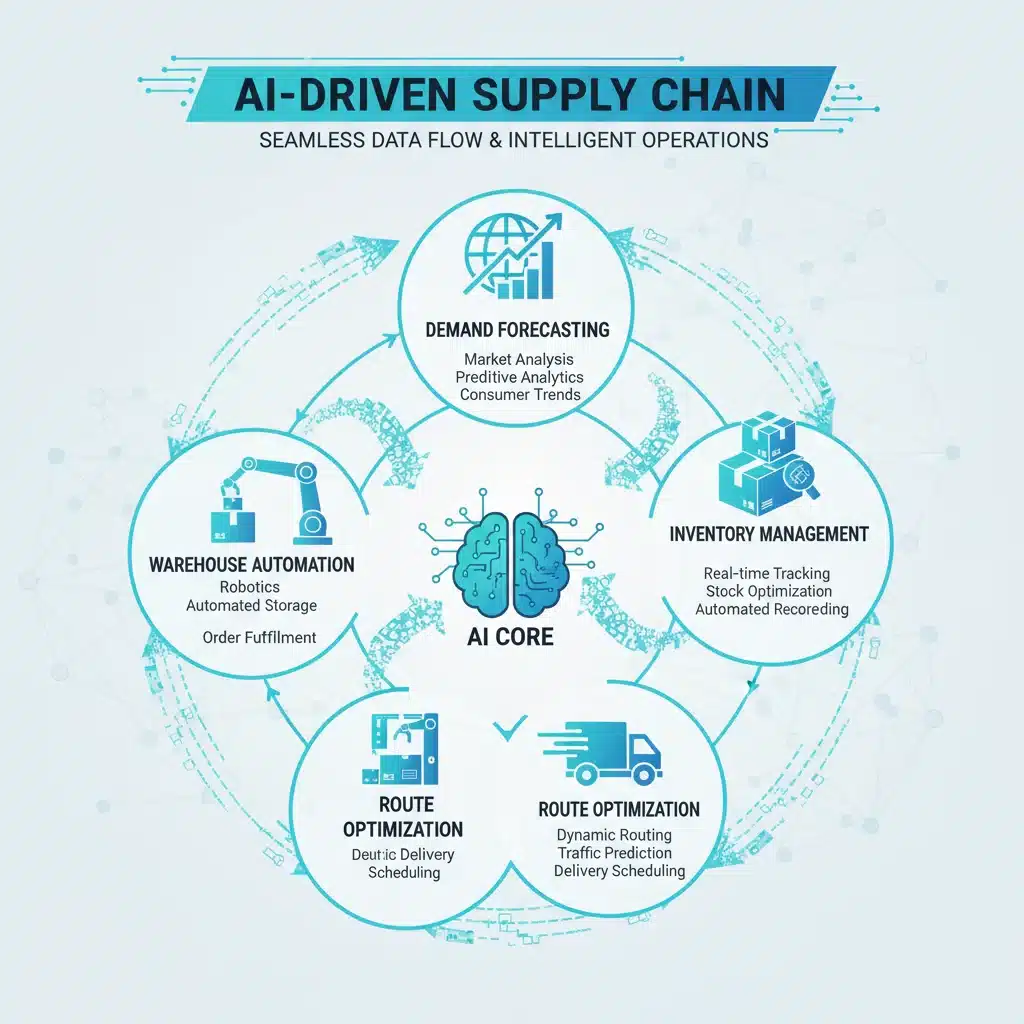
Achieving a 10% cost reduction requires a multi-faceted approach, leveraging AI across several critical areas of the supply chain. Each pillar contributes to overall efficiency and cost savings.
1. Advanced Demand Forecasting and Inventory Management
One of the most significant areas where AI can drive cost reduction is in predicting consumer demand and managing inventory. Traditional forecasting methods often rely on simple historical averages, failing to account for nuanced factors that influence purchasing behavior. AI, powered by machine learning algorithms, revolutionizes this process.
- Predictive Analytics: AI models can analyze a multitude of variables beyond historical sales data, including macroeconomic indicators, social media trends, weather patterns, competitor activities, promotional cycles, and even local events. This enables highly accurate demand forecasts at granular levels (SKU, store, region).
- Dynamic Inventory Optimization: Based on these precise forecasts, AI systems can dynamically adjust inventory levels across the entire network. This minimizes holding costs associated with excess stock and reduces the likelihood of stockouts, which lead to lost sales and expedited shipping expenses. AI can recommend optimal reorder points and quantities, considering lead times and supplier reliability.
- Seasonality and Trend Analysis: AI excels at identifying subtle seasonal shifts and emerging trends, allowing retailers to proactively adjust their product assortment and inventory, thereby reducing markdown losses for out-of-season or unpopular items.
- Perishable Goods Management: For retailers dealing with perishable items (e.g., groceries), AI can optimize ordering and rotation to minimize waste, a direct and substantial cost saving.
The impact of accurate demand forecasting on cost reduction is profound. By aligning supply more closely with demand, retailers can significantly cut down on inventory carrying costs, reduce waste, and avoid costly last-minute logistical maneuvers. This is a cornerstone of effective AI Supply Chain Optimization.
2. Optimized Logistics and Transportation
Transportation and logistics represent a substantial portion of supply chain costs. AI offers sophisticated solutions to optimize every step of the journey, from inbound freight to last-mile delivery.
- Route Optimization: AI algorithms can analyze real-time traffic conditions, weather forecasts, delivery windows, vehicle capacity, and fuel prices to generate the most efficient delivery routes. This reduces fuel consumption, driver hours, and vehicle wear and tear.
- Load Consolidation: AI can identify opportunities to consolidate shipments, maximizing vehicle utilization and reducing the number of trips required.
- Fleet Management: Predictive maintenance schedules for vehicles can be generated by AI, minimizing unexpected breakdowns and associated repair costs and delivery delays.
- Warehouse and Distribution Center Optimization: AI can optimize warehouse layouts, picking paths, and storage strategies to improve operational efficiency. Robotics and automated guided vehicles (AGVs), often AI-driven, can significantly reduce labor costs and increase throughput within distribution centers.
- Real-time Tracking and Visibility: AI-powered platforms provide end-to-end visibility of goods in transit, enabling proactive problem-solving and reducing the impact of delays or disruptions. This enhanced visibility also helps in managing customer expectations more effectively.
3. Supplier Relationship Management and Risk Mitigation
Managing a complex network of suppliers is fraught with potential risks, from quality control issues to delivery delays. AI can bring transparency and intelligence to supplier relationships, leading to more resilient and cost-effective sourcing.
- Supplier Performance Analytics: AI can analyze vast amounts of data on supplier reliability, quality, pricing, and lead times to identify the best-performing partners and negotiate better terms. It can also flag underperforming suppliers, prompting corrective action or diversification.
- Risk Prediction: AI models can monitor global news, geopolitical developments, weather patterns, and economic indicators to predict potential disruptions in the supply chain. This allows retailers to proactively source alternative suppliers or build safety stock, mitigating the financial impact of unforeseen events.
- Contract Optimization: AI can analyze contract terms and identify opportunities for optimization, ensuring retailers are getting the best possible value from their supplier agreements.
4. Automated Customer Service and Returns Management
While not traditionally seen as a core supply chain function, efficient customer service and returns management directly impact logistics costs and customer loyalty. AI can streamline these processes.
- Chatbots and Virtual Assistants: AI-powered chatbots can handle routine customer inquiries regarding order status, shipping details, and return policies, reducing the workload on human customer service agents and speeding up resolution times.
- Predictive Returns Analysis: AI can analyze product data and customer feedback to predict which items are likely to be returned, allowing retailers to address underlying issues (e.g., poor product description, sizing inconsistencies) at the source, thereby reducing return volumes and associated reverse logistics costs.
- Optimized Returns Logistics: For unavoidable returns, AI can optimize the return shipping process, identifying the most cost-effective methods for collecting, inspecting, and restocking or disposing of returned items.
Quantifying the 10% Cost Reduction Target
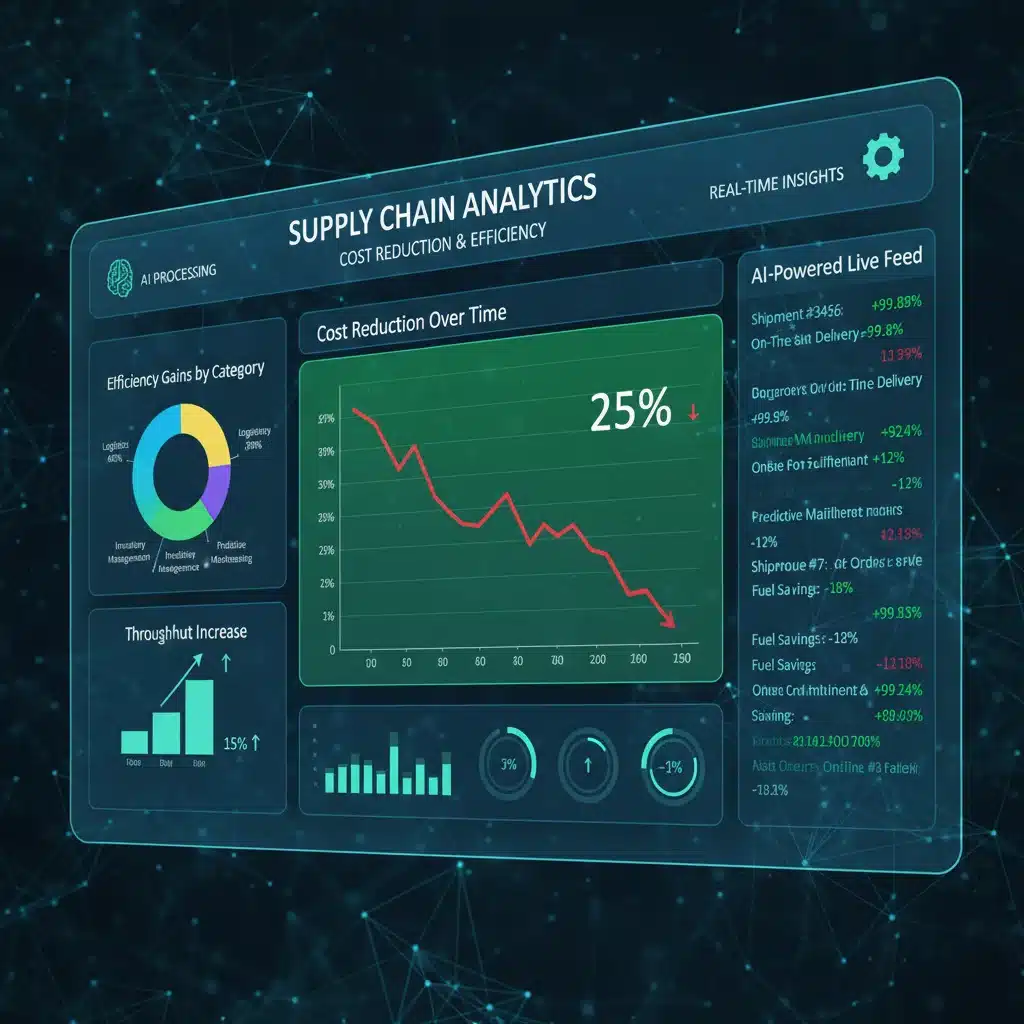
Achieving a 10% reduction in supply chain costs by mid-2026 is an ambitious yet attainable goal for US retail, given a strategic and committed implementation of AI Supply Chain Optimization. This target isn’t arbitrary; it reflects the cumulative impact of AI across various operational areas.
Where the Savings Come From:
- Inventory Reduction: By improving forecast accuracy and dynamic inventory management, retailers can reduce safety stock levels and minimize obsolete inventory, leading to significant savings on carrying costs (warehouse space, insurance, capital tied up). A 2-5% reduction in inventory holding costs is often a conservative estimate.
- Logistics and Transportation Efficiency: Optimized routes, full truckload utilization, and reduced expedited shipping can cut transportation costs by 5-10%. Fuel efficiency alone can yield substantial savings.
- Reduced Waste and Spoilage: Especially for grocery and fashion retailers, AI’s ability to predict demand and manage stock rotation can drastically reduce waste and markdown losses, contributing 1-3% in savings.
- Labor Optimization: Automation in warehouses (picking, packing), improved scheduling, and reduced manual data entry can lead to 3-7% savings in labor costs within the supply chain.
- Reduced Expedited Shipping: Better forecasting and inventory placement mean fewer instances of costly expedited shipping to meet customer demand, saving 1-2% of overall logistics spend.
- Improved Supplier Terms and Risk Mitigation: Better supplier selection and proactive risk management can prevent costly disruptions and secure more favorable pricing, indirectly contributing to cost reduction.
When these individual savings are aggregated, a 10% overall reduction becomes a realistic and achievable benchmark. The key lies in a holistic approach to AI Supply Chain Optimization, where different AI applications work in concert to create a more efficient and cost-effective system.
Implementation Roadmap for US Retailers
Embarking on an AI transformation requires careful planning and execution. Here’s a generalized roadmap for US retail businesses aiming for significant cost reductions through AI Supply Chain Optimization.
Phase 1: Assessment and Strategy (6-9 Months)
- Current State Analysis: Conduct a thorough audit of existing supply chain processes, identifying pain points, data sources, and areas with the highest potential for AI impact. Quantify current costs in each supply chain segment.
- Define Objectives and KPIs: Clearly articulate what success looks like. Beyond the 10% cost reduction, set specific KPIs for inventory turnover, on-time delivery, forecast accuracy, and labor efficiency.
- Data Readiness Assessment: Evaluate the quality, quantity, and accessibility of your data. AI thrives on data, so identifying gaps and establishing data governance policies are crucial.
- Vendor Selection and Pilot Projects: Research and select AI technology partners. Start with small, focused pilot projects in areas with high potential for quick wins (e.g., a specific product category’s demand forecasting or a regional route optimization initiative).
- Talent and Training: Assess internal capabilities. Invest in training existing staff or hiring new talent with AI and data science expertise.
Phase 2: Phased Implementation and Integration (12-18 Months)
- Modular Rollout: Based on pilot successes, gradually expand AI applications across different supply chain functions and product lines. Avoid a ‘big bang’ approach.
- System Integration: Ensure seamless integration of AI solutions with existing ERP, WMS, and TMS systems. Data flow and interoperability are paramount.
- Continuous Monitoring and Refinement: AI models require continuous monitoring and retraining with new data to maintain accuracy and effectiveness. Establish feedback loops.
- Change Management: Proactively manage organizational change. Communicate the benefits of AI to employees, address concerns, and provide ongoing training.
Phase 3: Scaling and Sustained Optimization (Ongoing)
- Expand AI Footprint: Once initial successes are cemented, look for new areas where AI can drive further value, such as predictive quality control, supplier negotiation, or personalized customer logistics.
- Advanced Analytics and Insights: Leverage AI-generated insights to inform strategic business decisions beyond just operational improvements.
- Foster an AI-Driven Culture: Embed AI thinking into the organizational DNA, encouraging continuous innovation and data-driven decision-making across all levels.
Challenges and Mitigation Strategies
While the benefits of AI Supply Chain Optimization are clear, implementation is not without its hurdles. Retailers must be prepared to address these challenges proactively.
Data Quality and Availability
Challenge: AI models are only as good as the data they’re trained on. Many retailers struggle with siloed, inconsistent, or incomplete data.
Mitigation: Invest in data governance, data cleansing, and data integration initiatives. Establish a centralized data lake or warehouse. Prioritize data collection from all relevant sources.
Integration Complexities
Challenge: Integrating new AI systems with legacy IT infrastructure can be complex and costly.
Mitigation: Opt for AI solutions designed for API-driven integration. Prioritize modular solutions that can be implemented incrementally. Work closely with IT teams and external integration specialists.
Talent Gap
Challenge: A shortage of skilled AI engineers, data scientists, and supply chain professionals proficient in AI can hinder adoption.
Mitigation: Invest in upskilling existing employees through training programs. Partner with universities or specialized consultancies. Consider ‘AI-as-a-Service’ models offered by vendors.
Resistance to Change
Challenge: Employees may be resistant to new technologies, fearing job displacement or increased complexity.
Mitigation: Emphasize AI as an ‘assistant’ that augments human capabilities, freeing up time for more strategic tasks. Involve employees in the design and implementation process. Provide extensive training and highlight success stories.
Cost of Implementation
Challenge: Initial investment in AI technology can be significant.
Mitigation: Start with pilot projects to demonstrate ROI quickly. Focus on areas with the highest potential for immediate cost savings. Consider cloud-based AI solutions to reduce upfront infrastructure costs.
The Future of Retail: AI as a Competitive Differentiator
The retailers who proactively embrace AI Supply Chain Optimization will not only achieve significant cost reductions but also build more resilient, agile, and customer-centric operations. By mid-2026, the 10% cost saving will translate into substantial competitive advantages:
- Improved Profit Margins: Direct impact from reduced operational costs.
- Enhanced Customer Satisfaction: Fewer stockouts, faster and more reliable deliveries, and personalized experiences.
- Greater Agility and Resilience: The ability to quickly adapt to market changes and mitigate disruptions.
- Sustainable Practices: Optimized routes and reduced waste contribute to a smaller environmental footprint.
- Data-Driven Decision Making: Moving from intuition to informed choices across the organization.
The journey towards fully optimized, AI-driven supply chains is continuous. It requires a commitment to innovation, data, and strategic investment. However, the potential rewards – particularly the tangible goal of a 10% cost reduction within the next few years – make it an imperative for any forward-thinking US retail business.
Conclusion: Seizing the AI Opportunity in Retail
The advent of AI marks a pivotal moment for the US retail sector. The complexities of modern supply chains demand intelligent solutions that can predict, adapt, and optimize at a scale and speed impossible for human operators alone. By strategically implementing AI Supply Chain Optimization, retailers have a clear pathway to not only overcome current challenges but also to unlock unprecedented levels of efficiency and profitability.
The target of reducing supply chain costs by 10% by mid-2026 is ambitious, yet entirely achievable for those who commit to a well-planned and executed AI strategy. This isn’t just about adopting new technology; it’s about fundamentally rethinking how goods move, how decisions are made, and how value is created throughout the retail ecosystem. Retailers that embrace this transformation will be the ones that thrive in the competitive landscape of tomorrow, setting new benchmarks for operational excellence and customer delight.
The time to act is now. The benefits of AI are no longer theoretical; they are quantifiable and within reach. For US retailers looking to secure their future, investing in AI Supply Chain Optimization is not merely an option, but a strategic imperative for sustained success and significant cost reduction.