Personalized Pricing Strategies 2026: 7% Revenue Uplift for US Retailers
The retail landscape is in a constant state of flux, driven by technological advancements, evolving consumer expectations, and fierce competition. In this dynamic environment, one strategy stands out as a powerful differentiator and a significant driver of profitability: personalized pricing strategies. As we look towards 2026, the adoption of sophisticated, data-driven personalized pricing models is no longer a luxury but a necessity for US retailers aiming to achieve substantial revenue growth. Industry projections indicate that retailers effectively implementing personalized pricing strategies could see a remarkable 7% uplift in revenue.
This comprehensive guide delves into the intricacies of personalized pricing, exploring how it works, its multifaceted benefits, the underlying technologies, and the critical considerations for successful implementation. We’ll examine the shift from traditional, one-size-fits-all pricing to a more nuanced, customer-centric approach that recognizes the unique value perception of each individual consumer. The goal is to provide US retailers with a roadmap to harness the power of personalized pricing and unlock significant untapped revenue potential by 2026.
Understanding Personalized Pricing Strategies
At its core, personalized pricing involves offering different prices for the same product or service to different customers, based on their individual characteristics, behaviors, and perceived value. This isn’t about arbitrary price discrimination; rather, it’s a strategic approach rooted in data analytics and a deep understanding of customer segments. Unlike dynamic pricing, which adjusts prices based on market conditions, demand, and competitor actions (though the two often overlap), personalized pricing focuses on the individual customer’s willingness to pay.
The Evolution of Pricing: From Static to Personalized
For decades, retailers relied on static pricing, where a product had a single, fixed price. The advent of e-commerce introduced dynamic pricing, allowing prices to fluctuate based on real-time factors. However, the next frontier is personalized pricing, which takes individualization to an unprecedented level. This evolution is fueled by the massive amounts of data retailers now collect – from browsing history and purchase patterns to location data and demographic information. When analyzed effectively, this data provides unparalleled insights into each customer’s specific needs, preferences, and price sensitivity.
Key Components of Effective Personalized Pricing Strategies
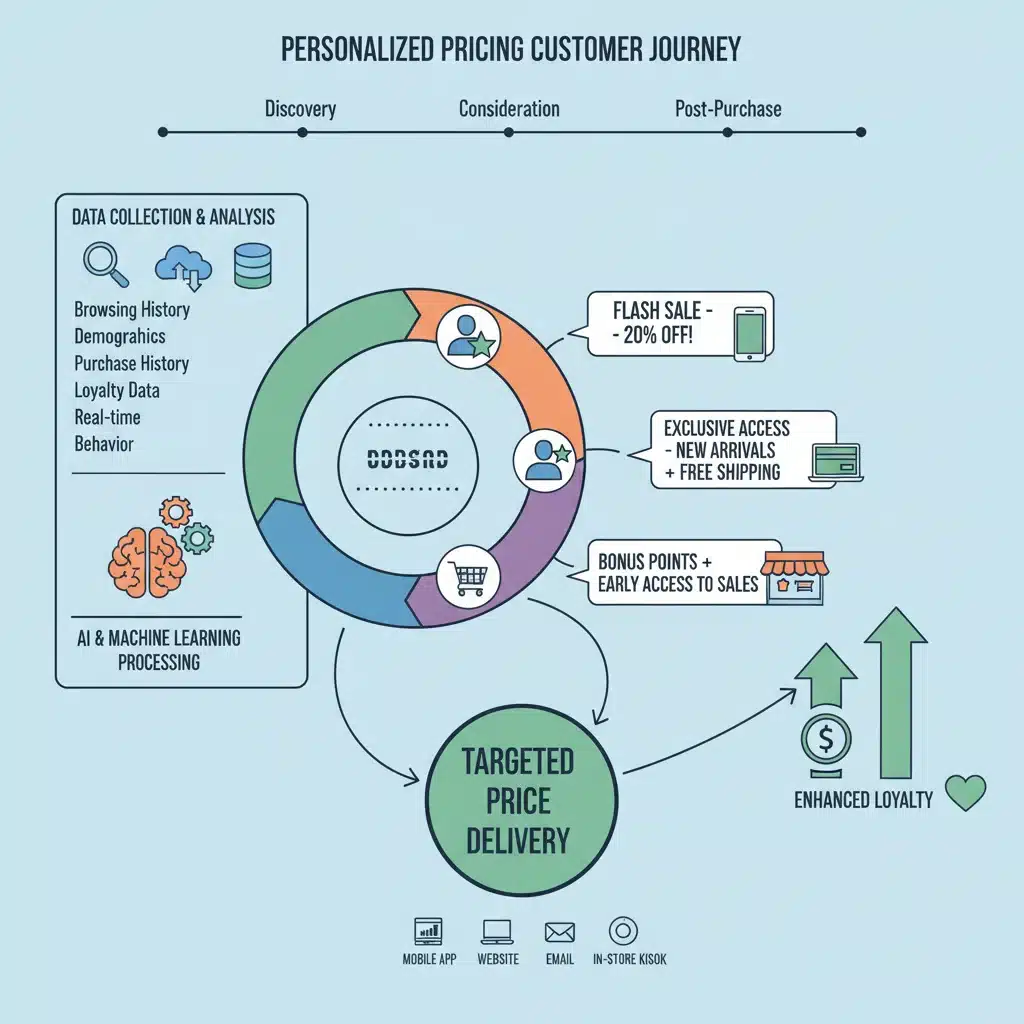
- Data Collection and Analysis: The foundation of any successful personalized pricing strategy is robust data. This includes transactional data, browsing behavior, demographic information, loyalty program data, interactions with marketing campaigns, and even external data sources. Advanced analytics and machine learning algorithms are then employed to process this vast amount of information.
- Customer Segmentation: Rather than treating all customers uniformly, personalized pricing segments them into distinct groups based on various criteria. These segments can be defined by purchasing frequency, average order value, product preferences, price sensitivity, loyalty status, geographic location, and even psychographic profiles.
- Predictive Modeling: AI and machine learning models play a crucial role in predicting a customer’s willingness to pay for a specific product at a given time. These models consider historical data, real-time context, and external factors to forecast optimal price points for individual offers.
- Offer Customization: Based on the segmentation and predictive modeling, retailers can then craft highly tailored offers. This might involve direct price adjustments, personalized discounts, bundled offers, loyalty rewards, or even differentiated pricing for premium services.
- Real-time Implementation: For personalized pricing to be truly effective, it often needs to be implemented in real-time. This means prices displayed on a website, in an app, or even in-store can adjust instantly based on the identified customer and their current context.
The Mechanics of Achieving a 7% Revenue Uplift
The projected 7% revenue uplift for US retailers by 2026 from personalized pricing strategies is not an arbitrary figure; it’s a realistic outcome driven by several interconnected mechanisms that optimize both top-line growth and bottom-line profitability. By precisely aligning prices with customer value perception, retailers can capture more value from each transaction.
Increased Conversion Rates
When customers are presented with prices that resonate with their perceived value and budget, they are significantly more likely to complete a purchase. A price that is too high for a price-sensitive customer will lead to abandonment, while a price that is too low for a value-driven customer leaves money on the table. Personalized pricing strikes the optimal balance, reducing cart abandonment and increasing the likelihood of conversion across different customer segments.
Higher Average Order Value (AOV)
Personalized offers can encourage customers to spend more. For instance, a customer identified as having a higher willingness to pay might be offered premium versions of a product or complementary items at a slightly higher price point, increasing their overall transaction value. Conversely, a price-sensitive customer might be offered an incentive to add a second item, even if at a discounted rate, still boosting AOV.
Improved Profit Margins
One of the most significant benefits of personalized pricing is the ability to optimize profit margins. By identifying customers who are willing to pay more, retailers can avoid unnecessary discounting. For customers who are highly price-sensitive, carefully calculated discounts can still secure a sale that might otherwise be lost, contributing incremental revenue without eroding margins on other segments.
Enhanced Customer Loyalty and Lifetime Value (CLTV)
When customers feel that offers are tailored specifically for them, it fosters a sense of being understood and valued. This personalized experience can significantly enhance customer satisfaction and customer loyalty. Loyal customers tend to make repeat purchases, refer others, and are often less price-sensitive over time, thereby increasing their lifetime value. Personalized pricing, when executed thoughtfully, builds trust and strengthens the customer-brand relationship.
Optimized Inventory Management
Personalized pricing can also play a role in inventory optimization. By strategically adjusting prices for specific customer segments, retailers can stimulate demand for slow-moving items or manage excess inventory more effectively, reducing carrying costs and minimizing markdowns on a broad scale. This targeted approach prevents widespread discounting that can devalue products.
Technologies Powering Personalized Pricing
The sophistication of personalized pricing strategies relies heavily on advanced technological infrastructure. The projected 7% revenue uplift is directly tied to the ability of retailers to leverage these tools effectively.
Artificial Intelligence (AI) and Machine Learning (ML)
AI and ML algorithms are the brains behind modern personalized pricing. They can analyze vast datasets, identify complex patterns in customer behavior, predict demand elasticity, and recommend optimal price points for individual customers in real-time. Supervised learning models can be trained on historical sales data to predict conversion rates at different price points, while reinforcement learning can continuously optimize pricing strategies based on ongoing results.
Big Data Analytics Platforms
To feed AI/ML models, retailers need robust big data analytics platforms capable of collecting, storing, processing, and analyzing diverse data sources at scale. These platforms integrate data from e-commerce sites, point-of-sale (POS) systems, CRM systems, marketing automation tools, and external market data, creating a unified view of the customer.
Customer Data Platforms (CDPs)
CDPs are critical for creating a persistent, unified customer database that is accessible to other systems. They consolidate customer data from various touchpoints, enabling retailers to build comprehensive customer profiles essential for accurate segmentation and personalized offer delivery. A well-implemented CDP is the single source of truth for all customer information.
Dynamic Pricing Engines
These sophisticated software solutions automate the process of price adjustments. They take inputs from AI/ML models and execute personalized pricing decisions across various channels, whether it’s updating prices on a website, generating unique discount codes, or informing sales associates about tailored offers for in-store customers. These engines are designed for speed and accuracy.
Behavioral Economics and Psychographics
Beyond pure data analysis, understanding the psychological underpinnings of consumer behavior is vital. Personalized pricing leverages principles from behavioral economics to understand how different pricing cues (e.g., anchoring, framing effects, scarcity) influence purchase decisions. Psychographic data, which categorizes customers based on their attitudes, aspirations, values, and other psychological criteria, adds another layer of sophistication to segmentation and personalization.
Implementing Personalized Pricing: A Strategic Roadmap
Achieving a 7% revenue uplift requires more than just adopting new technology; it demands a strategic, phased approach to implementation. Retailers must navigate technical complexities, organizational changes, and ethical considerations.
Phase 1: Data Infrastructure and Readiness Assessment
- Audit Existing Data: Identify all available data sources (transactional, behavioral, demographic, loyalty, etc.) and assess their quality, completeness, and accessibility.
- Establish Data Governance: Implement clear policies and procedures for data collection, storage, security, and privacy compliance (e.g., CCPA, state-specific regulations).
- Invest in CDP/Big Data Solutions: Ensure the underlying infrastructure can support the volume and velocity of data required for personalized pricing.
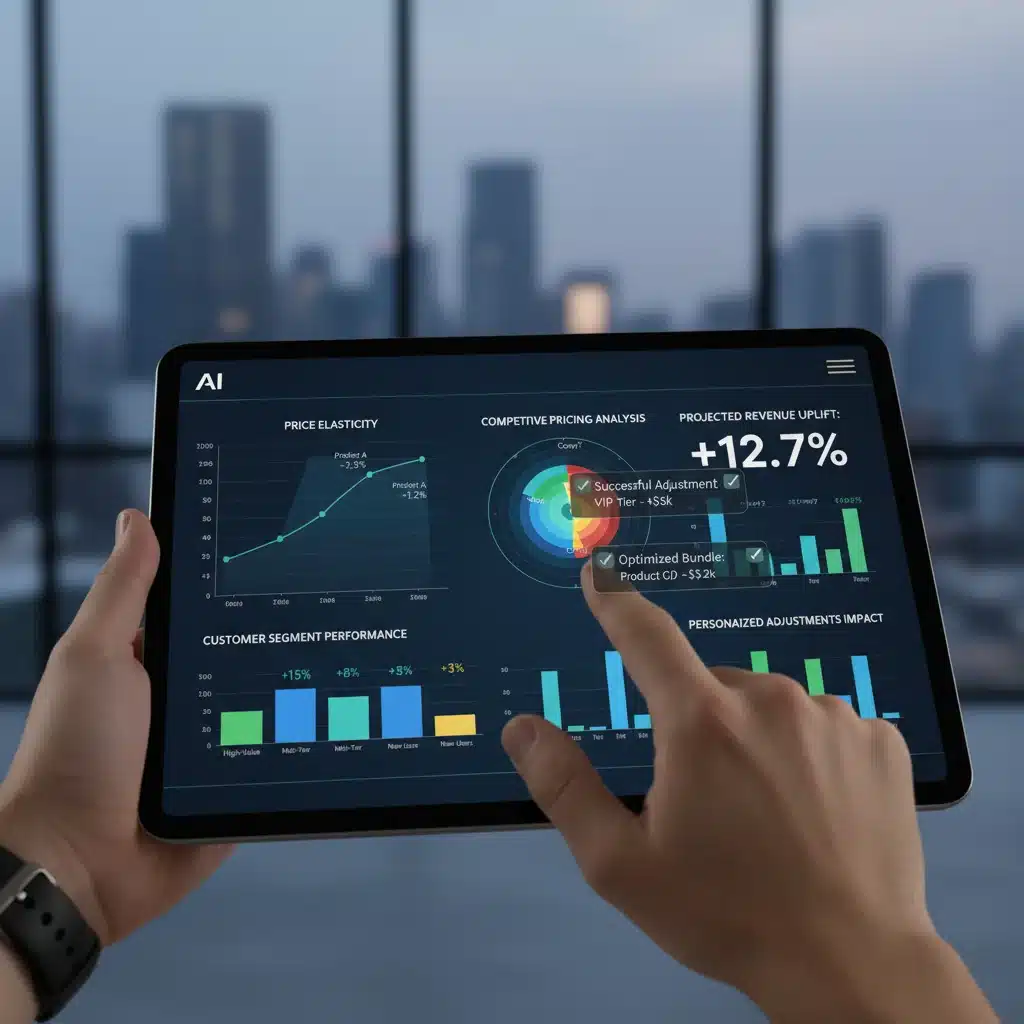
- Define Key Performance Indicators (KPIs): Clearly establish metrics to measure the success of personalized pricing, such as conversion rate, AOV, profit margin per segment, customer retention, and overall revenue uplift.
Phase 2: Segmentation and Model Development
- Develop Customer Segments: Start with broad segments (e.g., new customers, loyal customers, high-value, bargain hunters) and gradually refine them using advanced analytics.
- Build Predictive Models: Collaborate with data scientists to develop and train AI/ML models that predict willingness to pay for different products within each segment. This is an iterative process requiring continuous refinement.
- Pilot Programs: Begin with small-scale pilot programs on specific product categories or customer segments to test the models and gather initial insights without impacting the entire business.
Phase 3: Integration and Deployment
- Integrate Pricing Engine: Connect the personalized pricing engine with e-commerce platforms, POS systems, and marketing automation tools to ensure seamless execution of tailored offers.
- A/B Testing: Continuously A/B test different pricing strategies, offer types, and messaging to optimize performance and identify the most effective approaches for various segments.
- Monitor and Iterate: Personalized pricing is not a set-and-forget strategy. Continuously monitor performance, analyze results, and iterate on models and strategies based on real-world data.
Ethical Considerations and Customer Trust
While the revenue potential of personalized pricing is undeniable, retailers must navigate the ethical landscape carefully. The perception of unfairness can quickly erode customer trust and lead to backlash. Transparency and value are paramount.
Avoiding Price Gouging Perceptions
Customers generally accept personalized discounts, but they react negatively to perceived price gouging – where they believe they are being charged more simply because the system knows they will pay it. Retailers must frame personalized offers as benefits or rewards, such as loyalty discounts, special offers for new customers, or exclusive bundles, rather than simply higher prices for certain individuals.
Transparency and Communication
While full transparency on every pricing algorithm might be impractical, retailers should be transparent about their data usage policies and how personalization benefits the customer. Clear communication about loyalty programs, exclusive member pricing, or personalized recommendations can build trust.
Data Privacy and Security
Collecting vast amounts of customer data necessitates stringent data privacy and security measures. Retailers must comply with all relevant regulations (e.g., CCPA, GDPR-like state laws) and ensure customers’ data is protected from breaches and misuse. A breach of trust in this area can be catastrophic.
Focus on Value, Not Just Price
Personalized pricing should ultimately enhance the customer experience by offering relevant products at attractive price points for that individual. The focus should be on delivering perceived value and convenience, rather than merely extracting the maximum possible price.
Challenges and How to Overcome Them
Despite the immense potential, implementing personalized pricing strategies comes with its own set of challenges. Retailers need to be prepared to address these head-on to ensure success.
Data Silos and Integration Complexity
Many retailers struggle with fragmented data across different systems (e-commerce, CRM, ERP, POS). Integrating these disparate sources into a unified customer view is a significant technical hurdle. Solution: Invest in a robust Customer Data Platform (CDP) and API-first architectures to facilitate seamless data flow and integration.
Algorithmic Bias and Fairness
AI models can inadvertently learn and perpetuate biases present in historical data, leading to unfair pricing for certain demographic groups. Solution: Regularly audit algorithms for bias, ensure diverse training data, and implement fairness metrics to monitor and correct any discriminatory outcomes.
Talent Gap
Implementing and managing personalized pricing requires a blend of data science, economic, and marketing expertise, which can be scarce. Solution: Invest in upskilling existing teams, recruit specialized talent, or partner with external pricing optimization consultants and technology providers.
Resistance to Change
Transitioning from traditional pricing methods can face internal resistance from sales teams, marketing, and even leadership. Solution: Demonstrate early successes with pilot programs, clearly communicate the financial benefits, and provide comprehensive training and support to all stakeholders.
Maintaining Competitor Awareness
While personalized pricing focuses on the individual, ignoring competitor pricing can be detrimental. Solution: Integrate competitor price monitoring tools into the pricing strategy to ensure personalized offers remain competitive within the broader market context.
The Future of Personalized Pricing in US Retail by 2026
By 2026, personalized pricing will be a core competency for leading US retailers. We can expect several trends to accelerate its adoption and sophistication:
- Hyper-Personalization: Moving beyond segments to true one-to-one pricing, where each customer receives an offer uniquely tailored to their real-time context and predicted intent.
- Voice Commerce Integration: Personalized pricing extending to voice-activated shopping platforms, where AI assistants offer tailored deals during verbal interactions.
- Subscription Model Evolution: Personalized pricing will refine subscription tiers and offerings, making them even more customizable based on individual usage and preferences.
- Augmented Reality (AR) Shopping: AR experiences could present personalized prices and promotions directly within the physical shopping environment or virtual try-on sessions.
- Increased Regulatory Scrutiny: As personalized pricing becomes more prevalent, expect greater regulatory focus on transparency, fairness, and data privacy, pushing retailers to adopt best practices.
- Ethical AI Frameworks: Development and adoption of ethical AI guidelines specifically for pricing, ensuring fairness and preventing discriminatory practices will become standard.
The retailers who embrace these advancements and strategically integrate personalized pricing into their business models will be the ones that thrive, capturing market share and achieving the projected 7% revenue uplift.
Conclusion: Seizing the Personalized Pricing Opportunity
The opportunity for US retailers to achieve a 7% revenue uplift by 2026 through the strategic adoption of personalized pricing strategies is not merely aspirational; it is a tangible goal grounded in technological capability and evolving consumer behavior. By leveraging advanced data analytics, AI, and machine learning, retailers can move beyond generic pricing models to create highly relevant and compelling offers for each customer.
This shift requires significant investment in technology, a commitment to data governance, and a deep understanding of ethical considerations. However, the rewards – including increased conversion rates, higher average order values, improved profit margins, and enhanced customer loyalty – far outweigh the challenges. As the retail landscape continues to evolve, personalized pricing will be a crucial differentiator, enabling businesses to not only survive but to flourish in an increasingly competitive market. The time for US retailers to act is now, to lay the groundwork for a more profitable and customer-centric future.