Ethical Sourcing & Transparency: 5% Market Share Advantage for US Retailers

In an increasingly conscious marketplace, the pursuit of profit is no longer the sole determinant of business success. Today, consumers, investors, and regulators alike are scrutinizing the ethical foundations of businesses, particularly within the vast and complex retail sector. For US retailers, this shift presents not just a challenge, but a monumental opportunity. By embracing robust ethical sourcing transparency, companies can unlock a significant competitive advantage, potentially expanding their market share by a remarkable 5% by 2026.
This isn’t merely a fleeting trend; it’s a fundamental recalibration of consumer values. A recent study by Accenture revealed that 62% of consumers want companies to take a stand on current and relevant issues like sustainability, transparency, and fair employment practices. Another report by Nielsen found that 66% of global consumers are willing to pay more for sustainable brands. These statistics paint a clear picture: the future of retail belongs to those who prioritize purpose alongside profit, with ethical sourcing transparency at the core of their operations.
The imperative for US retailers to act now is clear. Those who proactively integrate ethical sourcing and transparency into their business models will not only meet evolving consumer demands but will also differentiate themselves in a crowded market, build stronger brand loyalty, mitigate risks, and attract top talent. This comprehensive guide will delve into the critical role of ethical sourcing transparency, explore the tangible benefits, outline actionable strategies, and provide a roadmap for US retailers to capitalize on this transformative opportunity.
The Shifting Sands of Consumer Expectation: Why Ethical Sourcing Transparency Matters More Than Ever
The modern consumer is savvier, more connected, and more demanding than ever before. Social media, investigative journalism, and readily available information mean that supply chain issues, once hidden in distant factories, can now go viral in a matter of hours. This heightened awareness has led to a fundamental shift in purchasing decisions. Consumers are no longer just buying products; they are buying into brands and their values. They want to know:
- Where do the raw materials come from?
- Are workers paid fair wages and treated humanely?
- Are environmental standards being upheld throughout the production process?
- Is the product free from forced labor or child labor?
- How is the company contributing to the communities it operates in?
This demand for answers fuels the need for ethical sourcing transparency. Brands that can openly and honestly address these questions build trust, which is the most valuable currency in today’s economy. Conversely, those that fail to do so risk severe reputational damage, consumer boycotts, and a significant erosion of their market position. The 5% market share advantage isn’t just about attracting new customers; it’s also about retaining existing ones who are increasingly voting with their wallets for brands that align with their values.
Defining Ethical Sourcing Transparency: Beyond Buzzwords
Before diving into strategies, it’s crucial to establish a clear understanding of what ethical sourcing transparency truly entails. It’s more than just a marketing slogan; it’s a holistic approach to business operations:
- Ethical Sourcing: This refers to the practice of procuring goods and services in a way that minimizes social and environmental harm and respects human rights. It encompasses fair labor practices, safe working conditions, environmental stewardship, community engagement, and responsible material extraction.
- Transparency: This is the openness and clarity with which a company communicates its sourcing practices to stakeholders. It involves providing verifiable information about the origin of products, the conditions under which they were made, and the social and environmental impact of the supply chain. Transparency is about making information accessible, understandable, and credible.
Together, ethical sourcing transparency creates a powerful framework for responsible business. It’s about demonstrating, not just claiming, a commitment to doing good. For US retailers, this means a rigorous examination of their entire supply chain, from the smallest component to the final product on the shelf.
The Tangible Benefits: How Ethical Sourcing Transparency Drives Market Share Growth
The 5% market share advantage by 2026 is not an arbitrary figure; it’s an achievable goal rooted in several interconnected business benefits that stem directly from prioritizing ethical sourcing transparency.
1. Enhanced Brand Reputation and Consumer Loyalty
In an era of instant information, a strong, trustworthy brand reputation is invaluable. Retailers known for their commitment to ethical sourcing transparency are perceived as more credible, responsible, and caring. This positive perception translates directly into increased consumer loyalty. When consumers trust a brand, they are more likely to make repeat purchases, recommend the brand to others, and even forgive minor missteps. This halo effect can significantly expand a brand’s customer base and increase its share of wallet.
2. Competitive Differentiation in a Crowded Market
The retail landscape is intensely competitive. Differentiating oneself purely on price or product features is becoming increasingly difficult. Ethical sourcing transparency offers a powerful and sustainable differentiator. By clearly communicating their ethical practices, retailers can attract a growing segment of consumers who actively seek out responsible brands. This creates a unique selling proposition that competitors, especially those focused solely on cost-cutting, will struggle to replicate.
3. Risk Mitigation and Resilience
Opaque supply chains are inherently risky. They can harbor hidden instances of forced labor, environmental violations, or unethical business practices that, if exposed, can lead to severe financial penalties, lawsuits, and irreversible reputational damage. By implementing ethical sourcing transparency, retailers gain greater visibility and control over their supply chains, enabling them to identify and mitigate risks before they escalate. This proactive approach builds a more resilient business model, capable of weathering supply chain disruptions and ethical controversies.
4. Attracting and Retaining Top Talent
Millennials and Gen Z, who now constitute a significant portion of the workforce, are increasingly seeking employers whose values align with their own. Companies with a strong commitment to ethical sourcing transparency are more attractive to these purpose-driven individuals. This translates into a competitive advantage in talent acquisition and retention, leading to a more engaged, productive, and innovative workforce. A positive employer brand, fueled by ethical practices, reduces recruitment costs and improves overall organizational performance.
5. Improved Investor Relations and Access to Capital
Sustainable and responsible investing (SRI) is a rapidly growing segment of the financial market. Investors are increasingly evaluating companies not just on their financial performance but also on their Environmental, Social, and Governance (ESG) criteria. Retailers demonstrating strong ethical sourcing transparency are more appealing to SRI funds and investors, potentially leading to lower capital costs and a more stable investor base. This can provide a significant financial boost and long-term stability.
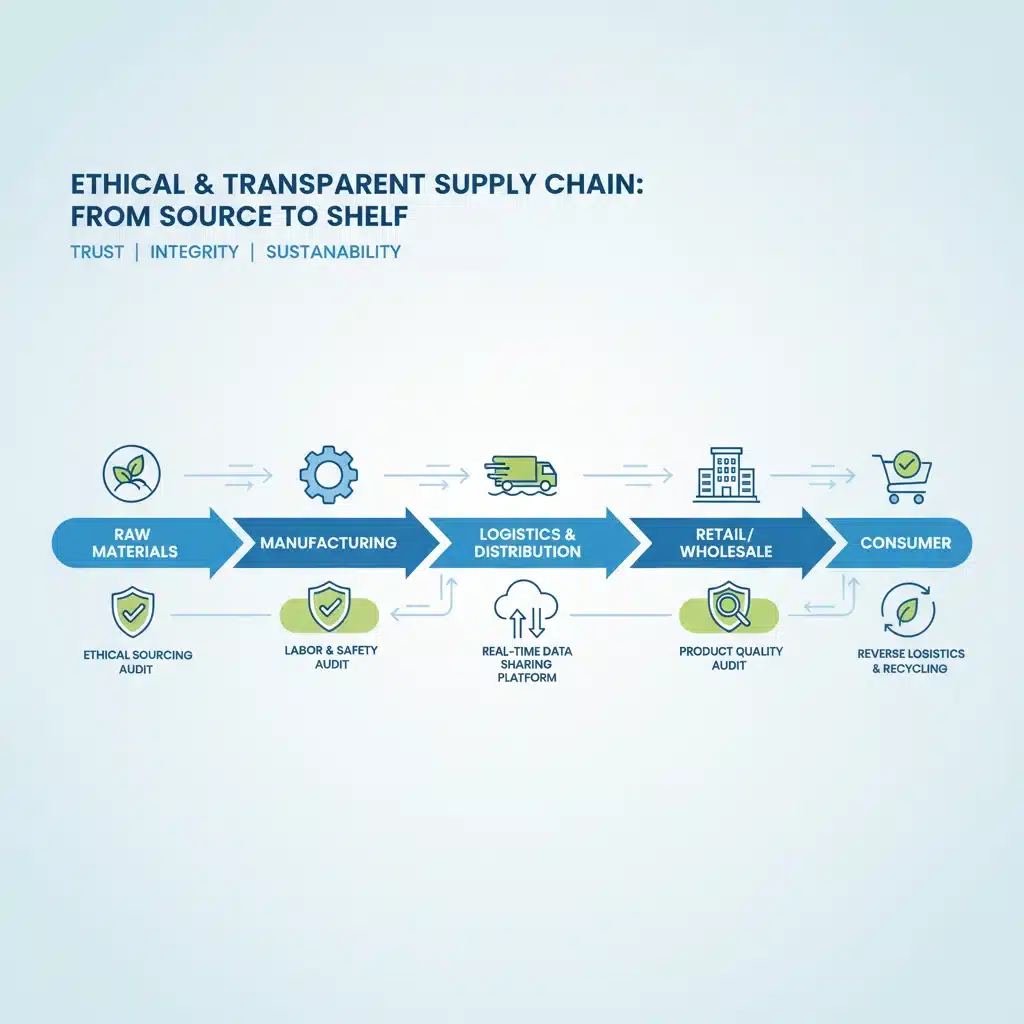
Strategies for Implementing Ethical Sourcing Transparency
Achieving a 5% market share advantage requires a strategic and systematic approach to integrating ethical sourcing transparency into every facet of the retail operation. Here are key strategies:
1. Conduct a Comprehensive Supply Chain Audit
The first step is to understand your current state. This involves mapping your entire supply chain, identifying all suppliers, sub-suppliers, and raw material origins. Conduct thorough risk assessments to pinpoint areas vulnerable to ethical breaches, such as regions with weak labor laws, high environmental risks, or complex, multi-tiered supply chains. This initial audit provides the baseline for improvement and helps prioritize efforts for enhanced ethical sourcing transparency.
2. Develop and Enforce a Robust Supplier Code of Conduct
A clear, comprehensive Supplier Code of Conduct is foundational. This document should outline your expectations regarding labor practices (wages, working hours, child labor, forced labor), environmental standards, health and safety, and business ethics. Crucially, this code must be communicated effectively to all suppliers and integrated into contractual agreements. Regular training and capacity building for suppliers can help ensure compliance and foster a shared commitment to ethical sourcing transparency.
3. Implement Traceability and Verification Systems
To achieve true ethical sourcing transparency, retailers need systems that can trace products from their origin to the point of sale. This can involve:
- Blockchain Technology: Offers an immutable, distributed ledger to record every transaction and movement of a product, providing unparalleled traceability and verifiability.
- Certifications: Partner with reputable third-party certification bodies (e.g., Fair Trade, Organic, B Corp) that verify ethical and sustainable practices.
- Digital Platforms: Utilize software solutions that allow for real-time tracking, data sharing, and monitoring of supplier performance against ethical criteria.
- On-site Audits: Conduct regular, independent audits of supplier facilities to verify compliance with the Code of Conduct and identify potential issues.
4. Invest in Supplier Relationships and Capacity Building
Rather than simply auditing and penalizing, a more effective approach to ethical sourcing transparency involves collaborating with suppliers. Provide training, resources, and support to help them improve their ethical and environmental performance. Long-term partnerships built on trust and mutual commitment are more likely to yield sustainable improvements than transactional relationships. This collaborative approach fosters a culture of continuous improvement throughout the supply chain.
5. Transparent Communication with Consumers and Stakeholders
This is where the "transparency" in ethical sourcing transparency truly shines. Retailers must proactively communicate their efforts and progress to consumers, investors, and other stakeholders. This can include:
- Dedicated Website Sections: Create easily accessible pages detailing sourcing policies, supplier lists, audit results, and impact reports.
- Product Labeling: Use clear, concise labels and QR codes that provide information about a product’s origin, materials, and ethical certifications.
- Annual Sustainability Reports: Publish comprehensive reports outlining ESG performance, challenges, and future goals.
- Storytelling: Share compelling narratives about the people and communities behind your products, highlighting the positive impact of ethical sourcing.
- Engage on Social Media: Use platforms to answer consumer questions, address concerns, and actively promote your ethical commitments.
Authenticity is key here. Avoid "greenwashing" or making vague claims. Be honest about challenges and demonstrate a genuine commitment to continuous improvement. Consumers appreciate honesty and effort, even if perfection hasn’t been achieved.
6. Integrate Ethical Sourcing Transparency into Corporate Governance
For ethical sourcing transparency to be truly effective, it must be embedded at the highest levels of the organization. This means:
- Board Oversight: The board of directors should have clear oversight of ESG performance, including ethical sourcing.
- Dedicated Leadership: Appoint a Chief Sustainability Officer or similar role to champion and drive ethical sourcing initiatives.
- Performance Metrics: Incorporate ethical sourcing and transparency metrics into employee performance evaluations and executive compensation.
- Cross-functional Teams: Establish teams across procurement, marketing, legal, and sustainability departments to ensure a unified approach.

Overcoming Challenges and Measuring Success
Implementing comprehensive ethical sourcing transparency is not without its challenges. Supply chains are often global, complex, and involve numerous intermediaries. Resistance from suppliers, data management complexities, and the cost of new systems can be significant hurdles. However, these challenges are surmountable with strategic planning and a long-term vision.
Addressing Common Obstacles:
- Data Management: Invest in robust data management systems and analytics tools to collect, store, and analyze supply chain information effectively.
- Supplier Engagement: Offer incentives, training, and long-term contracts to encourage supplier participation and commitment.
- Cost Considerations: Frame ethical sourcing as an investment rather than an expense, highlighting the long-term returns in brand value, risk reduction, and market share. Explore collaborative initiatives with industry peers to share costs and best practices.
- Regulatory Compliance: Stay abreast of evolving regulations related to supply chain due diligence, human rights, and environmental standards (e.g., California Transparency in Supply Chains Act, proposed EU directives).
Measuring the 5% Market Share Advantage
To track progress towards the 5% market share goal, retailers should establish clear key performance indicators (KPIs) related to ethical sourcing transparency. These could include:
- Consumer Sentiment: Track brand perception, trust scores, and purchase intent through surveys and social listening.
- Sales Growth: Monitor sales of ethically sourced product lines compared to conventional lines.
- Customer Acquisition and Retention Rates: Analyze the impact of ethical initiatives on new customer acquisition and churn rates.
- Media Coverage and Public Relations: Track positive media mentions related to ethical practices.
- Supplier Compliance Rates: Measure the percentage of suppliers adhering to the Code of Conduct and improving their ethical performance.
- Certifications Obtained: Track the number of products or suppliers achieving recognized ethical certifications.
- Employee Engagement: Monitor employee satisfaction and retention, particularly among younger generations.
Regularly analyze these metrics to understand the impact of your ethical sourcing transparency efforts and make data-driven adjustments to your strategy. This continuous feedback loop is essential for maximizing the market share benefits.
The Future of Retail: A Call to Action for US Retailers
The opportunity for US retailers to gain a 5% market share advantage by 2026 through enhanced ethical sourcing transparency is real and within reach. It requires courage, commitment, and a willingness to look beyond short-term gains. Those who embrace this paradigm shift will not only build more resilient and reputable businesses but will also contribute to a more just and sustainable global economy.
The time for incremental change is over. Consumers are demanding revolutionary transparency, and retailers who respond with authenticity and action will be rewarded with their loyalty and their dollars. By making ethical sourcing transparency a strategic imperative, US retailers can secure their place as leaders in the evolving landscape of conscious commerce, driving growth, fostering trust, and shaping a better future for all stakeholders.
Begin your journey today. Assess your supply chain, engage your suppliers, empower your consumers with information, and embed ethical practices into the very DNA of your organization. The 5% market share advantage awaits those who dare to lead with integrity.