Scalable Sales Funnel: U.S. Startup Growth 2026
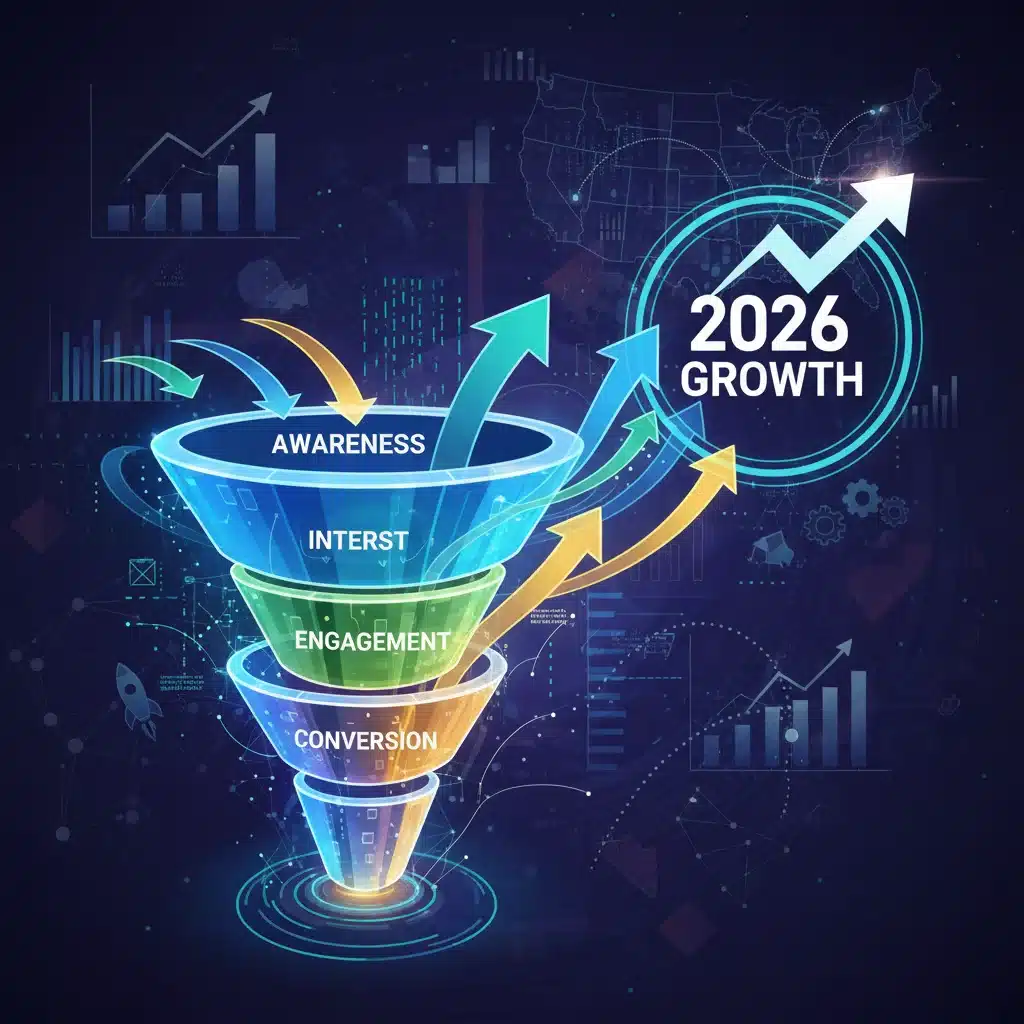
Building a Scalable Sales Funnel: Insights for U.S. Startups Aiming for 2026 Milestones
In the fiercely competitive landscape of the U.S. startup ecosystem, achieving sustained growth is not merely about having a groundbreaking product or service; it’s fundamentally about mastering the art of converting prospects into loyal customers. For U.S. startups eyeing ambitious milestones by 2026, the bedrock of this success lies in building a robust and scalable sales funnel. A well-designed sales funnel acts as a strategic roadmap, guiding potential customers through their journey from initial awareness to final purchase and beyond. It’s a systematic approach that allows businesses to predict, manage, and accelerate their revenue generation, making it an indispensable asset for any startup poised for rapid expansion.
The term ‘scalable’ is paramount here. For startups, resources are often finite, and the ability to grow without a proportional increase in costs is crucial. A scalable sales funnel means that as your marketing efforts attract more leads, your sales process can efficiently handle the increased volume without breaking down or becoming bottlenecked. This article delves deep into the essential components, strategies, and optimization techniques required for U.S. startups to construct a highly effective and scalable sales funnel, ensuring they are well-equipped to meet their 2026 growth targets.
We’ll explore how to define your target audience, craft compelling lead generation strategies, nurture prospects effectively, close deals efficiently, and, crucially, retain customers for long-term value. Moreover, we will emphasize the role of technology and data analytics in optimizing each stage of the funnel, transforming it from a mere concept into a powerful, automated growth engine. Understanding and implementing these insights will not only help U.S. startups navigate the present but also strategically position them for future success and market dominance.
Understanding the Fundamentals of a Scalable Sales Funnel
Before diving into the intricacies of building a scalable sales funnel, it’s vital to grasp its fundamental structure and purpose. A sales funnel is a visual representation of the customer journey, typically divided into several stages. While the exact terminology might vary, the core concept remains consistent: it’s about moving potential customers from a broad pool of awareness down to a focused group of paying clients.
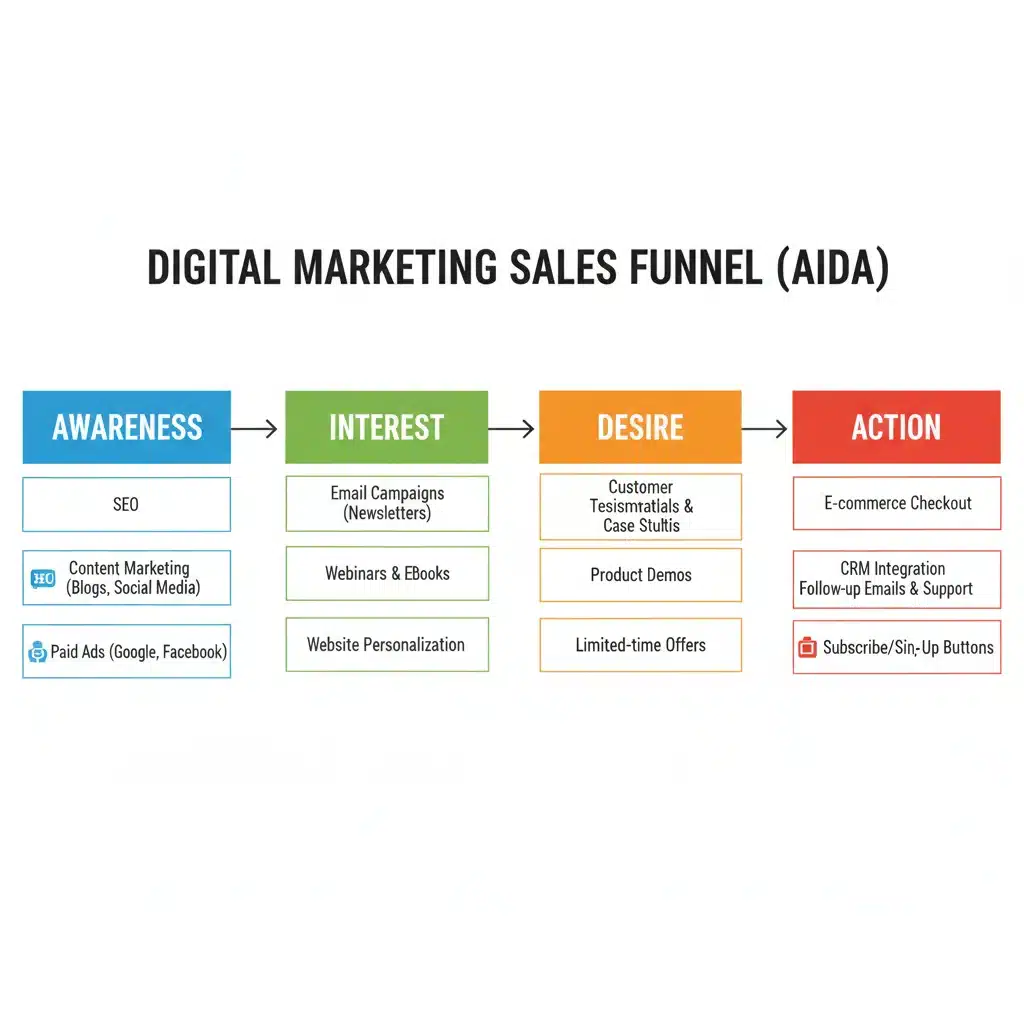
The Traditional Sales Funnel Stages: AIDA Model
One of the most widely recognized models for understanding the customer journey within a sales funnel is AIDA:
- Awareness: At the top of the funnel, prospects become aware of your brand, product, or service. This is where you cast a wide net to attract as many potential leads as possible.
- Interest: Once aware, prospects show interest in what you offer. They might engage with your content, visit your website, or seek more information.
- Desire: At this stage, prospects develop a desire for your product or service. They understand its value proposition and how it can solve their problems or meet their needs.
- Action: The final stage, where prospects take the desired action, typically making a purchase, signing up for a service, or becoming a client.
For a scalable sales funnel, each of these stages needs to be clearly defined, measurable, and optimized for efficiency. The goal is not just to attract leads but to attract the right leads and guide them seamlessly through each transition, minimizing friction and maximizing conversion rates. This requires a deep understanding of your target audience and their pain points at every step.
Why Scalability is Key for U.S. Startups
For U.S. startups, scalability isn’t a luxury; it’s a necessity. The ability to grow revenue without a proportional increase in operational costs is what differentiates successful startups from those that stagnate. A non-scalable sales funnel can quickly become a bottleneck, limiting growth even if demand is high. Imagine a scenario where your marketing efforts generate thousands of leads, but your sales team can only handle a fraction of them. This leads to lost opportunities, wasted marketing spend, and ultimately, stifled growth.
A scalable sales funnel, by contrast, incorporates automation, efficient processes, and data-driven insights to handle increasing volumes of leads and sales activities. It means investing in tools and strategies that can be expanded or replicated without a massive overhaul. This foresight allows startups to capitalize on market opportunities quickly and efficiently, positioning them for sustained success and helping them hit those crucial 2026 milestones.
Defining Your Target Audience and Ideal Customer Profile (ICP)
The foundation of any effective scalable sales funnel is a crystal-clear understanding of who you are trying to reach. Without a well-defined target audience and Ideal Customer Profile (ICP), your marketing and sales efforts will be akin to shooting in the dark – expensive and largely ineffective. For U.S. startups, this initial step is non-negotiable.
Creating Detailed Buyer Personas
Buyer personas are semi-fictional representations of your ideal customers, based on market research and real data about your existing customers. They go beyond basic demographics to include psychographics, behaviors, motivations, and pain points. When building a scalable sales funnel, consider:
- Demographics: Age, gender, income, location, education, job title.
- Psychographics: Values, attitudes, interests, lifestyle.
- Goals and Challenges: What are they trying to achieve? What obstacles do they face?
- Information Sources: Where do they get their information? (e.g., social media, industry blogs, forums).
- Objections: What concerns might they have about your product or service?
By understanding these aspects, you can tailor your messaging, content, and sales approach to resonate deeply with your prospects, significantly improving your conversion rates.
Identifying the Ideal Customer Profile (ICP) for B2B Startups
For B2B U.S. startups, defining an ICP is even more critical. An ICP describes the type of company that would gain the most value from your product or service and, consequently, provides the most value to your business. Key factors for an ICP include:
- Industry: Which sectors are most relevant?
- Company Size: Revenue, number of employees.
- Geographic Location: Specific regions or states within the U.S.
- Technological Stack: What technologies do they currently use?
- Pain Points: What specific problems can your solution uniquely address for these companies?
Focusing on your ICP allows you to allocate your resources more efficiently, ensuring that your sales team spends time on leads with the highest potential for conversion and long-term value. This targeted approach is fundamental to building a truly scalable sales funnel.
Crafting Compelling Lead Generation Strategies (Awareness Stage)
The top of your scalable sales funnel is all about attracting attention and generating high-quality leads. For U.S. startups, this requires a multi-faceted approach that leverages various digital marketing channels to reach your target audience effectively. The goal here is not just quantity, but quality – attracting prospects who are genuinely interested and fit your ICP.
Content Marketing: The Magnet for Leads
Content marketing is arguably one of the most powerful tools for lead generation. By creating valuable, relevant, and consistent content, you can attract and retain a clearly defined audience. For U.S. startups, this could include:
- Blog Posts and Articles: Addressing common pain points, offering solutions, and establishing thought leadership in your industry.
- Ebooks and Whitepapers: In-depth resources that provide significant value in exchange for contact information.
- Webinars and Online Courses: Interactive content that positions you as an expert and allows for direct engagement.
- Infographics and Videos: Visually appealing content that is easily digestible and shareable.
Optimizing your content for SEO (Search Engine Optimization) is crucial to ensure it ranks high in search results, making it easier for your target audience to discover you. This organic visibility is a cornerstone of a scalable sales funnel.
Search Engine Optimization (SEO) and Paid Advertising (SEM)
While content marketing builds organic reach, SEO ensures that your website and content are discoverable when prospects search for solutions. This involves keyword research, on-page optimization, technical SEO, and building high-quality backlinks. For U.S. startups, local SEO can also be vital if your business has a geographic focus.
Paid advertising, such as Google Ads (SEM) and social media ads, offers immediate visibility and highly targeted reach. You can precisely target your ICP based on demographics, interests, and behaviors. This is particularly effective for generating leads quickly and testing different messaging, providing rapid feedback for optimizing your scalable sales funnel.
Social Media Marketing and Community Building
Social media platforms are not just for brand building; they are powerful lead generation tools. Engaging with your audience, sharing valuable content, and participating in relevant industry discussions can build trust and drive traffic to your website. For B2B startups, LinkedIn is often a goldmine for lead generation, while platforms like Facebook, Instagram, and TikTok can be highly effective for B2C businesses.
Partnerships and Referrals
Collaborating with complementary businesses or industry influencers can expose your brand to a wider, relevant audience. Referral programs, where existing satisfied customers recommend your product or service, are also incredibly powerful and cost-effective, providing high-quality leads that often convert at a higher rate. These strategic alliances contribute significantly to a truly scalable sales funnel.
Nurturing Leads and Building Desire (Interest & Desire Stages)
Once you’ve generated leads, the next critical step in your scalable sales funnel is to nurture them, moving them from mere interest to a strong desire for your product or service. This involves building relationships, providing continuous value, and addressing their specific needs and concerns. Effective lead nurturing is what separates a list of contacts from a pipeline of qualified prospects.
Email Marketing Automation
Email marketing remains one of the most effective channels for lead nurturing. For a scalable sales funnel, automation is key. Implement email sequences that are triggered by specific actions (e.g., downloading an ebook, visiting a pricing page) or based on predefined time intervals. These sequences should:
- Educate: Provide more in-depth information about your solution and industry.
- Build Trust: Share case studies, testimonials, and success stories.
- Address Objections: Proactively answer common questions or concerns.
- Offer Value: Provide exclusive content, tips, or early access to features.
Personalization is crucial. Segment your email lists based on lead source, behavior, and demographic data to send highly relevant messages. This significantly increases engagement and moves prospects further down the funnel.
Retargeting and Remarketing Campaigns
Not all prospects will convert on their first visit. Retargeting campaigns are essential for re-engaging visitors who have shown interest but haven’t taken the desired action. By displaying targeted ads to these individuals on various platforms (social media, other websites), you keep your brand top-of-mind and gently nudge them back into your scalable sales funnel. These campaigns can be highly effective at a relatively low cost, as they target an already engaged audience.
Interactive Content and Personalized Experiences
To deepen engagement and build desire, consider interactive content such as quizzes, calculators, or personalized product recommendations. These tools not only provide value to the prospect but also gather valuable data that can be used to further personalize your nurturing efforts. A personalized experience makes prospects feel understood and catered to, accelerating their journey through the sales funnel.
CRM Implementation and Lead Scoring
A robust Customer Relationship Management (CRM) system is indispensable for managing a scalable sales funnel. A CRM allows you to track every interaction with a lead, centralize communication, and automate tasks. More importantly, it enables lead scoring. Lead scoring assigns a numerical value to each lead based on their engagement, demographic fit, and behavior. This helps your sales team prioritize high-potential leads, ensuring they focus their efforts where they are most likely to yield results. For U.S. startups, selecting the right CRM early on can prevent future scaling headaches.
Converting Prospects and Driving Action (Action Stage)
The final stage of the scalable sales funnel is where all the groundwork pays off: converting nurtured leads into paying customers. This requires a focused sales approach, clear calls to action, and seamless transaction processes. For U.S. startups, optimizing this stage is critical for revenue generation and proving market viability.
Optimizing Your Sales Process
Your sales process needs to be as efficient and streamlined as possible. This includes:
- Clear Value Proposition: Ensure your sales team can articulate the unique benefits and value of your product or service concisely.
- Effective Sales Pitches: Tailor pitches to the specific needs and pain points of each prospect, drawing on the data gathered during the nurturing phase.
- Handling Objections: Train your sales team to anticipate and effectively address common objections, turning potential roadblocks into opportunities.
- Follow-up Strategy: Implement a consistent and timely follow-up strategy, leveraging your CRM to schedule reminders and track interactions.
For a scalable sales funnel, consider implementing sales playbooks that standardize best practices and ensure consistency across your sales team, even as it grows.
Clear Calls to Action (CTAs)
Throughout your entire funnel, every piece of content and every interaction should have a clear, compelling Call to Action (CTA). At the conversion stage, CTAs should be direct and lead to the desired action, whether it’s:
- “Request a Demo”
- “Start Your Free Trial”
- “Buy Now”
- “Schedule a Consultation”
Ensure your CTAs are prominently displayed, easy to understand, and create a sense of urgency or exclusivity when appropriate.
Seamless Onboarding and Customer Experience
The moment a prospect converts, their journey doesn’t end; it transitions into the customer experience. A smooth and efficient onboarding process is crucial for customer satisfaction and retention. This includes:
- Automated Welcome Sequences: Emails guiding new customers through initial setup and key features.
- Dedicated Support: Easy access to customer support for any questions or issues.
- Educational Resources: Tutorials, FAQs, and knowledge bases to empower customers to use your product effectively.
A positive initial experience reinforces their purchase decision and sets the stage for a long-term relationship, which is vital for the sustained success of your scalable sales funnel.
Post-Conversion: Retention, Upselling, and Referrals
Many U.S. startups make the mistake of considering the sales funnel complete once a customer makes a purchase. However, for a truly scalable sales funnel, the post-conversion phase is just as critical, if not more so. Retaining existing customers, encouraging repeat business, and generating referrals are far more cost-effective than acquiring new ones, and they contribute significantly to long-term growth and profitability.
Customer Success and Onboarding
Investing in customer success is paramount. Proactive customer success teams ensure that customers are fully utilizing your product or service, achieving their desired outcomes, and deriving maximum value. This reduces churn and identifies opportunities for upselling and cross-selling. For a scalable sales funnel, automate parts of your customer success efforts through educational content, in-app guides, and personalized check-ins.
Upselling and Cross-selling Strategies
Once customers are happy and seeing value, they are prime candidates for upselling (selling a more premium version of what they already have) or cross-selling (selling complementary products or services). Implement strategies to identify these opportunities within your CRM and communicate these offers through targeted email campaigns or direct outreach from your sales team.
Referral Programs and Testimonials
Satisfied customers are your best advocates. Implement a structured referral program that incentivizes existing customers to spread the word about your business. Encourage them to leave reviews and provide testimonials, which serve as powerful social proof for new prospects entering the top of your scalable sales funnel. Positive word-of-mouth is an extremely cost-effective way to generate high-quality leads.
Leveraging Technology and Data for Optimization
In today’s digital age, technology and data analytics are the engines that power a truly scalable sales funnel. For U.S. startups aiming for ambitious 2026 milestones, relying on intuition alone is a recipe for stagnation. Data provides the insights needed to identify bottlenecks, optimize processes, and make informed decisions that drive growth.

Integrated CRM and Marketing Automation Platforms
As mentioned earlier, a robust CRM system is foundational. Integrating it with marketing automation platforms (MAPs) creates a seamless flow of information between marketing and sales. This allows for automated lead nurturing, personalized communication, and comprehensive tracking of customer interactions from the very first touchpoint to post-purchase. This integration is essential for managing a high volume of leads and customers within a scalable sales funnel.
Analytics and Reporting Tools
Regularly analyzing key metrics is crucial for optimizing your sales funnel. Utilize tools like Google Analytics, your CRM’s reporting features, and specialized sales analytics platforms to track:
- Conversion Rates: At each stage of the funnel.
- Lead Source Performance: Which channels generate the best leads.
- Sales Cycle Length: How long it takes to close a deal.
- Customer Lifetime Value (CLTV): The total revenue expected from a customer.
- Churn Rate: The rate at which customers discontinue using your service.
These insights allow you to identify areas for improvement, allocate resources more effectively, and make data-driven decisions to enhance the scalability and efficiency of your funnel.
A/B Testing and Continuous Optimization
A scalable sales funnel is never static; it’s a dynamic system that requires continuous testing and refinement. A/B test different elements of your funnel, such as:
- Website landing page layouts and copy.
- Email subject lines and content.
- Calls to action.
- Sales script variations.
By systematically testing and implementing changes based on performance data, you can continuously improve your conversion rates and overall funnel efficiency. This iterative process is a hallmark of successful U.S. startups.
Challenges and Considerations for U.S. Startups
While the benefits of a scalable sales funnel are clear, U.S. startups often face unique challenges in its implementation. Addressing these proactively can make a significant difference in achieving 2026 milestones.
Limited Resources and Budget Constraints
Startups typically operate with tighter budgets than established corporations. This necessitates a strategic allocation of resources. Prioritize channels and tools that offer the best ROI and consider starting with more cost-effective strategies like organic content marketing and SEO before investing heavily in paid advertising. Leveraging free or freemium versions of essential tools can also help manage costs while building a foundational scalable sales funnel.
Talent Acquisition and Training
Building a high-performing sales team is crucial. Attracting, hiring, and training top sales talent, especially those experienced in building a scalable sales funnel, can be challenging. Invest in ongoing training, provide clear sales playbooks, and foster a culture of continuous learning and improvement. Consider initial outsourcing for specialized roles like lead generation or sales development representatives (SDRs) to scale your efforts quickly.
Market Fluctuations and Competitive Landscape
The U.S. market is dynamic and highly competitive. Startups must remain agile and adaptable, constantly monitoring market trends and competitor activities. A flexible scalable sales funnel allows for quicker adjustments to messaging, targeting, and offers in response to market shifts, ensuring sustained relevance and competitive advantage.
Compliance and Regulations
U.S. startups must also be mindful of various regulations, particularly concerning data privacy (e.g., CCPA, state-specific laws) and email marketing (CAN-SPAM Act). Ensuring your lead generation and nurturing practices are compliant is not just good practice but a legal necessity. Non-compliance can lead to significant penalties and damage to your brand reputation, hindering your ability to build a trustworthy and scalable sales funnel.
Conclusion: Paving the Way for 2026 Success with a Scalable Sales Funnel
For U.S. startups with ambitious aspirations for 2026, building a truly scalable sales funnel is not merely an operational task; it’s a strategic imperative. It’s the blueprint that transforms raw potential into tangible revenue and sustainable growth. By meticulously defining your target audience, implementing robust lead generation strategies, nurturing prospects with personalized care, and optimizing your conversion processes, you lay the groundwork for exponential expansion.
The journey to a high-performing, scalable sales funnel is continuous. It demands a commitment to data-driven decision-making, embraces technological advancements, and fosters a culture of constant optimization. As you attract more leads, your funnel must be capable of handling the increased volume without losing efficiency or compromising the customer experience. This means investing in the right CRM, marketing automation, and analytics tools, and empowering your teams with the knowledge and processes to leverage them effectively.
Remember, success by 2026 won’t come from sporadic efforts but from a systematic, well-oiled machine that consistently guides prospects from awareness to loyal advocacy. By focusing on building a resilient and scalable sales funnel, U.S. startups can not only achieve their near-term milestones but also establish a durable foundation for long-term market leadership and sustained profitability. Start building, start optimizing, and watch your startup thrive.