Achieving Product-Market Fit in 2026: A Strategic Guide for U.S. Startups

In the dynamic and hyper-competitive landscape of 2026, the concept of product-market fit remains the holy grail for any U.S. startup aspiring to not just survive, but thrive. It’s the point where your product effectively satisfies a strong market demand, creating a sustainable growth engine. Without it, even the most innovative ideas can falter. This comprehensive guide will delve into the intricacies of achieving and maintaining product-market fit, offering actionable strategies for U.S. startups navigating the complexities of tomorrow’s market.
The journey to product-market fit is rarely linear. It’s an iterative process of hypothesis, experimentation, learning, and adaptation. For startups in 2026, this journey is amplified by rapid technological advancements, shifting consumer behaviors, and an increasingly crowded digital space. Understanding your target market with unprecedented depth, validating your product’s core value proposition, and meticulously refining your offering are paramount. This article aims to equip you with the knowledge and tools to confidently pursue product-market fit, ensuring your startup is not just building a product, but building a solution that truly resonates.
What Exactly is Product-Market Fit in 2026?
The fundamental definition of product-market fit – having a product that satisfies a good market – remains constant. However, its nuances evolve with time. In 2026, it signifies more than just solving a problem; it means solving a problem in a way that is distinctly superior, highly engaging, and deeply integrated into the user’s workflow or lifestyle. It’s about creating a product that users actively seek out, enthusiastically recommend, and would be genuinely disappointed without.
For U.S. startups, product-market fit in 2026 means:
- Solving a Critical Pain Point: Identifying and addressing a problem that is significant enough for users to actively seek a solution and be willing to pay for it.
- Superior User Experience (UX): Delivering an intuitive, delightful, and efficient user experience that stands out from competitors.
- Compelling Value Proposition: Clearly articulating the unique benefits and value your product offers, making it indispensable to your target audience.
- Measurable User Engagement: Observing high levels of user activity, retention, and positive feedback.
- Sustainable Business Model: Having a clear path to profitability and scalability driven by user acquisition and monetization.
- Adaptability and Future-Proofing: Designing a product and strategy that can evolve with emerging technologies and changing market demands.
The market in 2026 is characterized by heightened expectations for personalization, ethical AI, data privacy, and seamless integration across platforms. Startups must consider these factors from day one when striving for product-market fit.
Phase 1: Deep Market Understanding and Customer Discovery
Before you even think about building, you must embark on a rigorous journey of market understanding. This initial phase is critical for laying the groundwork for achieving product-market fit.
Identifying Your Target Audience with Precision
Gone are the days of broad demographic targeting. In 2026, granular segmentation is key. Who exactly are you trying to serve? What are their psychographics, behaviors, aspirations, and frustrations? Leverage advanced data analytics, AI-powered segmentation tools, and social listening platforms to build comprehensive buyer personas. These personas should go beyond basic demographics to capture the emotional drivers behind their needs.
- Data-Driven Persona Development: Utilize AI to analyze vast datasets of consumer behavior, online interactions, and purchase patterns to create hyper-detailed personas.
- Behavioral Economics Insights: Understand the psychological biases and decision-making processes of your target customers.
- Competitive Analysis 2.0: Don’t just analyze direct competitors; look at adjacent markets, emerging technologies, and even seemingly unrelated industries for potential disruptors or unmet needs.
Uncovering Unmet Needs and Pain Points
The core of product-market fit lies in solving a genuine problem. This requires more than just asking customers what they want; it involves observing their behaviors, identifying their frustrations, and understanding the underlying causes of those frustrations. Techniques like contextual inquiry, ethnographic research, and ‘Jobs to Be Done’ framework are more relevant than ever.
- Advanced User Research: Conduct in-depth interviews, usability tests (even with prototypes), and surveys. Pay attention to what users do, not just what they say.
- Problem-Centric Approach: Frame your research around problems, not solutions. What are the biggest headaches your target audience faces in their daily lives or work?
- Trend Spotting: Monitor macro-trends (e.g., remote work, sustainability, mental wellness) and micro-trends within your niche. How are these trends creating new problems or exacerbating existing ones?
Validating Market Size and Opportunity
A brilliant solution to a niche problem might not lead to a scalable business. Ensure there’s a sufficiently large and accessible market for your product. This involves both top-down and bottom-up market sizing approaches, considering the total addressable market (TAM), serviceable available market (SAM), and serviceable obtainable market (SOM).
- Primary and Secondary Research: Combine government data, industry reports, and expert interviews with your own customer discovery findings.
- Market Segmentation Analysis: Refine your understanding of which segments are most receptive to your proposed solution and why.
- Early Adopter Identification: Who are the first people most likely to embrace your solution? Understanding them is crucial for initial validation.
Phase 2: Product Development and Iterative Validation
With a clear understanding of your market and its needs, the next phase focuses on translating those insights into a tangible product and rigorously testing it to achieve product-market fit.
Crafting Your Minimum Viable Product (MVP)
The MVP is not just a stripped-down version of your final product; it’s the smallest possible product that delivers core value to your target users and allows you to learn. In 2026, MVPs are often more sophisticated due to readily available no-code/low-code tools and advanced prototyping software. The goal is rapid iteration and learning, not perfection.
- Focus on Core Value: Identify the absolute essential features that solve the primary pain point. Resist the urge to add ‘nice-to-haves’ at this stage.
- Build-Measure-Learn Loop: Embrace agile methodologies. Develop a feature, measure its impact, and learn from the data to inform the next iteration.
- Leverage Modern Tools: Utilize AI-powered design tools, rapid prototyping platforms, and no-code solutions to accelerate MVP development and testing.
Gathering and Analyzing Early User Feedback
This is where the rubber meets the road. Getting your MVP into the hands of early adopters and meticulously collecting their feedback is paramount. This feedback loop is the engine that drives your journey to product-market fit.

- Qualitative Feedback: Conduct user interviews, focus groups, and observational studies. Ask open-ended questions to understand ‘why’ users interact with your product the way they do.
- Quantitative Feedback: Track key metrics such as user acquisition, activation, retention, engagement (e.g., daily active users, feature usage), and churn.
- Feedback Integration: Establish a clear process for collecting, categorizing, analyzing, and acting upon feedback. Tools for sentiment analysis and natural language processing can help make sense of large volumes of qualitative data.
- The ‘Would You Be Very Disappointed?’ Test: A classic but still highly effective metric. Ask users: “How would you feel if you could no longer use [Product]?” A high percentage (typically 40%+) of users responding “very disappointed” is a strong indicator of approaching product-market fit.
Iterating and Pivoting Based on Learnings
The path to product-market fit is rarely a straight line. Be prepared to iterate on features, pricing, messaging, and even your core product offering. Sometimes, a full pivot is necessary if initial assumptions prove incorrect. Agility and a willingness to adapt are crucial.
- Data-Driven Decisions: Let the data guide your product roadmap. Avoid making changes based on gut feelings alone.
- Hypothesis-Driven Development: Frame every new feature or change as a hypothesis to be tested. What do you expect to happen, and how will you measure it?
- Lean Startup Principles: Continuously optimize your product and business model based on validated learning.
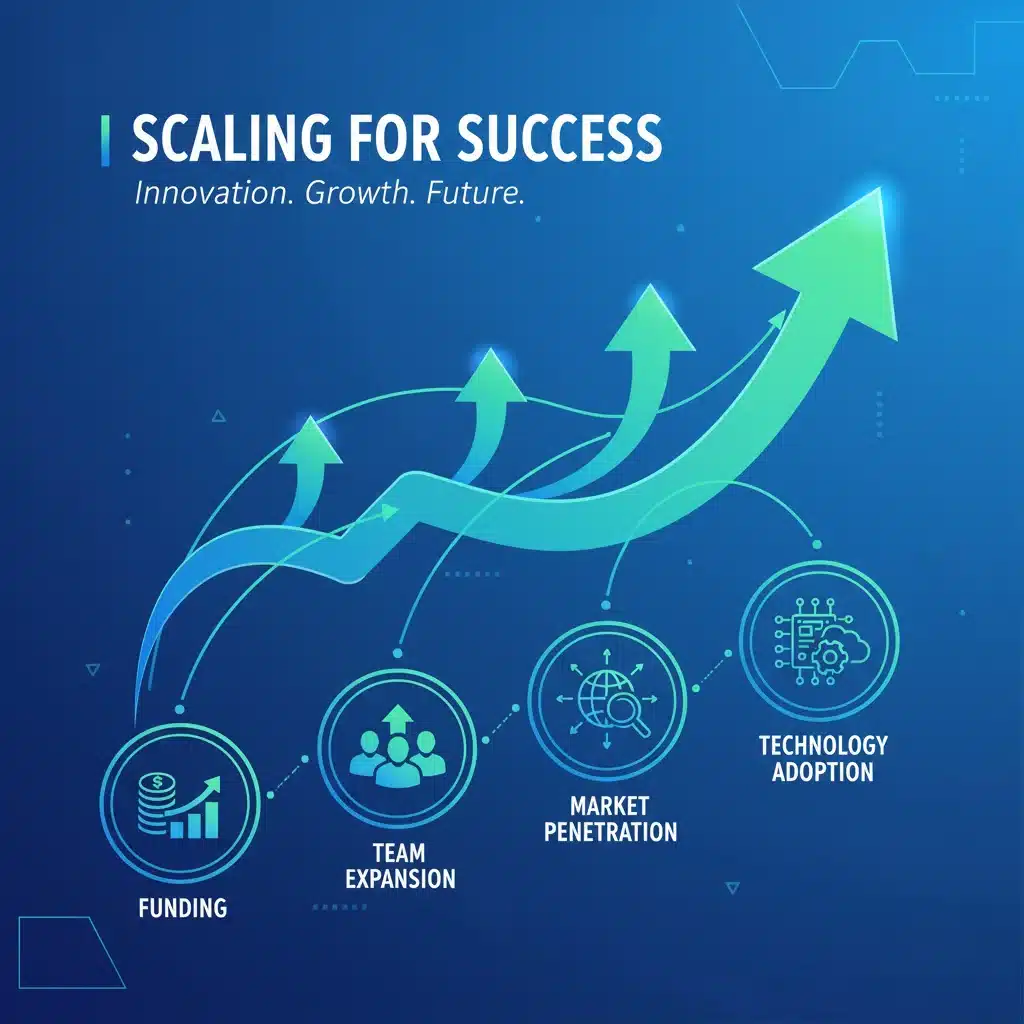
Phase 3: Scaling Beyond Initial Product-Market Fit
Achieving initial product-market fit is a monumental achievement, but it’s not the end of the journey. The next challenge for U.S. startups in 2026 is to scale effectively while maintaining that fit, adapting to growth, and fending off competition.
Optimizing for Growth and Retention
Once you’ve found your initial fit, focus on optimizing your growth loops and ensuring users stick around. This involves a deep understanding of your customer journey and identifying areas for improvement.
- Growth Hacking Strategies: Implement data-driven tactics to accelerate user acquisition and activation.
- Retention Engineering: Develop features and strategies that encourage long-term engagement and reduce churn. Personalization, community building, and continuous value delivery are key.
- Customer Success: Invest in robust customer support and success teams to ensure users are getting the most out of your product and to proactively address any issues.
Expanding Your Market and Product Offerings
As you scale, you may identify opportunities to expand into new market segments or develop complementary products. This requires careful strategic planning to avoid diluting your core value proposition.
- Adjacent Market Exploration: Identify new customer segments that share similar pain points or could benefit from your existing technology.
- Feature Expansion: Thoughtfully add features that enhance the core product without adding unnecessary complexity. Prioritize based on user demand and strategic alignment.
- Platform Strategy: Consider whether your product can evolve into a platform, enabling third-party integrations or extensions, thereby increasing its ecosystem value.
Building a Scalable Organization and Culture
Scaling a product goes hand-in-hand with scaling your organization. A strong culture of innovation, customer-centricity, and adaptability is crucial for sustained success.
- Talent Acquisition and Development: Recruit and retain top talent who are aligned with your mission and possess the skills needed for growth.
- Operational Excellence: Implement robust processes and systems to handle increased demand and complexity.
- Data-Driven Culture: Foster a culture where decisions are informed by data, and experimentation is encouraged.
Key Trends Impacting Product-Market Fit in 2026 for U.S. Startups
The technological and societal landscape of 2026 presents unique challenges and opportunities for achieving product-market fit. U.S. startups must be acutely aware of these trends.
The Rise of Generative AI and Personalization
Generative AI is no longer a futuristic concept; it’s a powerful tool that can revolutionize how products are built and personalized. Startups leveraging AI to deliver highly tailored experiences will have a significant edge in achieving product-market fit.
- AI-Powered Product Personalization: Use AI to dynamically adapt product features, content, and user flows based on individual user behavior and preferences.
- Automated Customer Support: Enhance user experience with intelligent chatbots and AI-driven support systems that resolve issues quickly and efficiently.
- Content Generation and Curation: Leverage AI to create compelling marketing content and curate personalized information for users.
Enhanced Focus on Data Privacy and Security
With increasing regulations and consumer awareness, data privacy and security are no longer optional features but fundamental requirements. Products that offer robust privacy controls and transparent data practices will build trust and achieve stronger product-market fit.
- Privacy-by-Design: Integrate privacy considerations into every stage of product development.
- Transparent Data Practices: Clearly communicate how user data is collected, used, and protected.
- Compliance with Regulations: Stay abreast of evolving data privacy laws (e.g., CCPA, state-specific regulations) and build compliance into your product.
The Blurring Lines Between Digital and Physical Experiences
The metaverse, augmented reality (AR), and mixed reality (MR) are creating new paradigms for user interaction. Products that seamlessly blend digital and physical experiences will tap into emerging markets and redefine product-market fit.
- Immersive Experiences: Explore how AR/VR can enhance your product’s value proposition, offering more engaging and interactive user experiences.
- Phygital Products: Develop products that integrate physical components with digital interfaces, creating holistic solutions.
- Spatial Computing: Consider how your product can operate within new spatial computing environments.
Sustainability and Ethical AI as Core Values
Consumers in 2026 are increasingly conscious of a company’s environmental and social impact. Products and companies that demonstrate a commitment to sustainability and ethical AI practices will resonate more deeply with their target audience, thereby strengthening their product-market fit.
- Eco-Friendly Design: Develop products with a minimal environmental footprint, from manufacturing to disposal.
- Ethical AI Principles: Ensure your AI systems are fair, transparent, accountable, and unbiased.
- Social Impact: Integrate social responsibility into your business model, contributing positively to communities.
Common Pitfalls to Avoid on the Path to Product-Market Fit
While the pursuit of product-market fit is essential, many startups stumble along the way. Being aware of common pitfalls can help you navigate this complex journey more effectively.
Building a Solution Without a Problem
This is perhaps the most common mistake. Startups often fall in love with an idea or technology before truly understanding if it solves a significant problem for a large enough market. Without a validated problem, your product will struggle to find its place.
- Solution: Prioritize problem validation over solution development. Spend ample time on customer discovery and market research before writing a single line of code.
Ignoring or Misinterpreting User Feedback
Feedback is gold, but only if you listen to it and interpret it correctly. Dismissing negative feedback or misinterpreting what users are truly asking for can lead to building the wrong features or alienating your audience.
- Solution: Establish a structured feedback loop, differentiate between wants and needs, and always seek to understand the underlying motivations behind user comments.
Premature Scaling
Attempting to scale operations, marketing, or sales before definitively achieving product-market fit can be disastrous. It leads to burning through capital on a product that hasn’t proven its value, often resulting in spectacular failures.
- Solution: Focus intensely on achieving product-market fit in a small, well-defined segment before pouring resources into aggressive growth strategies.
Chasing Trends Without Substance
While staying aware of trends is crucial, mindlessly integrating every new technology (e.g., blockchain, metaverse, AI) without a clear strategic purpose or value proposition can lead to feature bloat and confusion, hindering product-market fit.
- Solution: Assess emerging technologies through the lens of your customer’s problems. How does this technology genuinely enhance your product’s ability to solve those problems?
Underestimating the Competition and Market Dynamics
The market is constantly evolving. Underestimating existing competitors, failing to anticipate new entrants, or misjudging shifts in consumer preferences can quickly erode any perceived product-market fit.
- Solution: Maintain continuous competitive intelligence, monitor market trends, and be prepared to adapt your product and strategy proactively.
Measuring Product-Market Fit: Key Metrics for 2026 Startups
How do you know when you’ve achieved product-market fit? While there’s no single magic number, a combination of qualitative and quantitative metrics provides a clear picture.
Qualitative Indicators
- Enthusiastic User Testimonials: Users actively praising your product, sharing it with others, and expressing genuine excitement.
- High NPS (Net Promoter Score): A strong indication that users are not just satisfied, but enthusiastic promoters of your product.
- Word-of-Mouth Referrals: Organic growth driven by users recommending your product to others without prompting.
- Low Churn from Core Users: Your most engaged users are sticking around and continuing to derive value.
Quantitative Metrics
- Retention Rate: A high and stable retention rate, especially for your core user base, is a strong signal.
- Engagement Metrics: High daily/monthly active users (DAU/MAU), frequent feature usage, and time spent in the product.
- Customer Acquisition Cost (CAC) vs. Customer Lifetime Value (LTV): A healthy ratio where LTV significantly exceeds CAC indicates a sustainable business model fueled by your product’s value.
- Conversion Rates: Strong conversion rates from trial to paid, or from free to premium features.
- Virality Coefficient: If your product has built-in viral loops, a coefficient greater than 1 indicates organic, self-sustaining growth.
- Frequency of Use: How often do users return to your product? High frequency indicates strong integration into their habits.
It’s important to track these metrics over time and compare them against industry benchmarks. A sudden drop in engagement or a spike in churn can signal a deviation from product-market fit.
Conclusion: The Continuous Pursuit of Product-Market Fit
For U.S. startups in 2026, achieving product-market fit is not a destination but a continuous journey. The market is a living, breathing entity, constantly evolving with new technologies, changing consumer preferences, and emerging competitors. What constitutes a perfect fit today may not tomorrow. Therefore, successful startups must cultivate a culture of perpetual learning, adaptation, and customer-centricity.
By diligently understanding your market, iteratively developing and validating your product, and strategically scaling with an eye on emerging trends, you can significantly increase your chances of finding and maintaining that elusive product-market fit. Embrace the data, listen to your users, and remain agile. Your ability to consistently deliver value that resonates deeply with your target audience will be the ultimate determinant of your startup’s long-term success in the competitive landscape of 2026 and beyond.
The future belongs to those who not only build great products but also understand precisely who they are building them for, and why. Make product-market fit the guiding star of your startup journey, and you’ll be well-equipped to navigate the challenges and seize the opportunities that lie ahead.