Achieve 99% Order Accuracy: The Ultimate Guide to Warehouse Optimization for E-commerce in the US

In the fiercely competitive landscape of US e-commerce, customer satisfaction hinges on one critical factor: getting the right product to the right customer at the right time. This seemingly simple goal is often undermined by a pervasive challenge – order inaccuracy. For businesses striving for excellence, achieving 99% warehouse order accuracy isn’t just a lofty aspiration; it’s a strategic imperative that directly impacts profitability, reputation, and customer loyalty.
The cost of errors in e-commerce fulfillment is staggering. Incorrect shipments lead to returns, re-shipping costs, negative reviews, and, most importantly, a loss of trust. In an era where a single negative experience can drive a customer to a competitor, the pursuit of near-perfect order accuracy is no longer optional; it’s a cornerstone of sustainable growth. This comprehensive guide will delve into the strategies, technologies, and best practices required to elevate your US e-commerce warehouse operations to achieve an impressive 99% warehouse order accuracy, setting you apart in a crowded market.
The High Stakes of Order Inaccuracy in E-commerce
Before we explore solutions, it’s crucial to understand the multifaceted impact of order inaccuracies. Every mispicked item, every wrongly shipped package, creates a ripple effect throughout your entire operation and customer journey.
Financial Repercussions
- Return Costs: Processing returns involves reverse logistics, inspection, repackaging, and restocking, all of which incur significant labor and transportation expenses.
- Re-shipping Costs: Sending the correct item means additional shipping fees, often expedited to appease an inconvenienced customer.
- Lost Sales: While dealing with a return or re-shipment, the product is unavailable for other potential buyers, leading to missed revenue opportunities.
- Labor Waste: Employees spend time rectifying errors instead of focusing on productive tasks.
Reputational Damage and Customer Churn
- Negative Reviews: Disappointed customers are quick to share their experiences online, harming your brand’s reputation and deterring new buyers.
- Reduced Customer Lifetime Value (CLV): A single negative experience can lead to customer churn, significantly impacting long-term revenue.
- Erosion of Trust: Customers expect reliability. Repeated errors signal inefficiency and unreliability, making them less likely to purchase again.
Operational Inefficiencies
- Increased Workload: Error resolution adds complexity and volume to customer service and warehouse teams.
- Inventory Discrepancies: Incorrect shipments can throw off inventory counts, leading to stockouts or overstock situations.
- Supply Chain Disruptions: Returns and re-ships add strain to an already complex supply chain.
Given these profound consequences, investing in strategies to boost warehouse order accuracy is not merely an expense; it’s an investment in your business’s future.
Pillars of 99% Warehouse Order Accuracy
Achieving a 99% warehouse order accuracy rate requires a holistic approach, addressing every stage of the fulfillment process. Here are the fundamental pillars:
1. Robust Inventory Management System (IMS)
The foundation of accurate order fulfillment is precise inventory data. Without knowing exactly what you have and where it is, errors are inevitable.
- Real-time Tracking: Implement an IMS that provides real-time visibility into inventory levels across all locations. This includes tracking items from inbound receipt to outbound shipment.
- Barcode/RFID Technology: Utilize barcode scanners or RFID tags for every item. This automates data entry, significantly reducing human error during receiving, stocking, picking, and packing.
- Cycle Counting & Physical Inventories: Regular cycle counts, even daily for high-value or fast-moving items, help maintain inventory integrity without disrupting operations as much as a full physical inventory.
- Batch & Lot Tracking: For products with expiration dates or specific traceability requirements, implement robust batch and lot tracking to ensure the correct products are picked.
2. Optimized Warehouse Layout and Slotting
An inefficient layout can lead to longer travel times, increased confusion, and a higher propensity for errors.
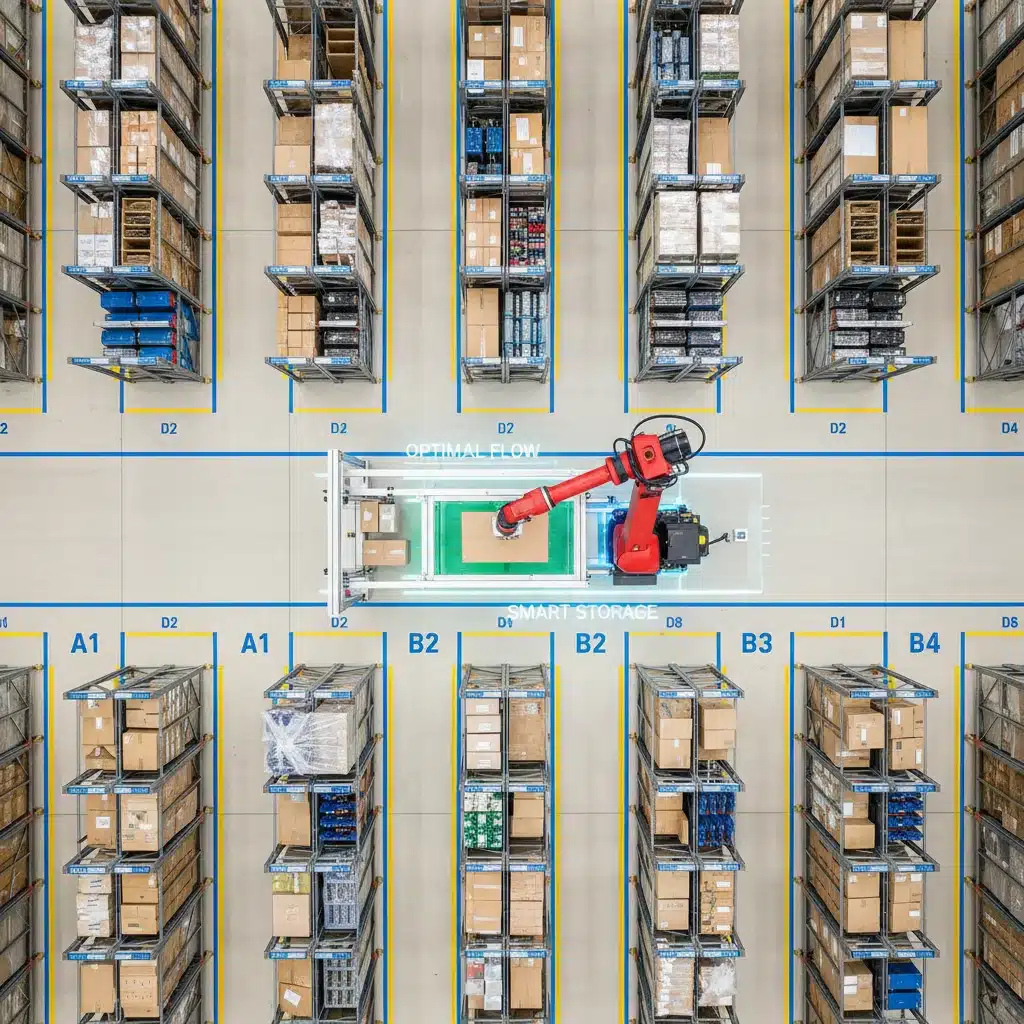
- Strategic Slotting: Place fast-moving items in easily accessible locations. Group complementary products together to reduce picker travel time.
- Clear Labeling: Ensure all aisles, racks, bins, and products are clearly labeled with large, readable signs and barcodes.
- Ergonomics: Design the layout with picker comfort and safety in mind to reduce fatigue, which can lead to mistakes.
- Dedicated Zones: Create specific zones for receiving, putaway, picking, packing, and shipping to streamline workflow and prevent cross-contamination of processes.
3. Advanced Picking Methodologies
The picking process is where most order errors occur. Implementing advanced methodologies and technologies can drastically improve warehouse order accuracy.
- Batch Picking: Picking multiple orders simultaneously for items located in the same area. This reduces travel time but requires careful sorting at the packing station.
- Zone Picking: Dividing the warehouse into zones, with pickers assigned to specific areas. Orders move from zone to zone until complete.
- Wave Picking: A combination of batch and zone picking, where orders are released in waves based on various criteria (e.g., shipping deadlines, destination).
- Pick-to-Light Systems: Lights illuminate the location and display the quantity to be picked, guiding the picker and confirming selections with a button press.
- Voice Picking (Voice-Directed Warehousing): Operators receive instructions via a headset and confirm actions verbally, keeping their hands and eyes free for picking.
- Robotic Picking: Automated robots retrieve items, drastically reducing human error and increasing speed.
The choice of picking methodology should align with your product mix, order volume, and existing infrastructure.
4. Meticulous Packing and Verification
The packing station is the last line of defense against errors before shipment.
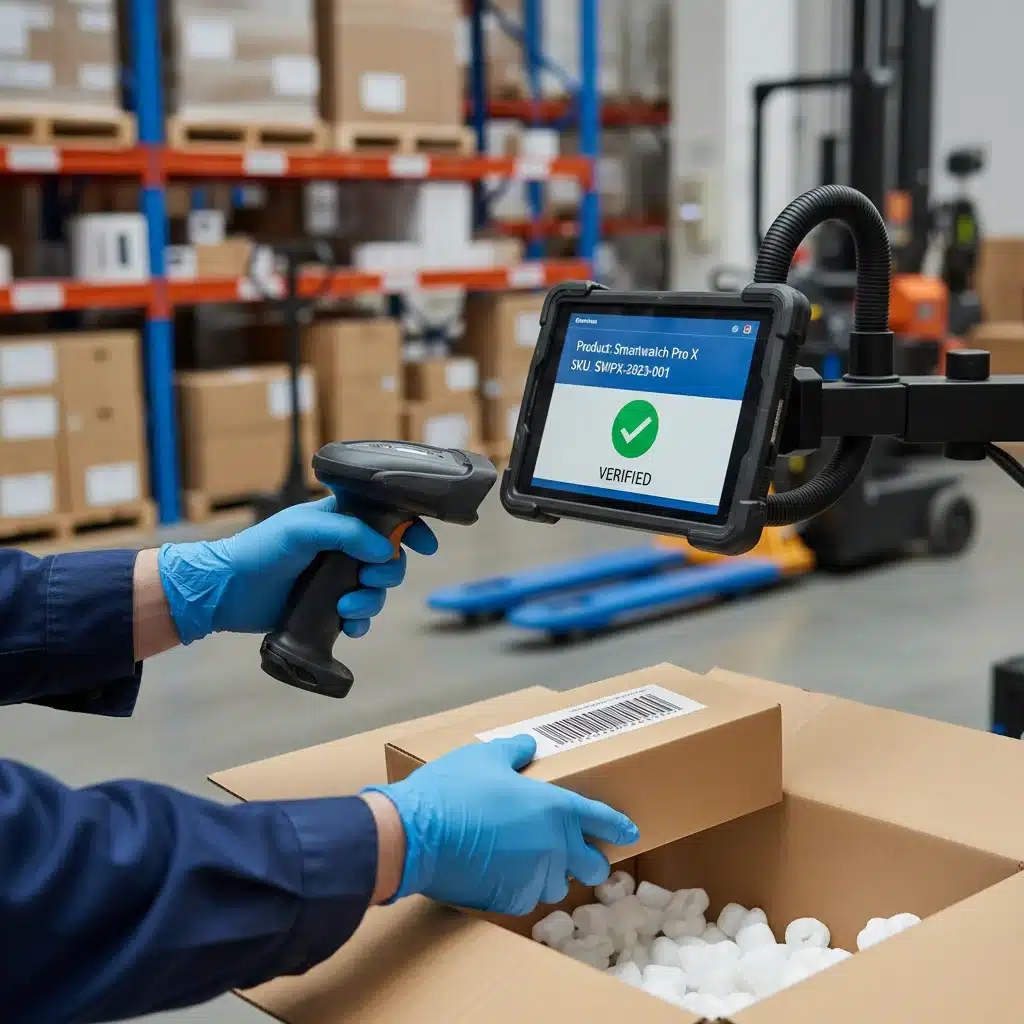
- Scan-to-Verify: Implement a mandatory scan of every item at the packing station against the order manifest. This is a critical step for achieving high warehouse order accuracy.
- Weight Verification: Integrate scales at packing stations to verify the total weight of the packed carton against the expected weight based on item master data. Discrepancies flag potential errors.
- Quality Control Checks: Implement random or targeted quality checks on packed orders before they leave the facility.
- Clear Packing Instructions: Provide detailed instructions for packing specific items, especially fragile or oddly shaped products, to prevent damage during transit.
Leveraging Technology for Peak Order Accuracy
Technology is the strongest ally in the quest for 99% warehouse order accuracy. Modern solutions offer unparalleled precision and efficiency.
Warehouse Management Systems (WMS)
A WMS is the central nervous system of your warehouse. It orchestrates all operations, from receiving to shipping, and is indispensable for optimizing warehouse order accuracy.
- Task Optimization: Guides pickers along the most efficient routes and assigns tasks based on priority and location.
- Real-time Data: Provides instant updates on inventory levels, order status, and operational performance.
- Integration Capabilities: Seamlessly integrates with your Enterprise Resource Planning (ERP) system, e-commerce platform, and shipping carriers for end-to-end visibility.
- Error Prevention: Built-in logic and validation checks prevent common mistakes before they become costly errors.
Automation and Robotics
While often a significant investment, automation offers substantial long-term benefits for accuracy and efficiency.
- Automated Storage and Retrieval Systems (AS/RS): Robots store and retrieve items, eliminating human handling errors.
- Automated Guided Vehicles (AGVs) / Autonomous Mobile Robots (AMRs): These robots transport inventory, reducing manual lifting and travel, and can assist with picking by bringing shelves to pickers.
- Robotic Process Automation (RPA): Software bots can automate administrative tasks, reducing data entry errors.
Barcode and RFID Technology
These technologies are fundamental for accurate data capture.
- Barcode Scanners: Used for receiving, putaway, picking, packing, and shipping to ensure the correct item is processed at each stage.
- RFID (Radio-Frequency Identification): Offers even faster and more accurate data capture, allowing for bulk scanning without direct line of sight. Ideal for high-volume operations where speed is paramount.
Vision Systems and AI
Emerging technologies are pushing the boundaries of what’s possible in warehouse order accuracy.
- Computer Vision: Cameras can verify item identity and quantity at various points in the fulfillment process, such as during picking or packing, identifying discrepancies instantly.
- Artificial Intelligence (AI): AI algorithms can analyze historical data to predict potential error points, optimize picking routes, and even identify patterns in mispicks to suggest process improvements.
Process Optimization and Continuous Improvement
Technology alone isn’t a magic bullet. It must be coupled with well-defined processes and a culture of continuous improvement.
Standard Operating Procedures (SOPs)
- Document Everything: Create clear, concise, and easily accessible SOPs for every warehouse task, from receiving to shipping.
- Regular Training: Ensure all employees are thoroughly trained on SOPs and new technologies. Regular refreshers are crucial.
- Visual Aids: Use diagrams, flowcharts, and instructional videos to complement written SOPs.
Employee Training and Engagement
Your workforce is your greatest asset. Empowering them directly impacts warehouse order accuracy.
- Comprehensive Onboarding: New hires should receive extensive training on all relevant processes and tools.
- Ongoing Education: Provide continuous training on new systems, best practices, and safety protocols.
- Feedback Loops: Encourage employees to provide feedback on processes. They are often the first to identify inefficiencies or potential error sources.
- Performance Incentives: Reward high accuracy rates and error reduction to motivate the team.
Data Analytics and Performance Metrics
You can’t improve what you don’t measure.
- Key Performance Indicators (KPIs): Track critical metrics such as:
- Order Accuracy Rate: The percentage of orders shipped without any errors.
- Picking Accuracy Rate: The percentage of picks made correctly.
- Return Rate Due to Error: The percentage of returns directly attributable to internal errors.
- Cost Per Error: The total cost associated with rectifying a single error.
- Root Cause Analysis: When an error occurs, conduct a thorough investigation to identify its root cause. Was it a training issue? A system glitch? A process flaw?
- Continuous Improvement Cycles: Implement a Plan-Do-Check-Act (PDCA) cycle to identify problems, implement solutions, measure their effectiveness, and standardize improvements.
Strategic Considerations for US E-commerce Businesses
Operating in the US e-commerce market presents unique challenges and opportunities for achieving high warehouse order accuracy.
Scalability
US e-commerce is characterized by rapid growth and fluctuating demand. Your warehouse operations and systems must be scalable to handle peak seasons (e.g., Black Friday, Cyber Monday) without compromising accuracy.
- Flexible Workforce: Utilize temporary staff during peak times, ensuring they receive adequate training.
- Modular Systems: Choose WMS and automation solutions that can be easily expanded or integrated with new technologies as your business grows.
- Cloud-Based Solutions: Cloud WMS offers scalability and accessibility, making it easier to manage operations across multiple warehouses.
Multi-Channel Fulfillment
Many US e-commerce businesses also operate brick-and-mortar stores or sell through multiple online marketplaces. Managing inventory and orders across these channels adds complexity.
- Unified Inventory View: A robust IMS that provides a single, real-time view of inventory across all channels is essential to prevent overselling or stockouts.
- Order Prioritization: Implement rules within your WMS to prioritize orders based on channel, shipping method, or customer segment.
Compliance and Regulations
Depending on the products you sell, you may need to comply with specific US regulations (e.g., FDA for food/medical products, DOT for hazardous materials). Accurate tracking and documentation are critical.
- Traceability: Ensure your systems can track products from origin to destination, fulfilling any recall or regulatory requirements.
- Labeling Compliance: Verify that all outbound shipments meet carrier and regulatory labeling standards.
Case Study: A Hypothetical E-commerce Success Story
Consider ‘GadgetGo,’ a rapidly growing US e-commerce retailer specializing in consumer electronics. Facing increasing customer complaints due to mis-shipped items and a return rate of 8% directly linked to order errors, GadgetGo realized their manual processes were unsustainable.
The Challenge:
Manual picking, paper-based manifests, and a basic inventory spreadsheet led to frequent errors, particularly during peak seasons. Their warehouse order accuracy hovered around 92%.
The Solution:
- WMS Implementation: GadgetGo invested in a cloud-based WMS, integrating it with their Shopify store and ERP.
- Barcode Scanning Everywhere: Implemented barcode scanning at receiving, putaway, picking, and packing stations.
- Voice Picking Adoption: Introduced voice picking for their high-volume small item zone, freeing up pickers’ hands and improving focus.
- Scan-to-Verify Packing: Mandated a final scan of every item against the order manifest at the packing station, coupled with weight verification.
- Daily Cycle Counts: Shifted from annual physical inventories to daily cycle counts of specific product categories.
- Continuous Training: Instituted weekly ten-minute refreshers on SOPs and quarterly deep-dive training sessions.
The Results:
Within 12 months, GadgetGo saw their warehouse order accuracy climb from 92% to an impressive 99.1%. This led to:
- A 70% reduction in error-related returns.
- A 25% decrease in customer service inquiries related to incorrect orders.
- Improved customer reviews and a 15% increase in repeat purchases.
- Significant savings in re-shipping costs and labor associated with error resolution.
GadgetGo’s success story underscores that with the right strategy and investment, achieving near-perfect warehouse order accuracy is not just possible but transformative.
The Future of Warehouse Order Accuracy
The journey to 99% warehouse order accuracy is ongoing. As e-commerce evolves, so too must fulfillment strategies. Future trends point towards even greater automation, predictive analytics, and hyper-personalization.
- Predictive Analytics: AI-driven systems will increasingly predict potential fulfillment bottlenecks and errors before they occur, allowing for proactive intervention.
- Hyper-Automation: Expect to see more collaborative robots (cobots) working alongside humans, taking over repetitive tasks and further minimizing human error.
- IoT (Internet of Things): Connected devices throughout the warehouse will provide a richer tapestry of real-time data, enhancing visibility and control.
- Blockchain for Traceability: For certain industries, blockchain technology could offer an immutable record of product movement, ensuring unprecedented levels of transparency and accuracy.
Conclusion: Making 99% Order Accuracy Your Standard
In the high-stakes world of US e-commerce, achieving 99% warehouse order accuracy is not merely a benchmark; it’s a competitive differentiator. It’s about more than just numbers; it’s about building customer trust, fostering brand loyalty, and fueling sustainable growth. By meticulously implementing robust inventory management, optimizing warehouse layouts, adopting advanced picking technologies, and fortifying your packing and verification processes, businesses can dramatically reduce errors.
Leveraging cutting-edge technologies like WMS, automation, RFID, and even AI, combined with a commitment to continuous improvement and comprehensive employee training, will pave the way to unparalleled accuracy. The investment in these areas pays dividends not only in reduced costs but also in enhanced customer satisfaction and a stronger market position. Embrace these strategies, and transform your warehouse from a potential source of errors into a precision-driven engine of e-commerce success.