AI Personalization: Boosting Retail Conversion Rates by 15% in 2026

How AI-Powered Personalization Will Boost Retail Conversion Rates by 15% in 2026 (INSIDER KNOWLEDGE)
The retail landscape is in a constant state of evolution, driven by technological advancements and shifting consumer expectations. In this dynamic environment, the ability to connect with customers on a deeply personal level has become the ultimate differentiator. While personalization has been a buzzword for years, the advent of Artificial Intelligence (AI) is set to usher in an unprecedented era of hyper-personalization, fundamentally reshaping how retailers engage with their audience. Our insider knowledge suggests that AI retail personalization will not just be a competitive edge, but a critical driver, boosting retail conversion rates by an astonishing 15% by 2026.
This isn’t merely an optimistic forecast; it’s a projection rooted in the exponential growth of AI capabilities, the increasing availability of vast datasets, and the growing consumer demand for tailored experiences. Retailers who embrace AI-powered personalization now will be the clear winners in the coming years, securing a significant market advantage and fostering unparalleled customer loyalty.
But what exactly does this mean for your business? How can you harness the power of AI to achieve these remarkable conversion rate improvements? This comprehensive guide will delve into the mechanisms, strategies, and future implications of AI retail personalization, providing you with the essential insights to thrive in the personalized economy.
The Evolution of Personalization: From Basic Segmentation to Hyper-Personalization
To truly appreciate the transformative potential of AI retail personalization, it’s crucial to understand its journey. Historically, personalization in retail was rudimentary, often limited to basic segmentation based on demographics or broad purchase history. Think of it as a blunt instrument, attempting to cater to large groups with generic offers.
-
Early Stages (Rule-Based Personalization): This involved simple ‘if-then’ statements. For example, ‘if a customer bought product A, then recommend product B.’ While a step up from no personalization, it lacked nuance and adaptability.
-
Advanced Segmentation: Retailers began segmenting customers into more refined groups based on behaviors, preferences, and lifecycle stages. This allowed for more targeted email campaigns and product recommendations, but still operated on a group level rather than individual.
-
Real-time Personalization: With the rise of e-commerce and analytics, retailers started offering real-time recommendations based on current browsing behavior. This was a significant leap, but often still relied on pre-defined rules and limited data sets.
The current frontier, hyper-personalization, is where AI truly shines. It moves beyond segments and rules to treat each customer as an individual, understanding their unique preferences, needs, and even their emotional state at a given moment. This level of granularity is only possible through sophisticated AI algorithms that can process, analyze, and learn from massive amounts of data in real-time.
The Core Mechanisms of AI Retail Personalization
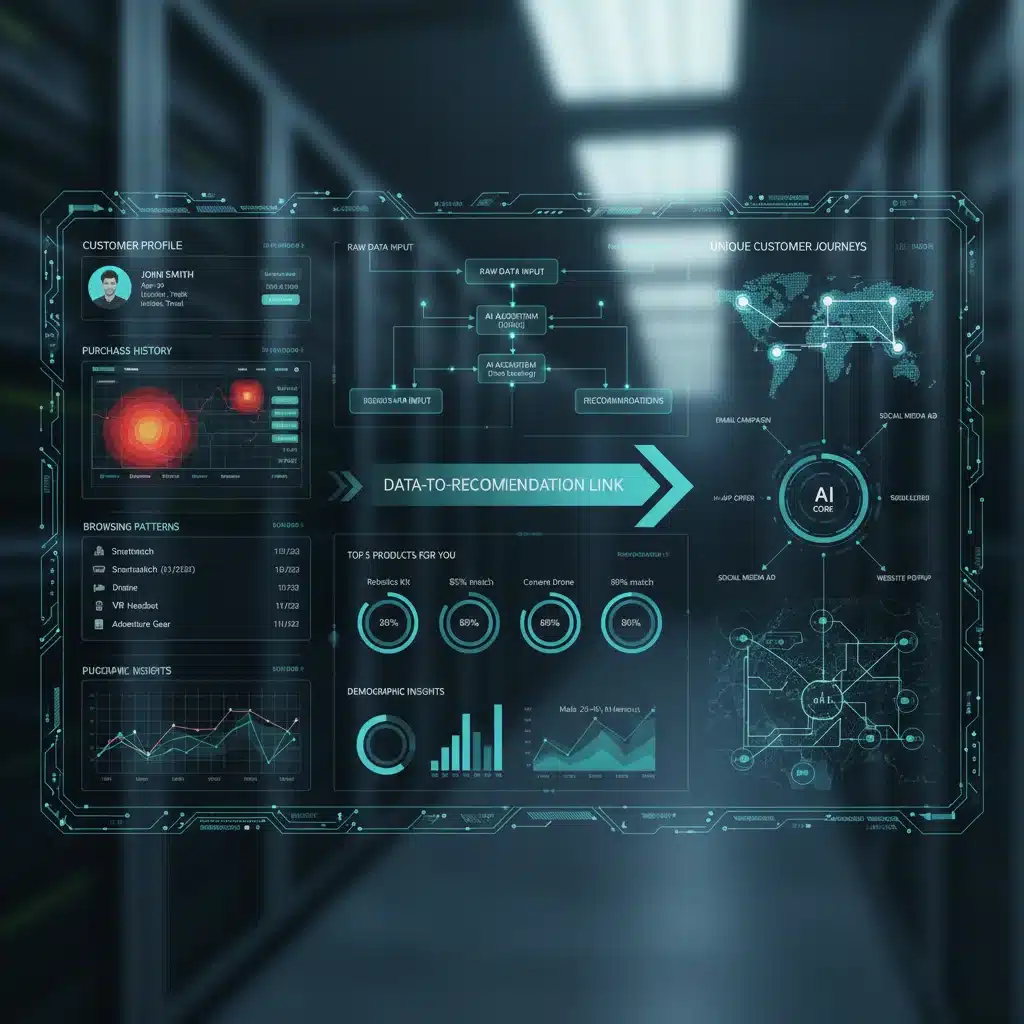
At its heart, AI retail personalization leverages advanced algorithms and machine learning models to predict and anticipate customer needs. This involves several key technological components:
1. Data Collection and Integration
The foundation of any effective AI personalization strategy is data. AI systems require vast quantities of diverse data to learn and make accurate predictions. This includes:
-
Behavioral Data: Website clicks, search queries, browsing history, time spent on pages, abandoned carts, app interactions.
-
Transactional Data: Purchase history, order frequency, average order value, preferred payment methods, returns.
-
Demographic Data: Age, gender, location, income level (where available and consented).
-
Preference Data: Explicit preferences stated by the customer, wish lists, product reviews, ratings.
-
Contextual Data: Time of day, device used, weather, current promotions, seasonal trends.
The challenge lies not just in collecting this data, but in integrating it from various sources (online, in-store, mobile, social) to create a unified, 360-degree view of each customer. AI platforms excel at this, consolidating disparate datasets and cleaning them for analysis.
2. Machine Learning Algorithms
Once the data is collected and integrated, machine learning algorithms get to work. These algorithms are the brains behind AI retail personalization. Key types include:
-
Collaborative Filtering: Recommends items based on the preferences of similar users. Think of Amazon’s ‘customers who bought this also bought…’
-
Content-Based Filtering: Recommends items similar to those a user has liked in the past based on item attributes. For example, if a customer buys a specific brand of running shoes, the system might recommend other shoes from the same brand or with similar features.
-
Reinforcement Learning: This allows the AI to learn through trial and error, optimizing recommendations over time based on user feedback and engagement. It continuously refines its understanding of what works best for each individual.
-
Deep Learning: Particularly useful for processing unstructured data like images, natural language, and voice. Deep learning can analyze product reviews for sentiment, understand conversational queries, and even interpret visual cues in browsing behavior.
-
Predictive Analytics: AI models can predict future behaviors, such as the likelihood of a customer churning, their next purchase, or their preferred communication channel. This allows retailers to proactively engage with customers before they even realize they need something.
3. Real-time Delivery and Optimization
The true power of AI retail personalization lies in its ability to deliver personalized experiences in real-time across multiple touchpoints. This means:
-
Dynamic Website Content: Product recommendations, personalized landing pages, and customized promotions that change as the customer browses.
-
Personalized Email and SMS: Triggered messages based on specific actions (e.g., abandoned cart reminders with personalized product suggestions) or lifecycle stages.
-
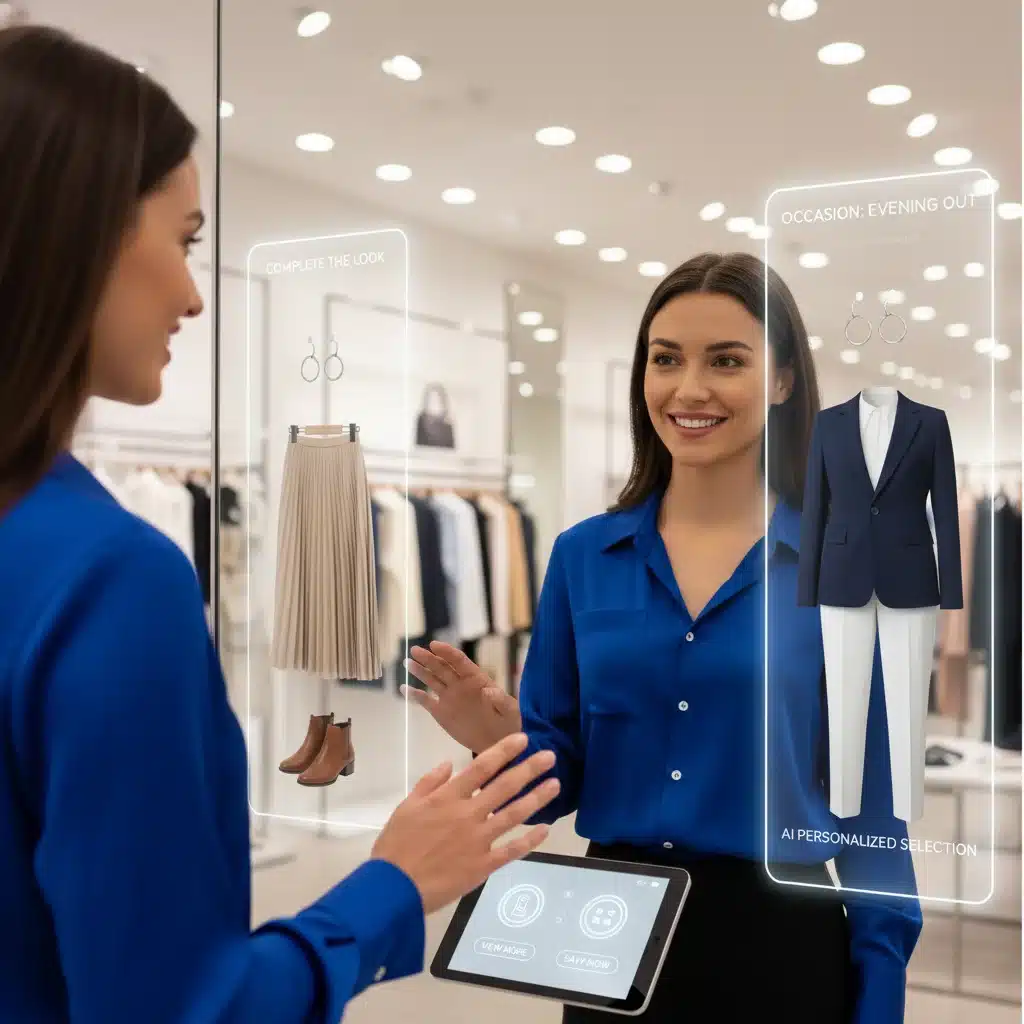
In-Store Experiences: Using beacons or in-store Wi-Fi to send personalized offers to customers’ phones as they browse aisles, or smart mirrors that recommend outfits based on body type and preference.
-
Customer Service: AI-powered chatbots and virtual assistants that provide personalized support, answer queries, and offer product suggestions based on past interactions.
The AI continuously monitors customer responses to these personalized interventions, learning and adapting to optimize future interactions. This iterative process is what drives the significant improvements in conversion rates.
Why AI Personalization Drives a 15% Conversion Rate Boost by 2026
The projected 15% increase in conversion rates by 2026 due to AI retail personalization isn’t an arbitrary number. It’s a conservative estimate based on several converging factors:
1. Enhanced Customer Experience (CX)
Customers today expect more than just products; they demand experiences. AI personalization delivers this by:
-
Reducing Paradox of Choice: By narrowing down vast product catalogs to a curated selection of relevant items, AI helps customers find what they need faster, reducing decision fatigue.
-
Increased Relevance: When recommendations, offers, and content are highly relevant, customers feel understood and valued, leading to a more positive shopping journey.
-
Seamless Omnichannel Journey: AI ensures a consistent and personalized experience whether a customer is online, on their mobile, or in a physical store, eliminating friction points.
A superior CX directly translates to higher engagement, longer browsing sessions, and ultimately, increased conversions.
2. Improved Product Discovery and Cross-Selling
AI’s ability to analyze complex relationships between products and customer preferences leads to:
-
Accurate Recommendations: AI can identify subtle patterns that human analysts might miss, leading to highly accurate and appealing product suggestions.
-
Effective Cross-selling and Up-selling: By understanding a customer’s needs and purchase history, AI can intelligently suggest complementary or premium products, maximizing average order value.
-
Personalized Bundling: AI can create dynamic product bundles tailored to individual customers, increasing perceived value and encouraging larger purchases.
This intelligent product discovery mechanism directly impacts the likelihood of a customer making a purchase.
3. Optimized Marketing and Sales Efforts
AI transforms marketing from a broad-brush approach to a precision-guided operation:
-
Personalized Pricing and Promotions: AI can dynamically adjust pricing or offer personalized discounts to specific customers based on their price sensitivity, purchase history, and likelihood to convert, maximizing profit margins while still driving sales.
-
Targeted Content Delivery: From blog posts to video ads, AI ensures that the right content reaches the right customer at the right time, increasing engagement and conversion rates.
-
Reduced Marketing Spend: By focusing efforts on highly receptive customers with relevant offers, retailers can significantly reduce wasted ad spend and improve ROI.
The efficiency gained through AI-driven marketing directly contributes to higher conversion rates without necessarily increasing overall marketing budgets.
4. Predictive Capabilities and Proactive Engagement
One of the most powerful aspects of AI retail personalization is its predictive power:
-
Churn Prediction: AI can identify customers at risk of churning, allowing retailers to intervene with personalized retention strategies (e.g., special offers, loyalty program benefits) before they leave.
-
Next Best Action (NBA): AI can recommend the ‘next best action’ for each customer, whether it’s sending an email, offering a discount, or suggesting a specific product, optimizing the customer journey at every step.
-
Anticipating Needs: By analyzing past behavior and external factors, AI can predict future needs (e.g., predicting when a customer might need to restock a consumable item) and proactively offer solutions.
This proactive approach ensures that retailers are always one step ahead, meeting customer needs even before they are explicitly expressed, thereby significantly increasing conversion opportunities.
Insider Strategies for Implementing AI Retail Personalization
Achieving a 15% boost in conversion rates by 2026 through AI retail personalization requires a strategic and methodical approach. Here are some insider strategies:
1. Start with a Clear Use Case and Measurable Goals
Don’t try to personalize everything at once. Identify a specific area where personalization can have a significant impact, such as:
-
Product recommendations on product pages: Focus on increasing add-to-cart rates.
-
Personalized email campaigns for abandoned carts: Aim to recover lost sales.
-
Dynamic homepage content: Improve bounce rates and initial engagement.
Define clear, measurable KPIs for each use case to track the impact of your AI initiatives.
2. Focus on Data Quality and Integration
Garbage in, garbage out. The success of AI retail personalization hinges on high-quality, clean, and integrated data. Invest in:
-
Robust Data Infrastructure: A Customer Data Platform (CDP) is often essential for unifying data from various sources.
-
Data Governance: Establish clear policies and procedures for data collection, storage, and usage, ensuring compliance with privacy regulations (e.g., GDPR, CCPA).
-
Data Cleaning and Enrichment: Regularly clean your data to remove duplicates and inaccuracies, and enrich it with third-party data where appropriate and permissible.
3. Adopt an Iterative, Test-and-Learn Approach
AI personalization is not a one-time implementation; it’s an ongoing process of optimization. Embrace an agile methodology:
-
A/B Testing: Continuously test different personalization strategies, algorithms, and content variations to identify what resonates best with your audience.
-
Multivariate Testing: Go beyond A/B testing to evaluate the impact of multiple variables simultaneously, gaining deeper insights into customer behavior.
-
Feedback Loops: Implement mechanisms to gather customer feedback on personalized experiences, using it to refine your AI models.
4. Prioritize Ethical AI and Transparency
As AI becomes more pervasive, ethical considerations and transparency are paramount. Consumers are increasingly concerned about data privacy and how their information is used.
-
Transparency: Be transparent with customers about what data you collect and how it’s used to personalize their experience. Provide clear opt-out options.
-
Bias Mitigation: Actively work to identify and mitigate biases in your AI algorithms to ensure fair and equitable personalization for all customer segments.
-
Consent Management: Implement robust consent management systems to comply with privacy regulations and build customer trust.
Building trust through ethical AI practices will foster long-term customer relationships and prevent potential backlash.
5. Invest in the Right Talent and Technology
Implementing effective AI retail personalization requires a combination of skilled personnel and appropriate technology solutions.
-
Data Scientists and AI Engineers: These experts are crucial for developing, deploying, and optimizing AI models.
-
Personalization Platforms: Leverage specialized AI-powered personalization platforms that offer pre-built algorithms, real-time recommendation engines, and integration capabilities.
-
Change Management: Ensure your organization is ready for the cultural shift that comes with adopting AI. Train your teams to understand and utilize AI insights effectively.
Real-World Applications and Success Stories
The impact of AI retail personalization is already evident in the market. Leading retailers are demonstrating significant gains:
-
Amazon: A pioneer in personalization, Amazon’s recommendation engine is legendary, driving a significant portion of its sales through highly relevant product suggestions.
-
Netflix: While not strictly retail, Netflix’s content recommendation engine is a prime example of AI personalization, keeping subscribers engaged and reducing churn.
-
Sephora: Utilizes AI to offer personalized beauty recommendations, virtual try-ons, and customized loyalty programs, creating a highly engaging shopping experience.
-
Stitch Fix: A personal styling service that combines human stylists with AI algorithms to deliver highly personalized clothing selections, boasting impressive customer satisfaction and retention rates.
These examples highlight that whether it’s e-commerce, brick-and-mortar, or a hybrid model, AI personalization offers tangible benefits that translate directly into business growth and increased conversion rates.
Challenges and Considerations for AI Retail Personalization
While the benefits are clear, implementing AI retail personalization is not without its challenges:
1. Data Privacy and Security
Collecting and processing vast amounts of personal data raises significant privacy concerns. Retailers must be diligent in ensuring data security and adhering to evolving privacy regulations. A data breach could severely damage customer trust and brand reputation.
2. Integration Complexities
Integrating AI personalization platforms with existing legacy systems (CRM, ERP, e-commerce platforms) can be complex and time-consuming. Ensuring seamless data flow and functionality across all systems is critical.
3. Algorithmic Bias
AI algorithms can inadvertently perpetuate or amplify existing biases present in the training data. This can lead to unfair or discriminatory personalization, alienating certain customer segments. Continuous monitoring and bias mitigation strategies are essential.
4. The "Creepy" Factor
There’s a fine line between helpful personalization and intrusive surveillance. Retailers must be mindful of the "creepy" factor, where personalization feels overly invasive. Transparency and giving customers control over their data preferences can help mitigate this.
5. Skill Gap
The demand for skilled AI professionals (data scientists, machine learning engineers) far outstrips supply. Retailers may struggle to find and retain the talent needed to build and manage sophisticated AI personalization systems.
Addressing these challenges proactively is crucial for a successful AI retail personalization strategy.
The Future of AI Retail Personalization: Beyond 2026
The 15% conversion rate boost by 2026 is just the beginning. The future of AI retail personalization promises even more sophisticated and integrated experiences:
-
Predictive Personalization with Emotional AI: AI will move beyond just understanding preferences to recognizing and responding to customer emotions in real-time, tailoring experiences based on mood and sentiment.
-
Hyper-Localized Personalization: Leveraging hyper-local data (e.g., real-time traffic, local events, micro-climate) to deliver highly relevant offers and experiences in physical stores.
-
Generative AI for Product Creation: AI could potentially be used to co-create products with customers, offering truly bespoke items based on individual design preferences and needs.
-
Voice and Conversational AI Dominance: As voice commerce grows, AI-powered conversational interfaces will become the primary means of personalized interaction, offering seamless and intuitive shopping experiences.
-
Ethical AI by Design: Future AI systems will be built with ethical considerations and privacy by design, ensuring responsible and trustworthy personalization.
The trajectory is clear: personalization will become increasingly intelligent, intuitive, and embedded in every aspect of the retail journey. Retailers who continuously innovate and adapt their AI strategies will not only survive but thrive in this evolving landscape.
Conclusion: Seizing the AI Personalization Opportunity
The evidence is compelling: AI retail personalization is not just a trend; it’s a fundamental shift in how retailers will operate and succeed. The projected 15% boost in conversion rates by 2026 is a powerful indicator of the immense value that AI brings to the table.
For retailers, the call to action is clear: embrace AI-powered personalization now. Start by understanding your data, defining clear objectives, and investing in the right technologies and talent. Adopt an iterative approach, continuously testing and refining your strategies, always keeping ethical considerations and customer trust at the forefront.
By doing so, you won’t just keep pace with the competition; you’ll gain a significant competitive advantage, cultivate deeper customer relationships, and unlock unprecedented levels of growth and profitability. The future of retail is personal, and AI is the key to unlocking its full potential.